⚠️
Connection Error
Please check your internet connection and try again.
1
1
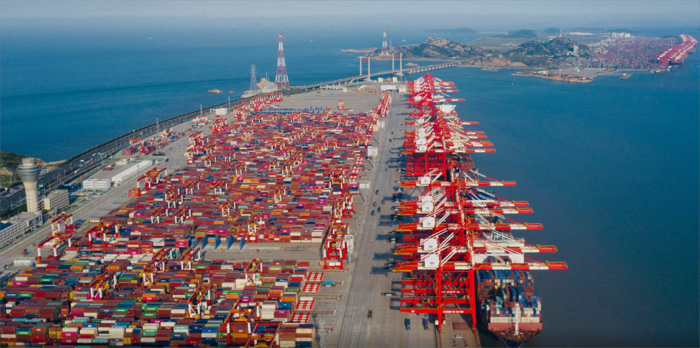
Port of Shanghai handles 55.06 million TEUs in 2025

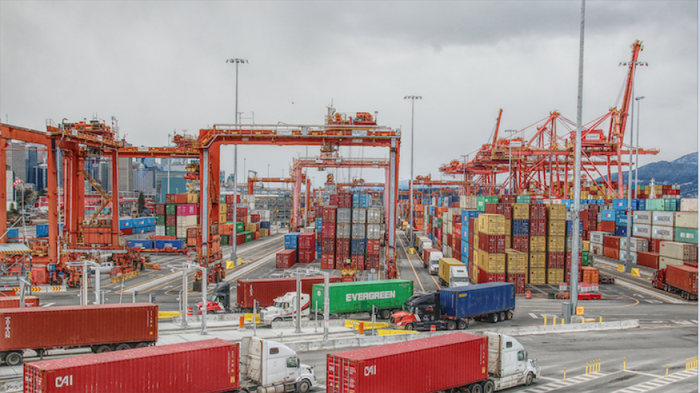
In 2025, the Port of Shanghai achieved 55.06 million TEUs, up 6.9% from 2024. It remains the world's busiest container port for the 16th consecutive year. International transshipment reached 7.911 million TEUs, up 10.6%.

Yangshan Deep-Water Port Area recorded 10.4% growth, handling 52.1% of total volume. Phase III Terminal throughput exceeded 10 million TEUs for the first time. These results reflect improved operational efficiency, rapid vessel turnaround, and high berth utilization.

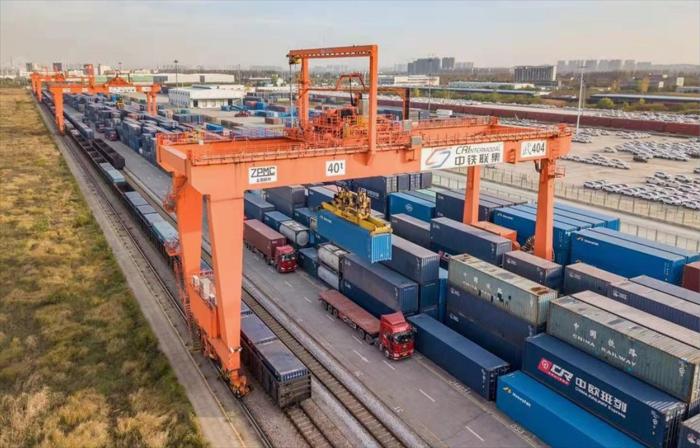
SIPG advanced digital transformation across its terminals. Automated systems, digital twins, AI stowage models, and smart yards boosted productivity, reduced re-stows, and enhanced truck operations. Sea-rail intermodal volumes surpassed 1 million TEUs, up 16.1%. Blockchain and other digital tools improved data sharing and lowered logistics costs.

Green initiatives expanded in 2025. Shanghai became the first port to bunker domestically produced green methanol. Shore power usage increased, energy intensity fell, and terminals earned five-star "Green Port" ratings. SIPG partnered internationally to promote low-carbon shipping corridors.

Service innovations included the "Four-Duals" model and all-tide "Triple-Berthing/Unberthing" operations, cutting vessel turnaround times and unlocking millions of TEUs in capacity. Streamlined customs and integrated supply chain services improved responsiveness and reduced costs.

Looking ahead, SIPG will:

  • Strengthen hub capabilities and vessel handling efficiency.
  • Expand international transshipment and multi-modal logistics.
  • Deepen digital transformation with AI, 5G, BeiDou, and blockchain integration.
  • Advance green energy bunkering, reduce carbon intensity, and promote global green standards.
  • Enhance inter-port collaboration, expand overseas presence, and offer one-stop logistics services.

SIPG aims to build a modern, smart, low-carbon port system, supporting both domestic and international trade while leading global port decarbonization.

Show full text
#container#transportation
Port of Shanghai handles 55.06 million TEUs in 2025
JNPA integrates data-driven marine operations

Jawaharlal Nehru Port Authority has taken a significant step towards end-to-end digitalization of its marine operations with the rollout of a comprehensive, paper-free Harbour Management System.

JNPA opted against off-the-shelf solutions and partnered with the National Technology Centre for Ports, Waterways and Coasts to develop an indigenous Harbour Management System.

The HMS integrates vessel scheduling, pilotage data, resource allocation, IoT-based inputs, safety monitoring, and sustainability tracking into a unified workflow aligned with global standards.

In parallel, JNPA has launched its own independent VTS, moving beyond the earlier VTS arrangement implemented by the Mumbai Port Authority with services provided by Wärtsilä.

AIS-based vessel data collection through VTS has already commenced, and once fully operational, the system will provide terminal operators and service providers with a realtime operational picture, enabling faster and better decision-making.

Shri Gaurav Dayal, IAS, Chairperson, JNPA, stated that by adopting an indigenously developed Harbour Management System and real-time data platforms, JNPA is strengthening its service delivery to all terminal operators while aligning with global best practices.

As part of Phase-I digitalization, all ship movement data is now being captured digitally through the JNPA Pilot "Thagaval" App, which has been in use for the past six months.

The app records complete pilotage data, including master's digital signatures, enables report generation, and is integrated with the port's billing system and the National Logistics Portal.

Manual data recording is being progressively phased out. Phase-Il trials are currently underway, extending digital data capture to all logistics assets such as tugs, pilot launches, and other crafts.

JPA has also successfully shifted all marine operations, including VTS, to the newly established Port Facility Centre.

The integrated facility houses all marine operational sections and allied authorities, including the Port Health Officer's office, and is fully operational from 1 January 2026.

Show full text
#logistics#trucking#shipping#transportation
JNPA integrates data-driven marine operations
Port of Tanjung Pelepas hits 14 million TEUs

Port of Tanjung Pelepas (PTP), a joint venture of Malaysia's MMC Group and APM Terminals, closed 2025 with a record 14,028,375 TEUs. It is the first single terminal in Malaysia to surpass 14 million TEUs.

Malaysia's Minister of Transport, Anthony Loke, said, "PTP's growth from 11.2 million TEUs in 2021 to 14 million in 2025 demonstrates its operational discipline, scale, and execution strength. Reaching this milestone in its 25th anniversary year is especially meaningful."

PTP Chairman Tan Sri Che Khalib Mohamad Noh added, "This achievement sets a new national benchmark. It reflects our team's commitment and the trust of our customers. We maintained a monthly average of 1.2 million TEUs without congestion."

CEO Mark Hardiman noted, "In December alone, we reached 13 million and 14 million TEUs. This marks a defining moment for PTP, placing us in a new league of operational performance."

The Pelepas Free Zone also grew by 8% in 2025. Its 7 million sq. ft. warehouse space reached 98% occupancy, driven by e-commerce, FMCG, sports apparel, auto parts, and construction materials.

PTP celebrated its 25th anniversary with a gala attended by government officials, shipping customers, free zone tenants, partners, and shareholders. Awards recognized long-term partnerships, throughput leaders, and industry excellence.

PTP was named a 5-Star Lister on the ESG Select List 2025 by the UN Global Compact Network Malaysia & Brunei. It is the first port in Johor and the only maritime company in Malaysia to earn this distinction.

Show full text
#container#multimodal#transportation#rail
Port of Tanjung Pelepas hits 14 million TEUs
Ashdod Port Company has expanded

Ashdod Port Company has expanded its strategic investment in Salvador Technologies to USD 1 million, as part of a broader funding round that includes additional partners. The move follows a successful pilot project conducted through Ashdod Port's Maritime Technology Hub, Blue Ocean CVC, and underscores the port's commitment to strengthening cyber resilience across maritime and industrial operational environments.

The pilot demonstrated Salvador Technologies' instant backup and recovery platform for operational technology (OT) and industrial control systems (ICS), enabling compromised systems to be restored to a clean, verified operational state in under 60 seconds, regardless of the attack vector or system failure. In port environments, where downtime can directly impact safety, business continuity and global supply chains, the ability to recover critical systems rapidly is increasingly seen as essential infrastructure.

Ashdod Port engaged with Salvador Technologies as a strategic design partner, carrying out a full-scale operational pilot in a live port environment involving multiple infrastructure divisions. Cybersecurity teams, operational staff and real industrial systems interacted with the technology in real time, validating both its operational maturity and suitability for dense, complex port operations.

Following the pilot's success, Ashdod Port entered into a commercial agreement with Salvador Technologies and has since deployed the platform operationally at the port.

In parallel, Ashdod Port is supporting Salvador's international growth through its Maritime Technology Hub, leveraging a global network of Innovation Embassies to facilitate deployment in ports and other complex OT environments worldwide. Salvador Technologies is already active in several international ports and continues to expand across industrial sectors.

Shaul Schneider, Chairman of the Board of Ashdod Port, said: "This investment reflects our strategic view that cyber resilience is a critical component of the future of maritime logistics. Salvador Technologies delivers measurable operational value, and we are proud to support a solution that strengthens safety and effectiveness across the industry."

Nissan Levy, CEO of Ashdod Port, added: "The ability to restore systems within seconds fundamentally changes how ports approach operational continuity. We see strong potential for this solution among our international partners and are committed to supporting its global deployment."

Roy Avrahami, Head of the Maritime Technology Hub at Ashdod Port, noted: "When port operations stop, the impact is felt across global supply chains. This collaboration proves that resilience is no longer optional-it is core infrastructure."

Amit Hammer, CEO of Salvador Technologies, said the partnership with Ashdod Port has accelerated the company's readiness for global expansion. "Together, we are setting a new standard for operational continuity in an era of escalating cyber threats," he said.

Ashdod Port said the expanded investment reflects a broader strategy in which infrastructure operators actively participate in accelerating the adoption of next-generation technologies that protect global trade at its most critical points.

Show full text
#logistics#multimodal#terminal
 Ashdod Port Company has expanded
New terminal will be built at Maasvlakte 2

In the northwest corner of Maasvlakte 2, a 15-hectare terminal for the Ministry of Defence will most likely be built.

The ministry intends to use this new terminal for the transshipment and transit of military cargo.

The terminal is part of the National Program Space for Defence. On December 19, the cabinet decided on the so-called preferred locations for various additional activities of Defence in the Netherlands.

The terminal at Maasvlakte 2 is part of this, as is the area for occasional amphibious exercises on the beach of Maasvlakte 2.

The security situation in the world has deteriorated recently. For the port of Rotterdam, the most relevant point is that the Ministry of Defence requires sufficient, guaranteed terminal capacity for handling ships with military cargo.

It has been agreed within NATO that this type of cargo can be transported to and from the Netherlands, even if the final destination is outside the Netherlands.

The cargo then travels to its final destination by road, rail, and inland shipping. For this purpose, a rail connection is also needed at the new terminal. No ammunition storage will be built.

In addition to Rotterdam, the Ministry of Defence will continue to use the ports of Vlissingen and Eemshaven for military transports.

In addition, the Ministry of Defence wants to be able to conduct amphibious exercises at Maasvlakte 2.

These exercises primarily involve practicing the landing of personnel and equipment. The Ministry of Defence wants to practice this type of operation at a total of four different locations in the Netherlands.

The Port Authority recognizes the importance of strengthening defence, understands the considerations of the cabinet, and is actively cooperating in the preparation and implementation of the plans.

The construction of the terminal is expected to take several years.

Show full text
#container#terminal
New terminal will be built at Maasvlakte 2
Valenciaport advances renewable energy and net zero goals

Valenciaport's ECOPORT II initiative has set ambitious targets to boost energy efficiency and environmental sustainability across its ports in Valencia, Sagunt, and Gandia.

The program focuses on developing renewable energy sources and installing electric charging points for ships, aligning with Valenciaport's Net Zero Emissions plan to achieve carbon neutrality by 2035. The plan also aims for full energy self-sufficiency to cover all port operations. Total investments are projected at €900 million, with €605 million from the Port Authority of Valencia and €295 million from private partners.

During its latest working group meeting, ECOPORT II reviewed 2025 achievements and discussed upcoming projects. Key initiatives include providing OPS charging points for vessels and expanding renewable energy infrastructure. Currently, 18% of the ports' energy needs are met through photovoltaic installations.

ECOPORT II builds on nearly 30 years of environmental policies at Valenciaport. The project includes 38 member companies developing and implementing environmental management systems for the port community.

Recent presentations highlighted projects such as the CLEVER TOOL, part of the ARSINOE project supporting Valenciaport's Climate Change Observatory, and the NeXTraIn. PortS initiative, focusing on sustainable mobility training across European ports.

Experts also discussed integrating Environmental Management Systems into broader sustainability reporting and monetising energy savings through Energy Savings Certificates (ESC). The meeting underscored Valenciaport's ongoing commitment to innovation, sustainability, and energy efficiency.

Show full text
#logistics
Valenciaport advances renewable energy and net zero goals
Port of Oakland showed exports increase in November

The Port of Oakland handled 174,239 TEUs in November 2025, reflecting a 4.1% year-over-year decline and a 4.7% decrease from October, as cargo volumes reflected typical seasonal slowing and continued adjustments in global shipping patterns.

Loaded cargo remained steady, supported by strengthening exports. Loaded exports totaled 68,824 TEUs, up 3.3% year-over-year and 4.0% from October, reinforcing the Port of Oakland's role as a leading US gateway for agricultural commodities and the nation's top port for refrigerated goods.

Loaded imports reached 73,092 TEUs, down 9.3% year-over-year and 11.1% month-over-month, reflecting continued moderation in import demand.

Port of Oakland Maritime Director Bryan Brandes, stated that even as the market recalibrates, the exporters are moving goods consistently, and efficient terminal operations are supporting balanced cargo flows and reliable service.

Combined loaded container volumes totaled 141,915 TEUs, down 3.6% year-over-year, while remaining relatively stable compared to October.

Empty container volumes declined to 32,324 TEUS, down 6.4% year-over-year and 6.3% from the prior month, driven by carrier equipment repositioning rather than changes in loaded cargo demand.

Vessel calls totaled 76 in November, down 8.4% year-over-year and 11.6% from October, as carriers continued to deploy larger vessels and consolidate services.

Fewer calls, paired with higher average cargo per vessel, helped sustain overall cargo throughput at the Port's marine terminals.

Overall, November performance reflects the Port navigating shifting market conditions, with export strength and operational efficiency supporting consistent cargo flows amid shifting market conditions.

Show full text
Port of Oakland showed exports increase in November
Port of Melbourne publishes 30-Year strategy for port development

Port of Melbourne has published its 2055 Port Development Strategy, outlining its high-level plans and approach for developing the capacity and efficiency of the Port for the next 30 years, while also providing a planning framework which is adaptable and responsive to changing needs over time.

Port of Melbourne's 2055 PDS outlines key projects that will improve capacity at the Port and respond to the needs of a growing Victoria.

All Victorian ports are legislatively required to have a PDS under the Port Management Act 1995 and to review their PDS every five years.

Port of Melbourne Chief Executive Officer Saul Cannon stated that as the population increases, the port's capacity must grow too, and this means continuing to engage with the stakeholders about the port's future growth and development.

Informed by extensive consultation and engagement with government, industry, and community stakeholders, the 2055 PDS endeavors to balance the many different views on how the Port should be developed.

Port of Melbourne thanks all who participated in the development of the 2055 PDS, which supports Victoria's competitive position and economic prosperity ensuring Victoria remains a great place to live, work, and do business.

Show full text
#shipping#multimodal
Port of Melbourne publishes 30-Year strategy for port development
Port of Tanjung Pelepas to electrify prime mover fleet

Port of Tanjung Pelepas (PTP) will electrify its prime mover fleet to boost sustainability and digital transformation. The port, a joint venture of Malaysia's MMC Group and APM Terminals, ordered 52 electric prime movers (e-PMs) from Terberg Tractors Malaysia (TTM). The total order includes 94 units, with the rest using conventional fuel.

PTP Chairman Tan Sri Che Khalib Mohamad Noh said the move reflects the port's 25th anniversary and its focus on innovation. The port aims to cut carbon emissions by 45% by 2030 from a 2021 baseline.

CEO Mark Hardiman said the fleet upgrade supports the port's expansion. PTP plans to handle about 16 million TEUs in the next two and a half years. Trials show each e-PM cuts emissions by 48% and reduces monthly costs by 57% compared with conventional units.

PTP also tested five electric small forklifts. The port participates in international sustainability programs, including IMO GreenVoyage2050 and a MoU with the Port of Melbourne.

The signing ceremony included Hardiman and TTM CEO Boo Wei Ching. The e-PMs will be delivered in 2026. TTM will maintain them for 24 months. Boo said PTP will be the first Malaysian port to operate TTM e-PMs.

PTP handled over 13 million TEUs in 2025, averaging 1.2 million TEUs per month. It achieved 15,000 moves in a 12-hour shift and was named the world's fastest-growing port by Alphaliner with 15.4% growth.

Show full text
#terminal
Port of Tanjung Pelepas to electrify prime mover fleet
Freight and supply chains in 2026, key trends shaping the year ahead

After years of pandemic shocks, congestion and rate whiplash, 2026 is not being defined by a single crisis, but by slower growth and deeper structural change in how freight and supply chains operate.

Most outlooks point to modest trade expansion, persistent geopolitical risk and sharper regulatory pressure, meaning logistics leaders must deliver resilience, visibility and sustainability without the tailwind of booming demand.

The question is no longer whether disruption will occur, but how well networks, contracts and digital tools are designed to absorb it. For many businesses, this places greater emphasis on experienced freight forwarders who can manage road freight, global sea and air freight, and customs processes through trusted partners.

Trend 1 – Soft demand, uneven capacity

Global freight markets head into 2026 with subdued but positive demand: trade volumes are expected to grow in the low single digits, with pockets of strength in e‑commerce, high‑tech and healthcare, but weaker momentum in some consumer and industrial sectors.

This low growth but high complexity backdrop keeps pressure on margins and makes lane-specific performance more important than global averages.

Capacity is also out of sync across modes: 

In ocean freight, years of vessel ordering mean fleet growth is outpacing demand on several major trades, even as Red Sea diversions and chokepoints create local tightness and longer transit times;

In road freight, especially in Europe and North America, truck capacity has stabilised but remains constrained in some regions by driver availability, costs and regulation.

For shippers, the implication is fewer extreme price spikes than in 2021 to 2022, but a greater need to manage volatility lane by lane and mode by mode rather than betting on a single market narrative.

 Trend 2 – Trade shifts and risk‑driven network design

Geopolitics and industrial policy are reshaping trade flows more quietly but more permanently than any single disruption event.

“China Plus One” and “friend‑shoring” strategies are pushing more production into Southeast Asia, Mexico and parts of Eastern Europe, while new tariffs and sanctions are changing which ports and corridors handle sensitive goods.

On the ground, that means:

Greater use of alternative routings around the Red Sea and Suez, adding days and fuel costs and changing the economics of certain Asia–Europe lanes;

More complex end‑to‑end journeys, where components move through several countries for assembly and tariff optimisation before reaching final markets.

Networks are being rebuilt with risk in mind:

Shippers are designing multi‑route playbooks, with pre‑approved alternative ports, modes and carriers that can be activated quickly when conditions change;

Inventory and manufacturing footprints are being revisited to shorten some supply chains, bring key SKUs closer to demand and reduce exposure to single nodes and suppliers.

In 2026, supply chain strategy is less about the perfect lean network and more about balancing efficiency with optionality.

Trend 3 – Digitalisation, AI and data quality

Digital tools have moved from “nice‑to‑have” to basic infrastructure across freight and logistics.

By 2026, real‑time tracking, online booking and electronic documentation are becoming standard, shifting the focus from buying new platforms to integrating what already exists and making the underlying data reliable.

The biggest shift is the rise of practical AI and analytics:

Carriers, 3PLs and forwarders are embedding AI into forecasting, routing, pricing and capacity planning tools, turning what were once spreadsheets into continuously updated decision engines;

Trucking and fleet operators are leaning on telematics, optimisation and predictive maintenance to run more data‑driven fleets and squeeze more value from each asset and shift.

Yet poor data quality is now one of the main barriers to value:

Many organisations struggle with fragmented systems, inconsistent shipment and customer data, and manual workarounds that undermine automation;

As a result, investment is tilting towards data governance, standardisation and interoperability, recognising that accurate, timely data is the foundation for AI, visibility and compliance.

In 2026, the winners will be less defined by having the most tools and more by having the cleanest data and the ability to act on it.

Trend 4 – Decarbonisation becomes a cost and design constraint

Environmental regulation is entering a new phase where carbon is not only reported but actively priced and constrained.

In Europe, measures such as ETS2 and FuelEU Maritime tighten the screws on emissions from both ocean and road, while zero‑emission zones and fleet regulations raise the bar for urban and regional delivery.

This is reshaping decisions across the chain:

Ocean carriers are re‑evaluating service speeds, fuel choices and network design to manage both emissions and compliance costs, with more “green surcharge” and low‑carbon service options appearing in rate sheets;

Road fleets are gradually adopting cleaner vehicles where routes, charging infrastructure and incentives make them viable, while using routing and load‑planning software to cut empty miles and idle time.

Shippers are being pulled in two directions:

On one side, there is pressure from customers, investors and regulators for better emissions transparency and progress towards Scope 3 targets;

On the other hand, budget realities mean sustainability goals must be achieved through practical levers such as groupage, modal shift and improved planning, not just by paying more for greener services.

In 2026, sustainability becomes a series of everyday trade‑offs – time, cost, service and emissions – rather than a separate, long‑term project.

Trend 5 – Warehousing and fulfilment as competitive infrastructure

Warehousing has shifted from a passive cost centre to an active performance lever in the supply chain.

Demand remains strong for modern, well‑located facilities close to ports, gateways and major consumption hubs, with many occupiers accepting higher rents in exchange for better access, throughput and labour pools.

Operationally, three patterns stand out:

Growing use of automation, robotics and warehouse management systems to handle labour shortages, increase pick rates and support e‑commerce and omnichannel requirements;

A move towards more regional and multi‑node fulfilment networks that can ship closer to customers and reduce reliance on long‑haul transport for final delivery;

Stronger integration between warehouse and transport planning, using shared data to optimise inventory positioning, dock scheduling and outbound loads.

By 2026, how and where inventory is stored and processed is becoming as strategic as how it is moved.

What this means for shippers and logistics SMEs.

For shippers, forwarders and logistics‑focused SMEs, 2026 will reward those who:

Design for volatility, not stability – build multi‑route and multimodal options into networks, contracts and playbooks so changes can be made quickly without starting from scratch;

Elevate data and integration – prioritise clean, joined‑up data and user adoption of existing systems so AI and analytics actually work in day‑to‑day planning and execution;

Embed sustainability and regulation in decisions – treat emissions, carbon pricing and compliance as core design constraints alongside cost and service, not afterthoughts;

Invest in people as much as platforms – pair digital tools with training, process clarity and clear roles so teams can use technology to make better, faster decisions.

Rather than chasing the next headline disruption, the most successful players in 2026 will be those who quietly build supply chains that can bend without breaking.

Show full text
#shipping#container#transportation
Freight and supply chains in 2026, key trends shaping the year ahead
All media
Following
Users' media
Companies' media
Hashtags

Your company registration code/number/ID  in the country of registration. Your company TAX ID is also appropriate. Ask your colleagues if you don't know. 

Share with your partners