
Shipping lines are shedding off the old business models and welcoming the New Year with more flexible and agile approach. What will it take to win the game in the coming months?
Through hardships to stars or a year of transformation – this is how 2021 can be described if we look at the major shift in the lines’ business models towards becoming full-blown providers of the inland logistics services. What has caused such catharsis? Ever Given stuck in Suez disrupting the game, stratospheric rates that left shippers almost bankrupt and logjams all over the world with epic piling up have led to major reconsiderations of the ways companies operate. What tops the picture in December is the disruption due to machinery failure that left a containership prang in Taiwan. The saga of an asset-light business model that included leasing warehouses, trucks and aircraft, and using contract labor for a long time, and maintained flexibility with minimum capital expenditures has ended. The crisis has proven that relying on third parties to make on-time deliveries is a losing game, thus In 2021, the major carriers invested heavily in becoming integrated logistics supermarkets from which customers can order individual services, such as customs brokerage or port-to-port transportation. It is clear that for big lines it means more agility with an extension of end-to-end operations but what about shippers? They can also benefit from it, as this extension will give more room for competition and a variety of services. However, when the lines acquire other companies, and we have seen it happening over the course of this year, they have to put tremendous effort to make this integration smooth, which requires organizational changes, IT changes, customer integration. Simply sticking together end-to-end will not do anything, and not many understand it because usually, the main reason for acquisitions is the desire to get in the game when the post-acquisition strategy is not defined.
In addition, it is a people-heavy business and if forwarders want to stand the competition, they will have to invest in localized knowledge and better forecasting, otherwise, shippers will. They are already spending time to improve their forecasting, and that will help them ask for contractual changes, based on relationships, rather than transactional. Their appetite will only keep growing, so 2022 should be the year when the industry needs to evolve the way it manages and executes supply chains. After all, 2021 has given all the necessary tools for it and luckily, ports will receive additional investment too. In the case of the US, they may come from abroad with Qatar planning to invest $10 billion. The east coast is past due for improvements while the west coast, although it is still problematic, holds the best potential, according to analytics.
Like a spider web, railways continue to expand and connect the most vital facilities. For a while, a part of the North-South transport corridor passing through Azerbaijan was under reconstruction, and recently it has renewed its work. Apart from connecting the country with Russia, the railway line is essential for the connectivity of the Abheron peninsula with the rest of the region. The upgrades also concern the UK where under a wide-ranging program of works Network Rail is improving capacity and relieving bottlenecks in and around Manchester. Despite the recent announcement that many capital projects including the one dedicated to the provision of a high-speed line, this initiative has not been crossed out. Over the Christmas holidays, these improvements are a crucial part of the Transpennine Route Upgrade, which will better connect the North and allow more trains to run in the future. In the meantime, the trend of many companies going east has already been highlighted, and DB cargo Eurasia jumps on it too with a new connection between China-Europe through Poland. The country has been in focus for many countries, so who knows, maybe Poland will have all the trump cards to become a new rail frontrunner in the region?

Many have already predicted that the coming year will be transformative for all modes, and the current state of affairs gives clear hints that rail will be the first on the list experiencing it, while shipping and airfreight sectors are battling never-ending congestion and cosmic rates. Metamorphosis will occur not only thanks to the already occurring changes such as introduction of the new services and grants for the development of new facilities but also if the EU will take the reign in its hands and shift China on the pedestal of the New Silk Road champion. However, this mission will not be easy to crack especially since China-Europe route remains the busiest in handling TEU.
Another forecast that we can see unfolding these days is the reconsideration of supplier relationships by many players. Near-shoring is becoming a new trend with European companies switching their focus to the east, and the US ones concentrating on Latin America. As costs keep increasing, it seems to be the only strategy that could secure a competitive position of the companies. Since MSC has outrun Maersk with the size of its fleet, will the size of the assets no longer be a battling ground for competition? What other predictions will come true and how are the new rules going to affect the market? Follow the updates on MAXMODAL.
With China becoming less favorable, does it mean it is time to wave it with a handkerchief? It seems like it is Eastern Europe’s moment to shine.
Reconsideration of suppliers has been in the talks for months since the costs started to rise. Initially, China was everyone’s favorite since sourcing from there used to be indeed the most efficient way. However, the rules have changed and the new reality requires new approaches. Many European players are planning to expand to Eastern Europe in 2022. What are the benefits? Sourcing from there or Mediterranean countries significantly cuts lead times when those from Asia to Europe have almost doubled due to supply chain disruption. At the same time, in the US, everyone is switching focus to Latin America, so near-shoring is set to become a global phenomenon that we are most luckily to start the new year with. However, it does not mean that Asia is forgotten – Maersk has sealed the deal of a $3.6bn acquisition of Hong Kong-based LF Logistics. The move is taking the giant further down its avowed corporate path to becoming a logistics integrator. Although Maersk’s “buying spree” has boosted the company’s assets greatly, it has still lost to MSC in the race of becoming the biggest line. The latter has “checkmated” Maersk thanks to the acquisition of 67% of Log-In – Logistica Intermodal S.A, a Brazilian company. With the new balance of power, what will be the next battleground for competition?
No matter the potential redirection of universal focus to Eastern Europe, the China-Europe rail direction remains exceptionally busy. Having transported 436,632 TEU so far, the market has set a new record. This is why new services are of great importance. The most recent one is the launch from Guangzhou on the southeast coast of China, to the main port of Germany: Hamburg. As congestion remains a pressing issue, rail becomes a sufficient alternative for cargo transportation. China senses the new direction of the wind and hurries to strengthen its presence in Eastern Europe too by introducing the train to the Polish harbor of Gdynia. After all, nobody has expected the country to ease its clawed grip off the region. However, not everything is so smooth. One of the biggest concerns regarding the New Silk Road includes the launch of regular chemical trains because there is no standardized approach to this segment of the industry. In addition, it is the notorious congestion that puts this initiative out of scope. At the same time, the Middle East is not slowing down and the Islamabad-Tehran-Istanbul railway train has finally seen the light. The corridor has great potential and more players such as India and Bangladesh are considering joining it in order to realize a faster transport link to Europe. Besides, the new train is eco-friendly, which aligns with the standards of the new sustainable agenda. Can the rail really take the congestion blast solely on itself? Is there a capacity for it? The US hopes so. As experts report no significant improvement at the Ports of LA and Long Beach reporting historical highs, the authorities switch to rail and give the Port of Long Beach a grant of $52.3 million for development. The rail capital improvement program aims to utilize moving more cargo by on-dock rail as it is cleaner, more efficient, and reduces truck traffic. The construction of the new facility will begin in 2023 and is planned to finish by 2032. Otherwise, the Port will not be able to handle all the incoming TEU. The elevated throughput concern Europe too where the volumes in the Port of Rotterdam surpass 15 million TEU. The problem lies in the fact that the ports all over the world are not growing fast enough and this cannot address the skyrocketing demand. As the result, lines continue deteriorating their calls to avoid further delays. For now, the authorities will continue to emphasize and encourage the importance of digitization, cooperation and data sharing to provide a better response to the global pressure on the logistics chain – now and in the future. What also adds up to piling issues is the post-Brexit policies that many have appeared unprepared for, thus local governments will be forced into unfavorable policies.
Not only ocean freight is extraordinarily expensive. Airfreight spot rates have been surprising shippers for weeks, and although the market has seen a small decline recently (the figures from China to the US have dropped to $13.82/kg), no one is really hopeful that it will last especially when there is a threat of lockdown in Europe lingering in the air. If they are imposed, consumer spending is expected to increase which will put more pressure on supply chains. Logically, companies are already bracing up and start expanding their assets. In the case of UPS, the company has made a major freight order from Boeing, which has broken its record in freight sales this year. Singapore Airlines follows suit and makes a similar strategic move by teaming up with Airbus to purchase freighter aircraft. It will burn up to 40% less fuel on similar missions to provide better operating economics, and boasts a longer range that offers greater flexibility in aircraft deployment.

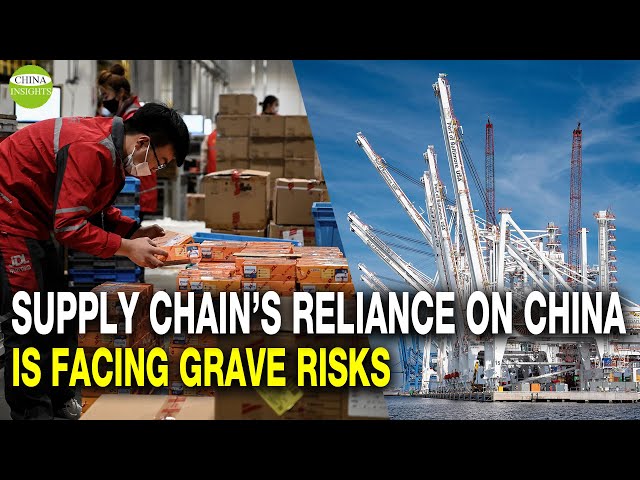
We have not even turned the page of the calendar over for 2022, but the promised increase in rates is already here.Traditionally, the EU-China is the most affected direction with prices going up to $11,900 per FEU, and the same is true for airfreight with early bids averaging $16/kg. With port congestion and demand remaining high, this monstrosity is expected to continue beyond Christmas. The setbacks seem to overshadow any improvement globaly with big companies canceling their calls on the most heavily affected routes. As another means to tackle the problem, some of them start upgrading their network by connecting facilities that one would not think about in the first place.
The rail goes for more collaborations to strengthen its positions this time thanks to a new joint venture among Russia, Hungary, and Austria. In addition, the recent advances are topped with the new China-Europe route. Indeed, the role of railways will only keep increasing especially in light of the upcoming post-Brexit rules regarding transportation. The current state of things demonstrates that many players are simply not ready for the coming changes and there is a risk that old problems might make a comeback. Keep an eye on MAXMODAL for fresh updates.

A reset of the China-Europe’s main rail artery? The new task on the coming year’s “To do” list.
Although rail is not directly affected, while Omicron is marching over China, it still does not mean that this sector is going to be immune to the consequences of potential ports closure. The New Silk Road has surely sparked a lot of hope that it is going to play a key role in the sector’s recovery, however, a close examination has revealed that it is still suffering issues that have been present for years. Some of them include problems with restricted goods regulations, capacity shortages, price instability or flow imbalances. Are we in for a major strategic reset? It mostly depends on the powerplay between Europe and China. Experts say that Europe should take the lead, otherwise it will not be able to stand the competition and China will advocate for the policies that will be beneficial only for it. Finally, another focal point that would make a difference in improving the New Silk Road and its services is the scheduling of trains and the balancing of eastbound and westbound flows. The destiny of the latter is closely tied to China’s future policies regarding subsidies. The government will phase them out by the end of 2023 which is expected to make forwarders focus on quality over quantity, especially in light of congestion experienced this year. Smaller rail terminals will shut down and give room to bigger ones that no longer need government support. Hungary, on the contrary, relies on the aid of the authorities, as it fears the rise of rail freight costs in 2022 due to elevated energy prices. At the same time, Spanish railways have been disrupted by the flood – the line between Madrid and Iran, a gateway of high importance for rail freight to and from the north-west of Europe, still remains closed. On the other side, Port Klang becomes the brother in misfortune where operations have been stopped because of the weather conditions.
In the battle against shipping lines for contracts at reasonable prices, shippers were destined to lose, taking into account the influence of the giants’ on the market. The winners are expected to seal agreements with clients at record figures. They are on track to earn $115 bn to $120 bn in profit with the average of the bids coming in $11,900 per feu on China to North Europe trade. Left-out forwarders are firing complaints about unfair competition claiming that they will no longer find space for their cargo in the new structure created by big lines unless they venture into the less favorable spot market. The current state of the EU law of competition does not live up to the new challenges, thus many advocate for reconsideration of the provisions to make them up to date. Sounds familiar, does not it? The US has been trying to influence the unstoppable shipping lines with the help of FMC, so now it is the turn of the European Commission to step in; otherwise, prices and reliability are going to be at risk of the unprecedented increase of cost of shipping goods, as well as enormous delays in the delivery. The US is already calling big carriers for collaboration and implementation of wiser strategies (e.g. regarding utilization of available terminal capacity on the West Coast). Besides, the kings of this chessboard are not going to slow down on their expansion with MSC placing a $6.4bn bid to buy out Bolloré Group’s African logistics business. For the company, this is a region of strong growth this decade and major developments in the future to strengthen its competitiveness. Apart from conquering new land, companies have significantly increased their spending on ships – both newbuilds and secondhand – thanks to the capacity crisis. The updates report the record amount since 2008 estimated at $147bn.
“Go green or go home” has been the leitmotif of 2021 and as an encouragement for everyone choosing sustainable development, Port Bronka is introducing a 10% discount. It will be applicable for mooring and quay operations. It is especially relevant for shipping companies operating in the Baltic and North Seas and other water areas that are part of the special Emission Control Areas. Lithium-ion battery systems also allow for zero-emissions port visits as well as modern two-stroke engines that cut emissions further.
It must be the tough times that are pushing the statistics of cargo theft higher in the Middle East. 76% of stolen cargo is from warehouse and storage facilities, with high-value goods such as electronics. This poses a big threat to higher volumes of cargo since the economies of the Gulf countries are returning to the pre-pandemic levels. Hence, many organizations are going to strengthen global transport supply chains through the implementation of international standards such as TIR for compliance management and security. The tough reality is also true for Hungary where electricity prices are going up.


With LA and Long Beach still being severely congested, many vessels are heading east. Will the reshuffling help or are we forever stuck in the circle of improvements and setbacks?
The tough context of newly increased rates and challenging negotiations over contracts (as capacity remains extremely tight ahead of holidays) has been forcing shipping lines to find ways to solve problems that would be less costly. For a while, they have been prioritizing import over export by turning empty containers to Asia so they can reload them with higher-yielding import loads to the U.S. As a result, agriculture companies, which are now dependent on foreign markets for profitability, were left behind trying to wait for their turn to unload. In the end, they were not able to break through international markets and demands. Just to illustrate the damage: a shocking 59% of containers left the US ports unattended with goods. However, the shipping lines’ party is not going to last as the American government is determined to tighten its control around the sector and thus it is pushing lines to treat export and import equally. To support this call, it has also proposed players divert their attention to other, less congested ports on the West Coast. East has also become the alternative – the updates show that imports to East/Gulf Coast ports rose 9.9%, proving that indeed many container ships are now escaping LA, but will it help improve the situation? No matter the efforts put to reduce congestion at Long Beach and Los Angeles, it seems like they are only adding more disruptions. The problem lies in the continued influx of ships that are overwhelming the capacity of the ports no matter on which coast they are located. Consequently, it is affecting the rates, and many believe that they will decrease only after ships will return to Asia. In turn, more realistic forecasts predict that contract rates are destined to be record-high in 2022 as there are already signs of it with China to North Europe early bids averaging $11,900 per FEU. The same will be true for airfreight where unprecedented momentum has hit the transpacific direction. The sky is the limit they say, so the spot rates reach almost $16/kg this week. With port congestion and demand remaining high, this monstrosity is expected to continue beyond Christmas.
Reshuffling the lines is not only American ports’ thing. The same is happening in the EU as congestion fever goes on. Felixstowe, Rotterdam, and Antwerp remain the black sheep with a high percentage of canceled calls. Companies report that as soon as they see pockets of improvements, they face new setbacks shortly thereafter. The Asian ports that are on the “omitted” list are no better. CMA CGM has taken Yantian and Hong Kong out of the Southbound rotation, while Port Louis and Honk Kong have left the Northbound rotation. To tackle the problem, some companies upgrade their intra-Asia network. MSC goes for Russia’s Far East by introducing a call to Petropavlovsk-Kamchatsky. The new service now connects Russia, north China, and South Korea. The company is also planning to expand its Asia – US Santana service. In the meantime, Pakistan is following a famous “better late than never” proverb and is going to develop its containership fleet. However, it is still uncertain how big it will be as none of the market researches has been conducted yet.
Russia becomes an important part of the network riddle not only in the shipping sector but rail too. The New Silk Role has already become the Holy Grail for development, so no wonder that more players hop on it. A joint venture consisting of Russia, Hungary, and Austria will take the role of freight forwarder and logistics provider on the famous route. The initiative is particularly important for Hungary where The East-West Gate terminal could in theory be the largest intermodal terminal of Europe, if infrastructure upgrades in Hungary are completed as planned. Meanwhile, rail is increasing its role in the UK where Tesco starts including refrigerated goods for the first time in its rail service, as it seeks to improve its environmental footprint. However, the improvement is overshadowed by the looming disaster regarding Brexit border delays. The grace period that was giving importers to prepare for full costs that are coming up thanks to the new policy is reaching its end and nobody has used it accordingly. The truckers are not ready for new rulesand currently, everyone is trying to find a scapegoat instead of looking for a solution. Is not it too late? In addition, UK van drivers will be required to get new international goods vehicle operating licenses if they want to travel back and forth to the EU in 2022. The drivers’ shortages have been a very painful issue in the UK for months and many fear that the problem will escalate again.


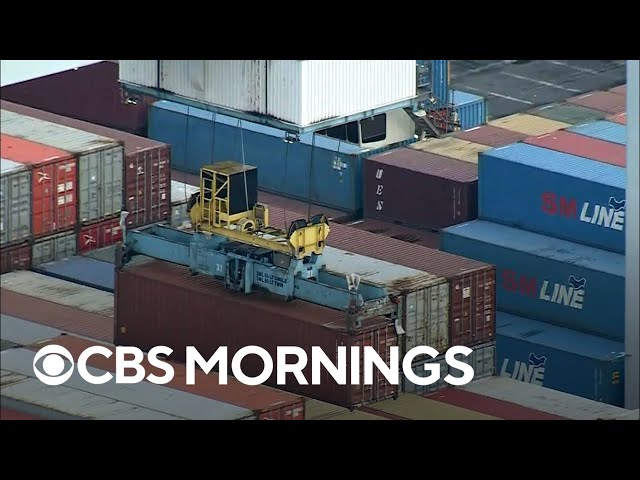
And just like that – the hopes for spot rates decline divert.
For a while, after spot rates plateaued, it seemed like a decline was lingering over the horizon. However, these days show that the shipping sector is up for a new spike. According to the new data, Asian rates were up 1.8% to 4,811 points, reversing previous declines. Experts comment that with growth in consumer spending, container rates and containership charter rates will remain elevated at least until Chinese New Year 2022. Shipping lines are saluting as for them it is good news – they are on track to earn a record $115bn to $120bn in profit in 2021. They also do not stop further expanding. Wan Hai Lines, the leader of box facilities efficiency, has broken its piggy bag with $320m inside for more for secondhand ship acquisitions. It now holds the 10th position in the rank of the largest container lines.
In the meantime, it has turned out that the reports on the state of congested ports in California might have been exaggerating the improvements. There are currently 101 boxships spreading out across thousands of miles of North American coastline, stretching deep into Mexico. The progress has been shadowed by the increasing dwell times at the major ports globally. In Europe, Rotterdam is reported to have an average 6.76 days export dwell time. Having assessed the potential damage, the port’s authorities are planning to invest in the facilities to boost competitiveness. The substance to this drive will be derived from the agreement on port tariffs for the next three years. The indexation of the port tariffs for 2022 amounts to 2.5%. These will then amount to 2.4% in 2023 and 2.3% in 2024. In addition, there will be a new inland port dues system amid to improve cybersecurity, especially regarding information exchange. While it is difficult to unload containers due to congestion, the weather also brings disruptions. In the Egyptian port of Alexandria, the storm caused the loss of three containers and some other boxes were dislodged and damaged during transit. A similar disaster took place in Kentucky where the train was derailed by a series of tornado storms. Normal operating procedures call for an immediate stop in the face of a tornado warning.
Italy hops on the train of rail development alongside its neighbors to push local products further in Europe. CLdN Cargo, operating directly from Italy, will focus on further developments partly thanks to the recent breakthrough of Swiss Alptransit rail infrastructure. It will also work on reducing its carbon footprint by investing in sustainable multimodal transport like rail and ro–ro shipping. Other players are also looking for ways to boost efficiency and avoid political clashes. The new China-Europe route will bypass Poland and Belarus and provide a rapid transit time (it is cut by half compared to the sea freight.) It will connect Beijing with Hamburg and other key western European freight hubs via St. Petersburg and become a needed alternative to ocean and air. It is extremely crucial, taking into account predictions for airfreight. The cargo charter demand is destined to remain strong in 2022. Preighters will stay as well because companies do not expect that passenger capacity will get back to the market that quickly. Finally, Omicron and potential future variants of the virus will have a global effect on capacity as they are going to delay a return to pre-pandemic international travel. All these factors are a clear sign for everyone who was looking for relief in the seasonal first quarter that it is most likely to be postponed.