

Hello, everyone. If you need the assistance of the freight forwarder in China, please do not hesitate to contact me, I will try my best to help you! WhatsApp:8615616129031


The fleet race
The container shipping industry faces increasing pressure as hopes for a robust peak season diminish. The process of reducing inventory levels has lasted longer than anticipated. Consequently, shipping lines are facing challenges in implementing General Rate Increases (GRIs). The inability to clear out ageing inventories has led to a surplus of capacity, putting downward pressure on freight rates. Ageing inventories refer to goods sitting in warehouses for an extended period, often due to supply chain disruptions and delays.
There is an increasing strain on consumer demand. The decrease in Trans-Pacific shipping capacity is not as significant as previously projected. Spot rates experienced a temporary increase in mid-April but have since declined and continue to be very low (e.g. Drewry’s WCI assessment for Shanghai-Los Angeles was at $1,823 per FEU last week.) Companies are now forced to look for alternative ways to manage capacity and improve rate levels.
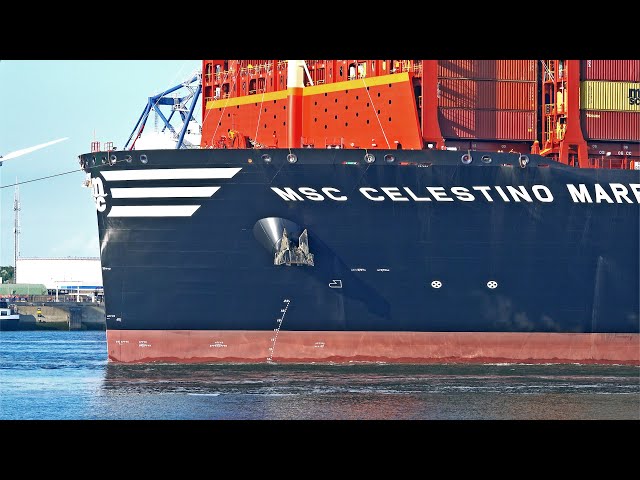
Yet, companies like MSC are not planning to slow down on fleet expansion. The company has become the first container shipping carrier to have a slot fleet of 5 million TEUs. It has outrun its competitor CMA CGM whose fleet capacity amounts to 3.5m TEU. Nevertheless, CMA CGM has outrun Maersk by the size of the existing fleet due to the fact that Maersk is now on vessel size optimization and increased operational efficiency rather than ordering new vessels.
Even though shipping lines choose aggressive strategies of expansion and winning market share, experts remind them that it does not mean that they need to underestimate forwarders and see them as inferior. Forwarders play a crucial role in the supply chain by bringing business to shipping lines. In the challenging market context that we see now, freight forwarders can contribute to increased volumes and efficiencies for shipping lines.
Routes, rates & services
- South Korea is expanding its container shipping connections with Russia to boost trade and economic relations. Dong Young Shipping will extend its shuttle service between Busan and Vladivostok by adding a call at the port of Donghae.
- Maersk has announced the launch of an expanded service connecting the Middle East with West Africa. The independent string (the Al Maha), will connect ports in UAE, Saudi Arabia, Oman, Qatar, Egypt, and Morocco, and replaces Maersk’s ME3 and ME4 networks.
- AD Ports Group and Aramex will establish a non-vessel operating common carrier (NVOCC) as part of the expansion strategy. This move will allow AD Ports to provide a broader range of logistics services, including freight forwarding and container shipping, in addition to its existing port operations.
- Kazakhstan continues to witness a steady increase in freight volumes along the Middle Corridor where in the first months of 2023, there has been a 22% increase in imports. Kazakhstan's efforts to enhance rail connectivity and streamline customs procedures have resulted in a positive impact on trade flows, attracting more shipments and solidifying its position as a crucial link in the international logistics network.
- Track access charges in the Netherlands are set to increase once again in 2024 by 10.5% based on inflation, posing challenges for rail freight operators. Experts are concerned by the upcoming financial burden on rail freight companies and expressed the need for a more sustainable pricing structure to support the growth of rail freight in the Netherlands.
- Contecon Guayaquil has welcomed ZIM's Colibri Express service. ZIM’s new service (ZCX) rotation will be San Antonio (Chile), Callao (Peru), Guayaquil (Ecuador) – Cartagena (Colombia) – Kingston (Jamaica) – Philadelphia – Miami, Kingston (Jamaica) – Buenaventura (Colombia – Guayaquil (Ecuador) – Callao (Peru) – San Antonio (Chile).
Other
- Lobbying groups within the trucking industry in the United States are pushing lawmakers in different directions, creating divisions on key issues. ATA is advocating for measures to increase safety, such as mandating advanced safety technologies and stricter training requirements. On the other hand, OOIDA is focused on opposing regulations that it believes would harm small trucking businesses, including efforts to regulate trucker wages and increase insurance requirements.
- ONE and Wan Hai Lines have reached settlements with the FMC regarding alleged violations of the US Shipping Act. Both companies have agreed to pay fines as part of the settlements.
- Strong winds at the Port of Koper in Slovenia caused disruptions to rail operations. The port was suspended.
- Iran is set to open a new rail route that will unlock the Russia-India corridor in July. The new section will connect the Iranian Caspian seaport city Bandar Anzali and Rasht.
- A rail strike in Sweden was called off at the last minute because of the reached agreement to increase wages by 7.4% and introduce the new regulation that makes it more difficult for employers to carry out late schedule changes.
- Europa Terminal has launched a capacity boost project to enhance its capabilities. New container cranes will be installed as part of the expansion to improve operational efficiency.
- The Port of Mobile has welcomed a new container depot, further expanding its capabilities and services. The depot, operated by Container Maintenance Corporation, offers storage, repairs, and maintenance services for shipping containers.
These are only several changes that occurred in more than 250 bn freight rates across 25 million routes with more than 1 million market players. Want to share some news about your company, services, and routes? Just post them on MAXMODAL, a multimodal network that digitally connects routes and rates worldwide to automate sales and operations across container transportation & logistics industry. Join to innovate.



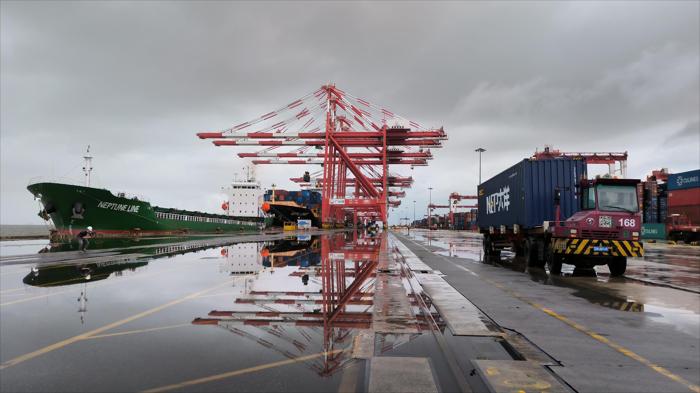
NEPTUNE LINE.
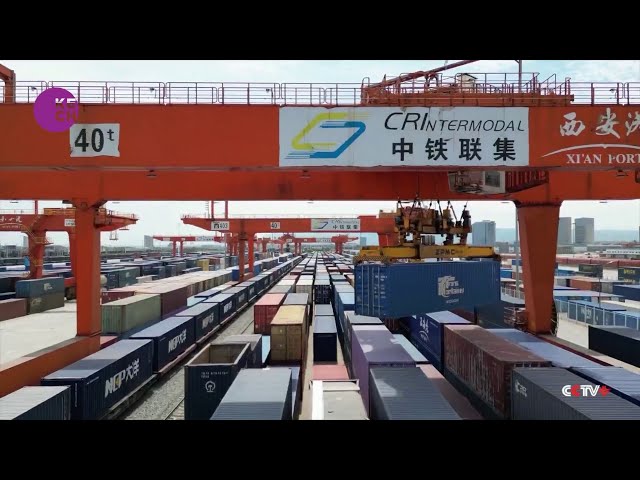
Taicang- Vostochny-Moscow/Novosibirsk/Yekaterinburg
4 Shipment per month
Monkey business
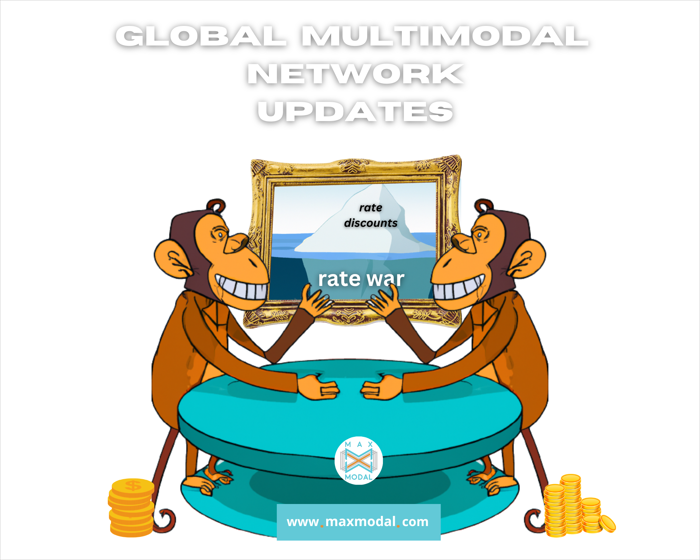
2M Alliance has announced a "go-slow" strategy for its Asia-Europe trade, in an effort to manage the ongoing congestion and delays at major ports in the region. The strategy involves reducing the number of sailings and slowing down vessel speeds, which is expected to help decrease congestion and improve schedule reliability. The ongoing challenges facing the container shipping industry are also reflected in the uncertainty in spot rates. While spot rates on major trade lanes have been stuck in a range in recent weeks, Drewry’s WCI is expected to remain unchanged over the coming months indicating the fragility of the situation. The longer outlook depends on how the industry will address the challenges. For now, companies’ desire to maintain market share and keep vessels full (some carriers are offering steep discounts on shipping rates in an effort to attract customers) will lead to the rate war primarily focused on the Asia-Europe trade, where there is intense competition and overcapacity.
German rail workers have gone on a 50-hour strike, which is expected to disrupt rail traffic across the country. The strike is being led by the EVG union, which represents around 160,000 rail workers and is in response to ongoing disputes with rail operator Deutsche Bahn over pay and working conditions.
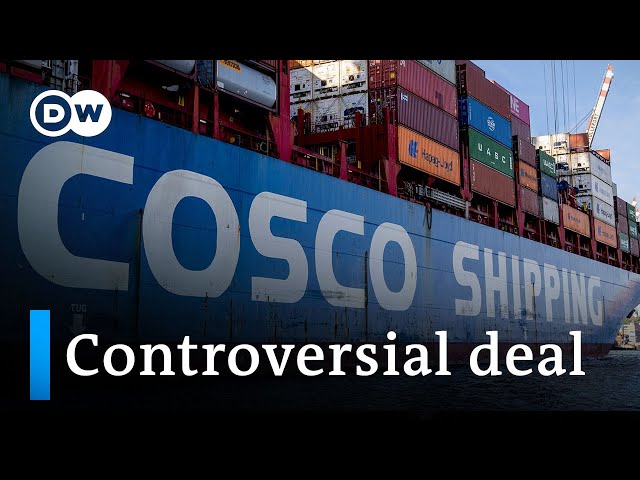
The proposed acquisition of a 24.9% minority stake in China's Cosco Shipping Ports by CTT Holdings has received further regulatory approval. This development is expected to concentrate the flow of goods between Asia and Europe, which is significant considering China’s status as Germany’s and the Port of Hamburg’s primary trading partner.
Routes & services
- The US trucking sector is facing a number of challenges: a shortage of drivers, rising fuel costs, and supply chain disruptions. Despite a recent increase in demand, the industry is struggling to keep up with capacity, leading to higher prices for shippers. The solution is to address the problem of labor shortage and invest in technology.
- Ukraine has joined Lithuania's free rail program, which allows shippers to use Lithuanian Railways' network to transport goods to other European countries without paying additional fees.
- A new rail connection has been established between Gliwice Port in Poland and Marckolsheim in France.
- The trade between Russia and China has increased by 41.3% in the first quarter of 2023, with rail transport playing a significant role in this growth. China's Belt and Road Initiative and Russia's Trans-Siberian Railway have helped to facilitate this increase.
- Rail Cargo Group (RCG) has launched a new rail connection between Vienna and Kyiv.
- China and Pakistan have agreed to include Afghanistan in the China-Pakistan Economic Corridor (CPEC), a major infrastructure project under China's Belt and Road Initiative. The move is part of China's efforts to expand its economic influence in the region and strengthen its ties with neighboring countries.
- China-Europe rail freight services for importing meat products have resumed after a temporary suspension due to COVID-19 restrictions.
Other
- The tank container market has seen a revival in demand post-pandemic, driven by increased trade in chemicals, foodstuffs, and liquefied gasses. This trend is likely to continue in the coming years, with the tank container industry expected to see continued growth as more shippers recognize the benefits of using tank containers for transporting liquid and gas products.
- Evergreen has come under scrutiny over complaints from shippers regarding delays and service disruptions. The complaints follow a series of incidents in the shipping industry, including the aftermath of Suez Canal blockage and ongoing port congestion issues.
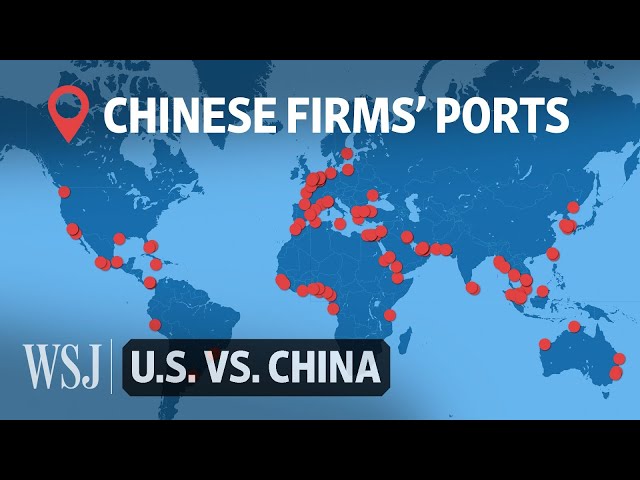
- A new bill has been introduced in the US Congress that aims to address concerns over Chinese influence in US ports and potential cyber threats. The bill would establish a new task force to investigate the potential security risks posed by Chinese investment in US ports, as well as providing additional resources for cybersecurity measures.
- The Georgia Ports Authority (GPA) has received environmental approval for the construction of a new rail hub near Gainesville.
- US import cargo volumes have rebounded (a 5% increase from February 2023), but are still below 2022 levels. The recovery is fragile and uncertain, with ongoing port congestion issues, supply chain disruptions, and rising costs.
- CMA CGM will acquire a controlling stake in Bolloré Logistics in a deal worth $5.5 billion. It will strengthen CMA CGM's position in the logistics industry and allow the company to offer a more integrated and diversified range of services to its customers.
These are only several changes that occurred in more than 250 bn freight rates across 25 million routes with more than 1 million market players. Want to share some news about your company, services, and routes? Just post them on MAXMODAL, a multimodal network that digitally connects routes and rates worldwide to automate sales and operations across container transportation & logistics industry. Join to innovate.