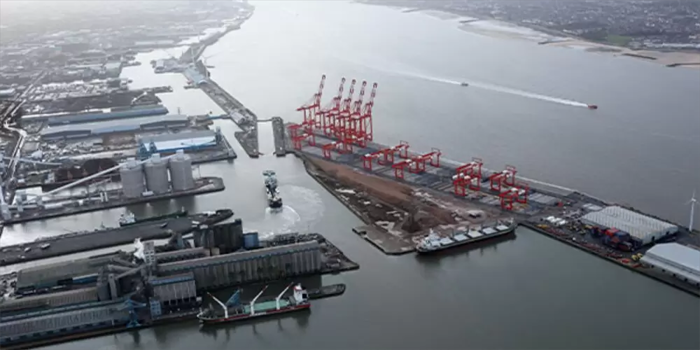
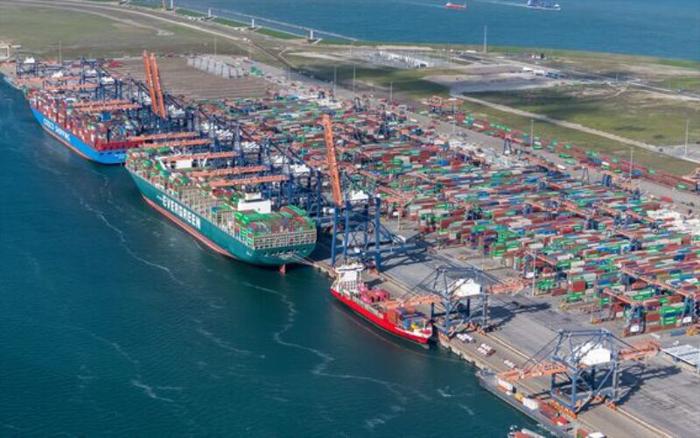
Malta Freeport Terminals proudly welcomed the MSC Benin, a state-of-the-art Neo-Panamax container ship built in 2025 by New Times Shipbuilding in China.
The vessel's distinctive vertical windbreaker-style bow reduces drag, enhances fuel efficiency, and provides better handling in rough seas making it highly suited for long-distance voyages.
Equipped with a dual-fuel LNG engine, MSC Benin has been designed with performance, sustainability, and environmental responsibility in mind.
Built to meet stringent IMO standards, the ship delivers tangible operational benefits, especially during slow steaming, where reduced speeds help conserve fuel and cut emissions.
During its stop at Malta Freeport, the MSC Benin berthed at Terminal Two North, where four quay cranes completed 1,312 discharge operations and 1,426 container load moves.
The vessel operates on MSC's California Service, which primarily transports refrigerated containers between South America and Europe.
Its rotation includes calls at Gioia Tauro, Civitavecchia, La Spezia, Fos, Valencia, Sines, Panama, Rodman, Lazaro Cardenas, Manzanillo, Los Angeles, Seattle, Oakland, Colon, Cristobal, Malta Freeport, and back to Gioia Tauro.
Measuring 260 meters long and 46 meters wide, with a capacity of 8,496 TEUs including 1,300 refrigerated plugs the MSC Benin represents the latest advances in shipbuilding technology.
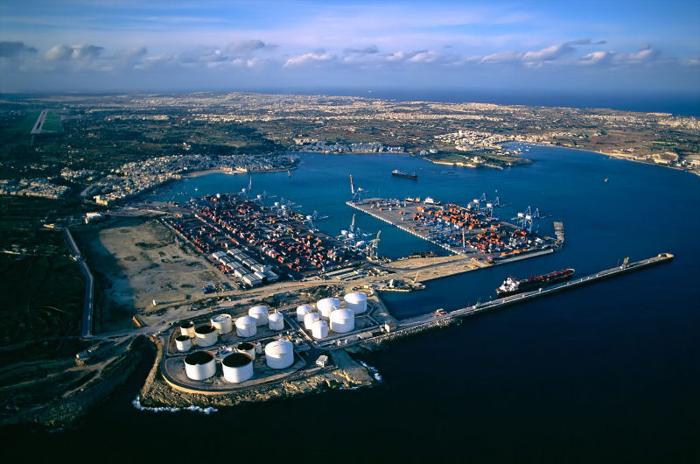

Hamburger Hafen und Logistik AG (HHLA) posted a strong performance in the first half of 2025, despite a weak German economy, geopolitical tensions, and uncertainty from US trade policy. Revenue rose 16.3% year-on-year to €884.5 million, while EBIT jumped 34.8% to €79.4 million.
Moreover, container throughput increased 7.9% to 3.17 million TEU. The Hamburg terminals handled 3 million TEU, up 6.9%, driven by strong Far East volumes, particularly from China, and growing feeder traffic within Europe. International terminals saw even sharper growth of 28.7%, supported by the resumption of operations in Odessa and gains at HHLA PLT Italy.
The Intermodal segment delivered standout results. Transport volumes climbed 19.6% to 997,000 TEU, with rail traffic up 20.2% and road volumes up 16%. Revenue for the segment rose 22.2% to €400.5 million, and EBIT increased 23.1% to €48.2 million.
HHLA's real estate business in Hamburg's Speicherstadt and fish market areas remained almost fully occupied. Revenue edged up 1.8% to €23.4 million, though EBIT dipped 3.4% to €6.7 million.
CEO Angela Titzrath credited the results to HHLA's strengthened European network and integrated logistics solutions. "Our performance shows we are well-positioned to navigate a volatile environment and continue our growth," she said.
The company has narrowed its full-year EBIT forecast to €195-215 million for the Group, and €180-200 million for the Port Logistics subgroup.
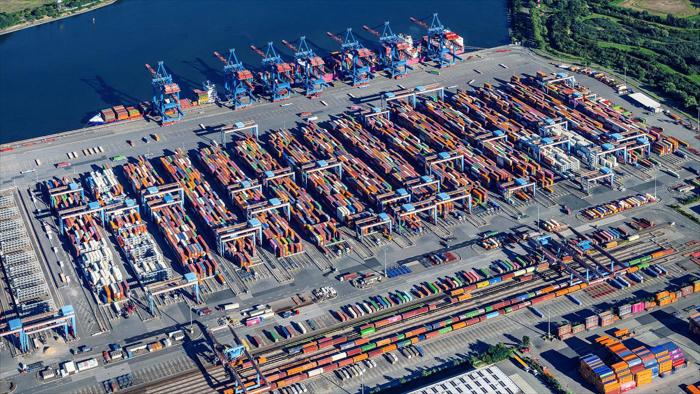

July 2025 was the busiest month in the 117-year history of the Port of Los Angeles, with throughput reaching 1,019,837 TEUs, an 8.5% increase over July 2024.
The surge was driven by retailers and manufacturers accelerating shipments amid concerns over potential tariff increases later this year.
Gene Seroka, Executive Director of the Port of Los Angeles commented that in July, terminals were packed with ships, yet cargo moved without delays thanks to the dedication of our longshore workforce, terminal and rail operators, truckers, and supply chain partners.
Dr. Zachary Rogers, Assistant Professor of Supply Chain Management at Colorado State University and a lead author of the Logistics Managers Index, joined Seroka during the monthly briefing to discuss the broader impacts of tariffs on transportation, warehousing, and inventory levels.
In July, loaded imports totaled 543,728 TEUs, up 8% year-on-year and setting a new monthly import record for the port. Loaded exports reached 121,507 TEUs, a 6% increase from 2024. The port also processed 354,602 empty containers, up 10% from last year.
From January through July 2025, the Port of Los Angeles handled 5,975,649 TEUs, representing a 5% increase over the same period in 2024.
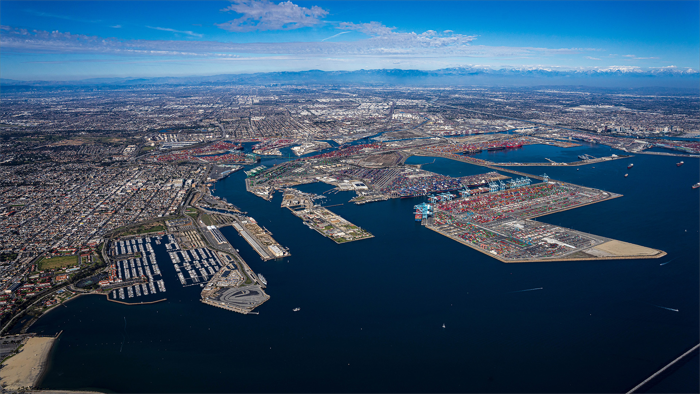

The Port of Rotterdam Authority has chosen NPM participation Conclusion as its digital partner to manage and further develop its online environment, including the corporate website and a reservation tool for port users.
This platform serves thousands of captains, businesses, residents, and government agencies on a daily basis.
Following a successful tender, Netvlies part of Conclusion oversaw the technical transition.
Over the coming years, the focus will be on enhancing scalability, strengthening security, and integrating data streams. The customer portals already facilitate berth applications, permit requests, and real-time alerts on sailing conditions, among other services.
As the port is part of the Netherlands' vital infrastructure, stringent requirements are set for digital security and operational continuity.
To meet these standards, Netvlies provides monthly security reports, proactive threat assessments, and round-the-clock monitoring. The platforms' modular design also ensures they can be easily adapted to evolving needs and regulatory changes.
According to the Port of Rotterdam Authority, partnering with Conclusion reinforces the port's digital capabilities.
Jochem Vlemmix, founder and director of Netvlies, said that by combining digitalization with sustainability and innovation, the port sets a strong example.
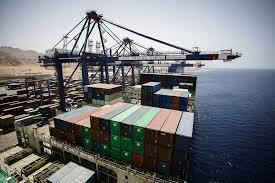
Aqaba Container Terminal (ACT) has completed the removal of its second gantry crane, wrapping up the final phase of a major modernization project.
The removal frees up valuable berth space, allowing the terminal to operate more efficiently. With seven modern ship-to-shore (STS) cranes now in service, ACT can handle vessels faster and cut down on berth waiting times. Additionally, ACT can speed up cargo turnaround for customers. The upgrade is expected to make vessel calls more predictable and keep shipping schedules on track.
ACT has also tied the modernization to its sustainability goals. So, ATC will recycle all dismantled equipment.
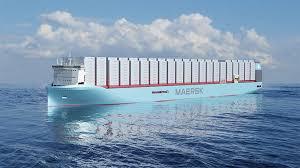
Maersk posted solid results in the second quarter, reporting a 2.8% rise in revenue and EBIT of USD 845 million. While slightly down from the previous quarter, the figures remain on par with last year, a noteworthy result given ongoing geopolitical tensions and rate pressure across the industry.
Stronger demand outside North America and steady performance across all business units led Maersk to raise its financial guidance for 2025.
The Ocean segment delivered a solid performance despite rate volatility and demand swings. Volumes rose 4.2% year-on-year, largely thanks to increased exports from Asia. Maersk also fully implemented the Gemini Cooperation in June, achieving reliability scores above 90% within the first few months — a key milestone.
Logistics & Services saw continued improvements in profitability and operations. EBIT jumped 39% to USD 175 million, with the EBIT margin improving to 4.8% from 3.5% a year ago. Strong cost control and increased productivity drove the gains.
Terminals had another strong quarter. Volume growth reached 9.9%, supported by additional Ocean volumes through the Gemini network. Revenue hit record highs, and EBIT surged 31% to USD 461 million, backed by robust operations and joint venture contributions.
Across all segments, Maersk emphasized tighter cost discipline and ongoing efficiency efforts as key drivers behind the Q2 results.
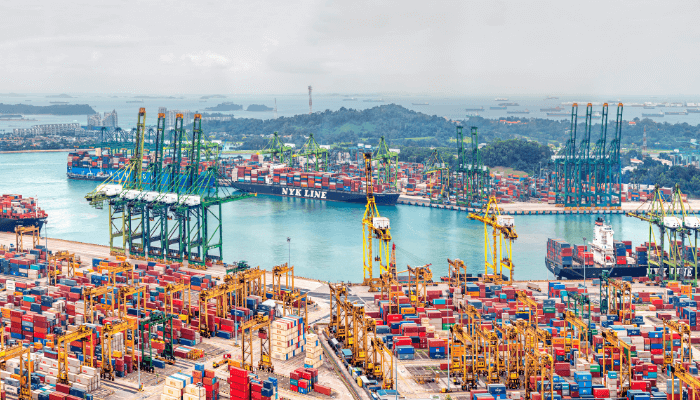
French Minister for Transport Philippe Tabarot and Singapore's Acting Minister for Transport and Senior Minister of State for Finance Jeffrey Siow signed an Enhanced Maritime Partnership Agreement.
The agreement builds on an existing partnership established in 2021 and aims to further deepen maritime collaboration between the two countries.
This enhanced partnership focuses on five key areas: maritime decarbonisation, digitalisation, cybersecurity, innovation, and training.
As part of the agreement, Singapore and France will launch joint pilot projects in collaboration with industry stakeholders. A bio-methane bunkering trial, involving shipping giant CMA CGM, will be conducted in Singapore as a key milestone of the partnership.
On digitalisation, MPA will collaborate with HAROPA PORT and the Port of Marseille-Fos to enhance port call optimisation and digital processes. This includes trials with CMA CGM vessels to improve ship-to-shore data exchange, streamline port clearance procedures, minimise paperwork, and boost data accuracy and efficiency using internationally recognised standards.
The agreement also promotes maritime innovation and entrepreneurship, encouraging maritime startups, companies, and investors from both nations to participate in platforms such as the PIER71*™ Smart Port Challenge, ZEBOX, and Landing Pad to drive cross-border innovation and collaboration.
Teo Eng Dih, Chief Executive of MPA, said this partnership represents a significant milestone in deepening maritime ties between Singapore and France, while, Eric Banel, Directorate General for Maritime Affairs, Fisheries and Aquaculture (DAMPA), added that France and Singapore see this partnership as strategically vital to shaping the future of green shipping, digital ports, and resilient maritime systems.
Associated British Ports has successfully leased a significant industrial unit at King George Dock, Hull, to Mitsubishi Chemical UK Limited, a subsidiary of the global Mitsubishi Chemical Group, one of the world's leading chemical producers.
The new lease comprises 158,000 sq ft of storage space alongside a 53,000 sq ft canopy, located in a prime logistics position overlooking the Humber Estuary, adjacent to the Hull Container Terminal.
This strategic location enables efficient cargo handling and supports seamless import operations.
Andrew Dawes, Regional Director of ABP Humber, commented that this partnership highlights a commitment to supporting business growth and providing flexible, high-quality industrial infrastructure.
Greg Lacey, Head of Property (Humber), added that port-based warehousing offers a distinct strategic advantage, providing direct access to key logistics networks and reducing transportation costs.
Mitsubishi Chemical UK Limited will use the facility to support its contractor, Fluor Corporation, during the development of the SoarnoL ethylene vinyl alcohol copolymer facility at Saltend Chemicals Park in Hull.
On this, Michael Curtis, PUMA Lead Construction Delivery Manager at Mitsubishi Chemical Group, stated that leasing this new facility at the Port of Hull is a major milestone in their long-term investment in Hull, Saltend, and the wider Humber region as it supports the doubling of the production capacity and enhances the ability to meet growing global demand.
Matson reported net income of US$94.7 million, or US$2.92 per diluted share, for the quarter ended June 30, 2025, compared to net income of US$113.2 million, or US$3.31 per diluted share, for the same quarter in 2024.
Consolidated revenue for Q2 2025 was US$830.5 million, down from $847.4 million in Q2 2024.
Matt Cox, Matson's Chairman and Chief Executive Officer, commented the second-quarter financial performance exceeded expectations despite challenges from market uncertainty, tariffs, and global trade volatility. He added the onset of tariffs in April significantly reduced freight demand in China, but from mid-May onward, the Transpacific services saw a rebound in demand following the U.S. and China's agreement to temporarily reduce tariffs.
He also noticed shifts in production across Asia as the customers adapted to tariffs, resulting in higher container volumes outside China compared to the first quarter.
Mr. Cox continued that the domestic trade lanes, we saw higher volumes in Hawaii and Alaska compared to last year, but lower volumes in Guam.
The company expects continued uncertainty related to tariffs, global trade, regulatory measures, and geopolitical factors.
Assuming these conditions remain stable, Matson anticipates higher operating income for Ocean Transportation for the full year compared to the guidance provided in May, though still moderately lower than last year.
Logistics operating income for the full year is expected to be in line with the previous year.
For Q3 2025, Matson expects Ocean Transportation operating income to be significantly lower than the US$226.9 million achieved in Q3 2024, primarily due to lower freight rates and volume in the China service, compared to the higher demand levels from last year's third quarter and expectations of a muted peak season.
For Logistics, operating income in Q3 2025 is expected to be comparable to the $15.4 million achieved in the same period last year.
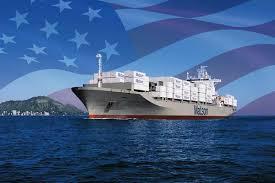
The Yeoman Bank has made its final call at the Port of Liverpool, ending more than 30 years of service.
The self-discharging bulk carrier is operated by Holcim UK. It has delivered more cargo to Liverpool than any other vessel. Since 1991, it visited Royal Seaforth Dock 195 times. In total, it carried almost seven million tonnes of granite aggregate.
"The Yeoman Bank has been a true workhorse and a constant presence at the Port of Liverpool over the last three decades. Its final sailing really is the end of an era," said Phil Hall, Port Director for Mersey Ports, Peel Ports Group.
The stone came from Glensanda quarry in Oban, Scotland. It supported major UK projects, including Terminal 2 at Manchester Airport. The ship was key to Peel Ports' "virtual quarry" setup. It used overhead conveyors to unload, with no extra handling.
"The Yeoman Bank has been more than just a vessel; it has played a vital role in our supply chain for over three decades. Its consistent service into the Port of Liverpool has supported the delivery of construction materials to some of the UK's most significant infrastructure projects," commented Simon Turk, Director, Holcim UK Marine Logistics. Built in Greece in the 1970s, it was later converted in Norway. The vessel joined Foster Yeoman's fleet in 1991.
It spent nearly all its career serving Liverpool. Its retirement marks the end of a remarkable run.