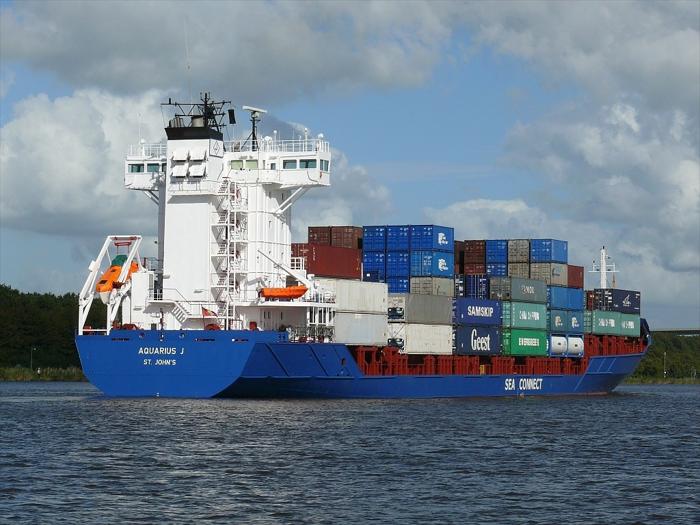

Hurricane Ida has stormed into the US as an uncontrollable whirl bringing all the facilities in the south to chaos. More rate increases are on the way, so it is time to not only get an umbrella, but also tighten the belts.
While it is still uncertain, whether hurricanes are indeed named after female names to awake more fear or not, it is certain the effects brought by hurricane Ida last week will be devastating for the US supply chains. The southern states are still under emergency alert trying to recover from floods and widespread infrastructural damage. Several ports, including New Orleans, have some of their operations shut down which will bring more delays.. Railway terminals have faced the same misfortunate destiny, and guess who will feel the financial aftermath the most? Customers. Experts have already warned that apart from getting their supplies late, consumers will experience increased costs. On the brighter side, the Port of New Orleans has awarded a $4 million contract to HDR Engineering for the new Louisiana International Terminal container facility that might be a live-or-die kind of move in the light of severe weather conditions
Will Groundhog Day ever end or is this contrapasso going to be eternal? Luckily, we are not in Dante’s Inferno, and the congestion is not here to stay – it is just the relief might come no sooner than 2022. Several factors contribute to a postponed date: good ol’ capacity shortages, spike in imports generated by the peak season, and the fact that Chinese factories remained opened during the holiday week, which has reduced the number of blank sailings this year, aiding the congestion.
Ocean carriers are already familiar with this crisis starter pack, hence they are growing more confident in their abilities to keep benefiting from the current situation by extending vessel charters with containership owners for longer periods at much higher daily hire rates. However, there is still a seed of doubt that they are not as powerful as they wish to be. Despite that they seem to have all the trump cards, carriers sense a “line in the sand” that some charterers were now not prepared to cross, in terms of charter lengths. Of course, when your ships are bottled at the blocked ports, how willing are you to pay for such conditions? Hardly. As a result, carriers are beginning to question the wisdom of adding extra loaders to trades where there are already heavily congested terminals. Anyway, for now, the charter market is still the hottest – 1,700 TEU ships are now able to command $51,000 a day for six -to 12-month contracts.
It all most seems like the increasing rates are equivalent to fever: going further up with no paracetamol in the first aid kit. It is a vicious circle of constraints driving them up and vise versa. Among the recent updates, CMA CGM has published a series of freight rate increases for shipments in Europe, the Mediterranean and Africa, which will be applicable from September and October. In the second part of this month, it will also implement another FAK rate increase from Pakistan to all North European, Mediterranean and North African base ports. The difference between old and new rates varies from $1000 to $1500.
Perhaps, the pressure might ease up on rail this week? It is controversial – on the one hand, labor unions in South Korea have reached an agreement with HMM about wage negotiations, since the company could not afford another possible disruption. Meanwhile, on the other hand, the strike in Germany is not over yet. Although Deutsche Bahn tried to object to a continuation of strikes through court, it has failed. Has Germany become a black ship all of a sudden? Despite the turbulence on the rail, its intermodal facilities are up and running. The new advancement concerns MSC’s new service connecting Turkey with the German town Ludwigshafen since the country is a great forepost for the rapid, high quality door-to-door services. No wonder, since the situation in ports is still gloomy, intermodal holds one of the biggest potentials and Asian direction is no exception – China speeds up and establishes a new trade route via Myanmarfollowing the successful arrival of goods at Chengdu International Railway Port.
Asia pushes through container transportation as well with Vietnam boosting its throughput in its container sector despite anti-COVID measures. Short-term relief is awaiting India as well thanks to the government’s upcoming measures. In Europe, container transportation is also going towards the light because of Bureau Veritas that has developed in-depth technical guidance to provide safe and practical pathways for operators carrying containerized cargo in bulk carriers.
Another horseman of the crisis, the post-Brexit framework of the EU – the UK relations is not contributing to the solution of the drivers’ shortages. There is now a risk of the food simply not being delivered due to the new regulations. One of the proposed ways out is a form of a digitally enabled Facilitated Movement Scheme that meets all of the EU standards. As for the new workforce, there have been suggestions to reduce working age and attract more women into the sector.
Although the EU has rather recovered from the July floods, there are still consequences of it – the logistics industry is very sensitive, so the new surcharges announced by Hapag-Lloyd can become a permanent fixture on Europe’s inland waterways. There has to be some communication, otherwise, rates wi


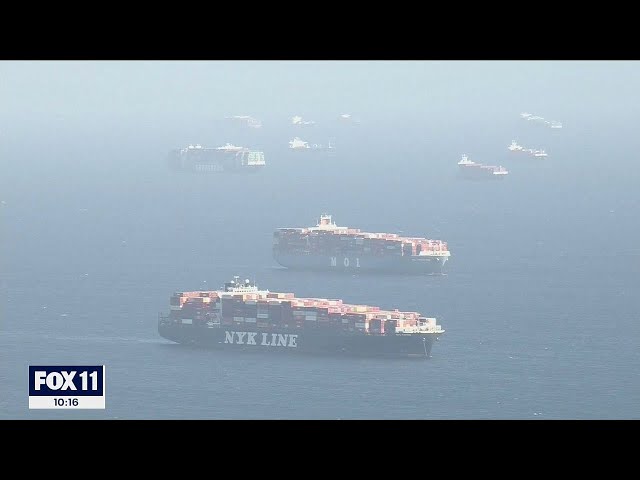
Moving containers on the fleet of bulk carriers may not be a panacea but at least it is a good band-aid straight from the first aid kit.
It seems like there is light at the end of the tunnel when it comes to alternatives providing a much needed support for supply chains for the shippers with urgent requirements. Bulk containers are the answer. The dry bulk owners have started to move containers on the dedicated fleet of bulk carriers, and, although it is not as efficient as companies would like it to be, it provides a considered relief to supply chains. Moreover, bulk carrier owners are eager to accept some high-paying containers. The dearth of cellular container tonnage in the charter market has also forced many companies to tap into the multipurpose (MPP) and open hatch bulk carrier markets to cover their needs this year.
Airfreight capacity remains tight as more restrictions are reinforced in China and congestion does not leave Bangladesh (alongside with continuous strike spree). As a result, the major retailers find themselves the hovering-up capacity to get their autumn/winter ranges to market, leaving smaller firms floundering. More shipping delays are expected in the future, so air forwarders should not rely on the marine sector and expect the situation to improve any time soon. On top of that, thanks to the ground operations in Shanghai, there has been a 10% drop in volumes on China to Europe direction in the last two weeks of August, while westbound capacity was reduced by 18%. Consequently, spot rates for air increased by nearly 20% in the last week of August compared to the last week of July.
There used to be high hopes for intermodal to become the most efficient alternative for transportation but as the situation unfolds, the future of it does not seem so bright due to the maxed-out trucking market. CSX will restrict the number of domestic containers it accepts from Chicago. Although intermodal is more competitive from a cost perspective, the deterioration in service levels is undermining its appeal. For everyone, all of this spells more misery ahead as the peak season shifts into high gear.
Anyway, it is too early to bury rail despite another upcoming strike in Germany. In the UK, British railways have drawn the audience’s attention by proving a possible solution for the drivers’ shortage. The concept of trunk operations by rail between efficient and conveniently sited hubs can be possible thanks to capacity released by pandemic-reduced passenger travel, and rolling stock now available for conversion. It is something the railway industry has not embraced for a long time, but experts say it is something that is about to change.
The crisis has demonstrated that expansion and joint efforts, perhaps, could be one of the possible ways to tackle the challenges. Thus, HMM, SM Line Corporation, Pan Ocean, Sinokor Merchant Marine, and Heung-A Line have started joint intra-Asia services under the K-Alliance engineered by the Ministry of Oceans and Fisheries. Although the latter was recently concerned about unfair competition of the lines, the voluntary membership in the alliance makes it better.
IKEA joins Walmart and Home Depot in the attempt to take matters into its own hands, revealing the decision to buy boxes and charter ships amid to address the growing port congestion around the world. Some experts believe that these giant shippers will have a good look at terminal handling charges that potentially could be a game-changer in their relationship with carriers, terminals, and forwarders.
MSC will one more nail in the coffin for the exporters by introducing its new increased peak season surcharge between Europe and the US by $1,000 per 40ft. Spot rates on the tradelane have leaped by about 180% in the past six months, indicating a rate of $5,888 per 40ft. As for the overall state, another month of high demand, overloaded infrastructure and intense negotiations for shippers, long-term contracted ocean freight rates now stand 85.5% higher than at this point last year.
Meanwhile, OOCL has entered into shipbuilding contracts for the construction of ten 16,000 TEU containerships following the trend of big players investing in their assets expansion. In turn, Fenix Marine Services had decided to focus on the infrastructure development and ordered four additional STS quay cranes its commitment to the partners at the ILWU, the terminal, and the future growth of the critical Port of Los Angeles gateway. The latter has recently noted that apart from investments in infrastructure, significant development of digitalization is needed as the splurge in e-commerce has added to the existing challenges that the port is facing.

Fasten your seat belts, we are taking off into the peak season and it promises to be turbulent
Ocean freight turmoil, production delays, and air capacity shortages caused by numerous restrictions have long been the omen of the approaching peak season. For the air sector, it has come a month earlier than expected taking many companies off-guard. Instability and unreliability are forcing many carriers to withdraw their capacity agreements and start quoting daily or weekly rates based on a spot basis only. Airlines are increasing rates by the day and westbound cargo rates have risen significantly in a week. Rates from China to the US west coast surged to more than $10/kg with rates to the US also disrupting capacity to Europe. Overall, they have increased by 112% from pre-Covid levels in August. Consequently, the capacity crunch is becoming more severe, so experts expect the chaos to be back shortly.
However, for Russian airfreight, it may be a moment for recovery or at least, a breakthrough that will lead to stable improvements. Local observers predict an 8% to 13% increase in the share of cargo traffic with the revenues possibly reaching $152bn. Meanwhile, there is a strong flow of newcomers such as smaller operators that decided to focus on charter services to make the most of the situation and as the result strengthened their presence in the industry.
Not only Russian air companies are on the rise. Geodis has taken a lease on a new freighter to operate between Amsterdam, London, Chicago, and Hong Kong. It will also serve the China – Europe route during the peak season. The decision to charter their own freighter aims to provide service at a more reliable schedule especially in such chaotic times.
Previously booming China-Europe rail volumes clocking a massive 52% increase in first-half volumes are now under the threat of a drastic 30% reduction in capacity in September. The cause of it is the delays at Kazakhstan border crossings and congested European gateways. The latter is also going to worsen due to another upcoming strike by German train drivers. In addition, following the increase in ocean freight rates, rail operators have announced general rate increases between $600 and $1,500 per 40ft container from 1 September. DB Cargo Eurasia will be the one sorting it all out mostly, as it is currently leading the game of China-Europe links. On the bright side, it has already launched five new connections in this direction.
Although there has been a massive trend of such big conglomerates as Walmart and Home Depot planning to ship their own containers, experts are skeptical about the long-term effects of this strategy. The economic situation is too dodgy and does not play in their favor – chattering vessels by themselves will only bring immediate relief. The current situation is driven by too many factors for the chosen approach to be the solution.
Ocean freight rates have been on the rise for 19 consecutive weeks. The recent updates show an increase in major East-West trades by 2.1% reaching $9,817 per 40ft container, although various freight sources report that the real price paid by shippers is way higher. Rates on Eastbound Transpacific lanes surged 4% or $393 to $11,362 from Shanghai to Los Angeles. However, from New York to Rotterdam they dropped 1% amounting to $1,142/FEU.
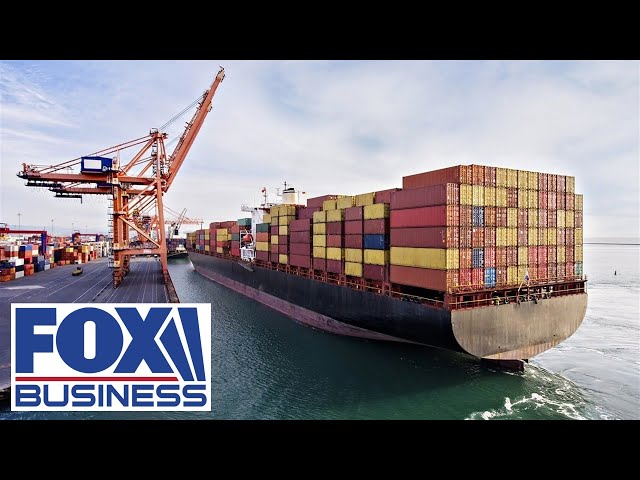
Port congestion is not the only cause of the drastic rise. It is now mostly up to the antiquated rail and road infrastructure on the West Coast that is preventing the efficient removal of containers out of the port. The Port of LA is currently facing a daily 30% no-show rate for truck appointments.
Strikes have not only washed over Europe. After HMM’s management pushed to resume discussions regarding the seafarers’ union strike, they voted to fire again. They have also claimed that HMM did not comply with the Maritime Labour Convention, and KMTC Line, Korea Line Corporation, SK Shipping and H-Line Shipping joined the protest.
Another player on the blacklist is Amazon. Climate activists have called the e-commerce giant on ship pollution. They underline that when the industry is determined to achieve a more sustainable future, big retailers and their shipping companies simply have no excuse to not invest in cleaner ways of doing business. Other companies that have become targets are Target, IKEA, and Walmart that previously expressed the initiative to transition to 100% zero-emissions cargo shipping vessels by 2030.

Мы предоставляем услуги транспортно-экспедиторское обслуживания, связанное с экспортными, импортными и транзитными перевозками грузов, при использовании различных видов транспорта, как в прямом, так и в смешанном сообщении, по территориям Китайской Народной Республики, Республики Казахстан, Стран СНГ и других государств (Европа, Центральная Азия и тд.).
#контейнеры #перевозка #логистика
Мы предоставляем услуги транспортно-экспедиторское обслуживания, связанное с экспортными, импортными и транзитными перевозками грузов, при использовании различных видов транспорта, как в прямом, так и в смешанном сообщении, по территориям Китайской Народной Республики, Республики Казахстан, Стран СНГ и других государств (Европа, Центральная Азия и тд.).
#контейнеры #перевозка #логистика
It is all “fun and talks” until it escalates — the tension between China and Lithuania is growing. Intermodal still remains the industry’s last hope as ports are drowning in surging volumes.
The threat of possible cease of railway connections between China and Lithuania has been looming over for a while now, and things are getting only more unclear. Although no official statements have been made, some companies are already taking a pause in ongoing projects until political stability is back. In this context, the Kaunas Intermodal Terminal will play a crucial role in Baltic and European rail freight.
Overall, European intermodal terminals remain a valuable asset for development. It is difficult to choose only one when it comes to evaluating their potential as new candidates keep appearing in the intermodal race. In particular, Luxemburg is currently in the spotlight as an aspiring powerful hub — CFL Multimodal is planning to expand its operations in Europe and the New Silk Road. Poland is another alternative with great possibilities, however, there are several issues such as the imbalance between east and westbound flows that make intermodal development challenging. It is prime time to get onto an intermodal train, especially in the Chinese direction. The updates have shown that there is a 35.5% increase for train trips and a 44.6% surge in TEU handled, year on year on China-Europe route.
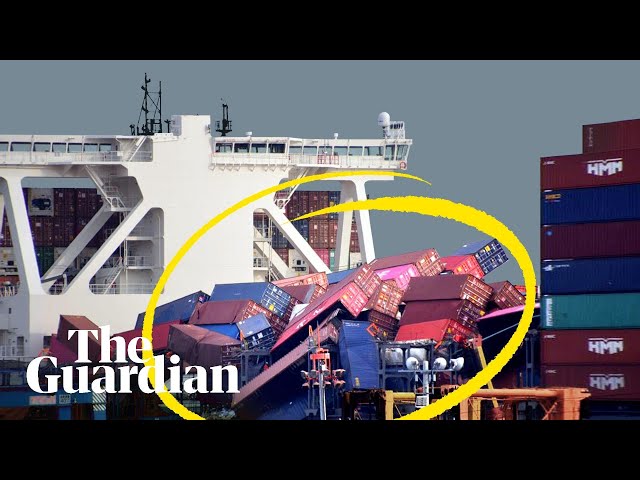
American ports continue struggling with no ease in sight. Import values are surging at an unprecedented pace. Experts project import volumes of 190,937 TEUs for the week of Sept. 12-18. Paired with low inventories and ships still queening, it is almost bringing the situation on the verge of collapse. The government, in turn, has appointed the port envoy to tackle the congestion problem. The blockages and gloomy forecasts have already forced the 2M Alliance to reschedule its Asia to US and Canada services.
No wonder that MSC is going to push up rates in Europefor upcoming September. In addition, it will push up its prices by $200 per dry and HC unit, for all export shipments from the Southern Africa Region.
COVID crise followed by the devastating consequences have been extremely harmful for every industry. Airlines all together have lost $6.9 bil. in spring 2021, and although traveling is recovering, not everyone shares optimistic mood. Recently, the EU recommended to re-impose travel restrictions to omit the new COVID waves, so the companies should not take off their armor too early.
Chinese ports have seen it all: pandemic outbreaks, severe weather conditions, disrupted supply chains — the list goes on. Meanwhile, the container throughput has increased year-on-year by 12.4% from January to July 2021. The average freight rate of a 40 ft container from Ningbo Port, where congestion has slightly eased its grip, to Los Angeles port in August was $6559, an increase of 15.3% compared to July 2021 levels.
The crisis has clearly demonstrated how truly different the companies are when it comes to addressing the challenges. The industry has already witnessed a trend of the big players vigorously expanding their fleet to tackle the problem of capacity shortage. Hapag-Lloyd pushes through and makes a new order of 75,000 TEU dry boxes in order to ease the scarcity of empty containers through the new order.
DP World is on the roll of advancing its initiative with the government of Bangladesh regarding the construction of Bangladesh’s largest rail container depot in Gazipur district. Shippers are currently dependent on trucks, so when the facility is complete, it will majorly boost efficiency of the operations. DP World had already expressed interest to invest US$1 billion in Bangladesh’s logistics sector including the Bay Terminal in Chittagong.