Shipowners have splurged on tonnage like never before boosting containership to unbelievable volumes. Will expanded assets guarantee staying afloat?
Since shipping reliability continues to worsen (down a massive 39.7% from last year), spot rates are on their rise hitting the 19th consecutive week. The composite index across eight major East-West trades increased 2.1% or $204 this week, to reach $9,817 per 40ft container. Freight rates on Eastbound Transpacific lanes surged 4% or $393 to $11,362 from Shanghai to Los Angeles and 5% or $631 to $14,136 from Shanghai to New York per 40ft container. Rates from New York to Rotterdam dropped 1% to reach $1,142 per FEU.
Meanwhile, the chaos reigning over supply chains has led suppliers and manufacturers to hike up prices for their customers. As a result, companies are considering switching to new ones, but this may lead to more difficulties, as now supplier reliability is one of the most important factors helping to stay afloat. Players are paying close attention to customers’ reactions to higher prices while trying to negotiate with suppliers for more convenient conditions.
Liner operators have proven to benefit the most from the current situation in the past several months and they still do. Recently they have added 23 transpacific services boosting nominal capacity by 33%. The 2M alliance of Maersk Line and MSC account for the largest growth in transpacific capacity. However, let’s keep in mind that this is nominal vessel capacity, and with the congestion in ports, actual working capacity is reduced. For example, Long Beach has set a congestion record – there are now more than 40 ships waiting outside.
In the meantime, shipowners have splurged on new tonnage like never before. A total of 619 containerships are now on order for future delivery. Players either go big or do not go at all; it is now the game of survival where the tonnage is one of the tools for remarkable competition.
The industry needs an alternative routing that would be as reliable and stable as shipment, so OOCL Logistics and OOCL have offered a multimodal container service from China to the US East Coast. It is operated by an ocean carrier, using the Asia-Europe land bridge and the Atlantic Ocean to avoid the current high levels of traffic seen on routes to the US West Coast and through the Panama Canal.
If only the driver crisis in the UK could be solved solely by the relaxation of immigration rules, the situation could have already been improved. However, UK government ministers appear to be resisting calls to reconsider the current policies. They have stated that a package of measures to tackle the HGV driver shortage that was put in place will bring fruitful results soon. The drivers believe it is just a temporary solution. Data estimates driver shortage at around 100,000, with some suggesting the number is much higher. Meanwhile, more and more hauliers apply driver retention surcharges which have caught some of them off-guard as haulage firms increase rates by roughly £50 a load. The British Ports Association has also voiced its concerns about post-Brexit immigration rules for European-based HGV drivers and warned that the lack of action will be devastating for the British economy.
German railways are still dealing with the consequence of the strike. Paired with the recent floods, the situation is extremely complicated to resolve. Maersk and Hapag-Lloyd stated that some of the services on the Germany-Czech corridor that had been supposed to start operating earlier are still taking time to resume. In particular, Maersk has decided to omit Hamburg on the next six voyages and divert the discharge moves on these voyages into Bremerhaven.
Not only Chinese ports contribute to congestion, but also airports that are causing cancellations and a lot of uncertainty for ex-China air cargo, pushing up air cargo rates. The update has shown spot prices ex-Shanghai rising 15-25% to US destinations this week and 12-15% to airports in Europe.
The US rail is expecting major difficulties with operations serving facilities at Chicago, Cleveland, Atlanta and Memphis, Tennessee, because of chassis shortages.
Labor shortages in the seafarer workforce keep worsening with more than half of HMM’s employees signing letters of resignationfollowing management refusal to meet payment demands. Meanwhile, terminal operators in Busan are preparing contingency plans for moving cargo if the strike hits the port.
CMA CGM is going to apply new Peak Season Surcharges in the number of ports globally. It will also push up its rates from Europe to several destinations in America: $470 per dry and reefer container from North Europe, Scandinavia and the Baltic Seaports.
Shippers from Ukraine are vigorously criticizing the decision of Ukrainian Railways to increase the tariffs for rail freight operations to support infrastructure upgrades. Despite the initially positive intention, it will raise the prices of coal transportation. It is said that logistics providers will not tolerate the higher tariffs and move their enterprises to the road.

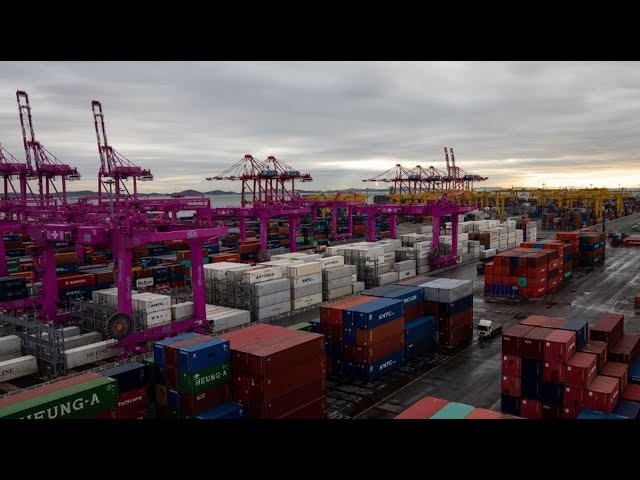
In the spirit of mutually beneficial cooperation we are glad to support your domestic and international logistics needs [CHN, AM, AZ, UZB, KZ, BY, KG, RU, MD, TJ, UA, TM, EU, USA] via road, air, sea, railway freight transportation services (Containerized, Non-Containerized, Tanker, etc.).
We also offer services related to warehousing, customs and purchasing.
We proudly stand head and shoulders above our competitors offering similar logistics services. Our unique combination of experience, service and technology allows us to provide logistics services that offer a high degree of reliability while remaining cost-effective.
#container #logistics #freight #railway #cooperation
#грузоперевозки#контейнеры
The big players have already emptied everything they could down to the smallest feeders, and now they are extending charter deals. Do the new rules even leave others a slight chance to survive?
The COVID-caused closure of Ningbo-Zhoushan port is slowly easing up as operations are expected to resume by the end of August. It has been observed that this congestion was the worst in the last seven years at the port. However, despite the improvements, it has triggered an already tight equipment shortage. It is likely that container prices will rise on lower availability in the coming weeks depending on whether the industry sees a further spike in container prices at Ningbo, how much cargo was disrupted at the port, and if there are additional shutdowns later.
Maersk backs the premise that the shutdowns in China and Vietnam will continue to bring chaos in the supply chain and over-the-roof container demand is destined to rise. The increase in the US alone is expected between 2-4% year-on-year for 2H 2021 and reflects in the 18.7% rise in global container trade in 2Q 2021 among major destinations. Did not a similar dynamic occur after Yantian? Back in the day, the lockdown resulted in a 180% spike in the price of containers; all box sizes sourced from Yantian, surged from $5,515 in June, to $15,336 in August.
On a charter market, ocean carriers are on a mission to charter new vessels. Cosco has joined others in trying to turn the heads of shipowners with substantial daily hire offers for 36-month periods. The updates state that this fixing spree follows a wave in June, which saw Cosco fixing and extending six classic panamaxes for periods of 36 months in the low $40,000 a day level. Experts have mixed feelings about the charter market dynamic – big carriers have taken everything off including the smallest feeders, so others are having troubles covering commitments with their clients. It is especially challenging now when owners are asking them to agree to new long-term extended charter deals at vastly inflated hire rates.
On the railway arena, the tension between China and Lithuania continues to draw the attention of the experts. Although China has contradicted the news that it would suspend rail communication with Lithuania because of Lithuania’s cooperation with Taiwan, the New Silk Road is not only a crucial artery but also a diplomatic tool. A tool that works both ways – the potential suspension of railways would cost Lithuania billions of dollars and the blockage of an ideal transit point Western and Northern Europe would cut China off.
A major development of rail connections Afghanistan has been in the talks for quite a while as it could open up Central Asian markets for countries in the southeast of Asia, most notably India, but the situation is about to take a new turn because of the Taliban. It is traditionally friendlier towards Pakistan, a political rival of India, so its further strategy could be the end of the Chabahar port project. India is not the only country noticing this cloud. Iran too is concerned about the future of its rail connections with Afghanistan.
The changes in the UK customs (there will be new safety and security requirements surrounding exports) processes bring concerns among cargo owners and hauliers. Shippers will be required to supply exit summary declarations for further movements, like empties being moved under a transport contract to the EU, and consequently, they do not understand what exactly exit summary declarations are. The government is yet to clarify and adjust the new regulations to the drivers’ crises and other constraints.
Another strike is looming over this time involving HMM's union after the company’s management rejected its demands for a generous salary increment. Both sides are in the process of negotiations because everyone understands that in case of a strike, there will be disruptions that the company simply cannot afford.
Shanghai Pudong International continues to undergo major delays as it mounts the new COVID outbreaks. Since nobody knows how long the pressure will last, some freight forwarders are considering alternative export methods, including a combination of ferry and air service via South Korea, or container shipping and air service via Singapore or Dubai.
The question of sustainable future or at least how realistic it is definitely a subject to collaborate approach. In order to cut carbon emissions at major ports, greater collaboration among stakeholders is essential when it comes to investments. The biggest trend ports will see in the near future is the development of hydrogen supply chains, but there will also be other areas of investment, including waste-heat networks and digital efficiency development. One of the recent examples is the Port of Tallinn that is teaming up with partners to design the hub of the Baltic Sea green infrastructure in Estonia.
Focusing on its growth, Ocean Network Express and Universal Container Services have opened a container storage center at the Port of Hamburg. The facility is not the first product of their collaboration – before it was a similar one at the Port of Rotterdam.


Transpacific has always been a battleground for influence but this time competition is stronger than before since the world has never seen the situation that the industry is experiencing now. It is time to buckle up – the stakes are much higher.
The three major players of the shipping sector 2M, The Ocean Alliance, and THE Alliance are in for a wild ride. Companies are vigorously competing for market shares despite the ongoing battles against the coalition of anti-monopolistic forces. It is on the transpacific where the greatest changes in market shares have taken place recently. As all three-carrier alliances have lost capacity market share to non-alliance services, they are now set to do whatever it takes to regain the positions and the recent analysis proves it. However, the power struggles are perceived as manipulative and unfair by other representatives of the industry, thus the FMC is not going to ease up its grip around the shipping sorority’s throat.
Although the global congestion scene is changing rapidly, the situation in Ningbo has mostly remained the same. There are now 48 boxships waiting at Ningbo-Zhoushan and a percentage of 65% of vessels waiting versus in port. It is similar to what is going on in Shanghai, Yantian, and Hong Kong. The glimpse of hope for improvement still appears with the partial reinstatement of the Meishan terminal. It is still early to talk about major improvement as only boxships have left the facility and no official statement about the reopening has been made. The longer it takes, the more devastating the consequences will be as Ningbo has already proved to be the world-class terminal with 23.2% year-on-year in its sea-rail container transport in H1 2021. Outside of East Asia, there has yet to be a major congestion spill since new COVID cases have been detected. The latest targets are the Chittagong port that has already been having a hard time, and the YM TRAVEL container ship.
Airfreight is also struggling with the same outbreaks. Freighter suspensions that began earlier remain in effect at Shanghai Pudong International Airport after new COVID-19 cases were reported among cargo workers. It is still unknown when flights will operate again, so more delays are expected. Airfreight rates from China were at $8.10/kg according to the recent update, an almost 6% increase from a month ago.
Home Depot and Walmart have already set the example of the tendency when big corporations take matters in their hands and start chattering ships, so it is no wonder that Taiwan Semiconductor Manufacturing Co is said to be in discussions with Wan Hai to charter a containership to move components from Kaohsiung to the US. The situation is yet to unfold; however, experts predict more such cases to appear in the future.
American exports are booming but not as fast as imports since the major ports have been reporting records in handling TEU. As a result, the divergence between the two keeps widening (last month it was registered at an unbelievable indicator of a new record ratio of 2.75x) setting the scenario for an even wider trade gap. The largest export commodity continues to be air as companies reposition empty containers back to Asia.
For the European shippers with the first German strike calming down, the situation will not improve as another rail strikeis about to come like a wrecking ball. The union demands a 3.2% increase in income on the model of the public service and protection of occupational pension. Meanwhile, DB Cargo is cooperating with other rail operators to ensure trains transporting essential goods.
The drivers are another vulnerable group that has been hit with major shortages. If before it was mostly the UK dealing with the challenge, now it is going global. DHL eCommerce has mounted an aggressive recruitment drive in the US in anticipation of heavy traffic in the peak season. Amazon follows suit, and in Europe, Logistics UK sees an overall need for logistics firms to get better guidance on how to tap into government programs to finance recruitment. It is also actively urging the British government to grant 10,000 temporary work visas to EU drivers.
New freight services are on the way despite the current context as the logistics arm of Alibaba is setting up a direct sea freight route between China and South Korea with a 30% reduction in costs.
Hupac stays true to its expansive approach and acquires a stake in WienCont, the trimodal terminal in Vienna. It is a strategically wise move as the terminal is an important hub to serve Southeast Europe and Turkey. Another great expansion is due to the agreement between the Port of Houston Authority and USACE – The Houston Ship Channel will be widened and deepened to benefit alongside facilities. At the same time, the Port of Long Beach has opened its Long Beach Container Terminal at Middle Harbor.
Further initiatives are looming over in the green light with South Carolina Ports receiving a $1.3 million grant to support project partners as they deploy all-electric, energy-efficient trucks in place of diesel-run vehicles. In addition, Hamburger Hafen und Logistik AG will get additional $2.6 mil to test new transportation technologies for green hydrogen, under the TransHyDE project.

The crisis is forcing companies into transformation. Supplier relations, agility, volume capacity and other factors that used to matter less are now coming to the spotlight.
The problem of growing volumes and lack of reliable suppliers Maersk is vigorously trying to solve moving forward like a bull this time enhancing the new opportunities in Russia thanks to its first inland container at the Port of Novorossiysk, the largest Black Sea hub that is planning to handle up to 25,000 boxes annually. The main goal is to convert much of the bulk cargo in the region to container traffic.
If lately, it has been ports dealing with significant delays, airfreight did not manage to avoid the same disruption. Mandatory Covid-testing in Shanghai has revealed a positive case, which caused a number of cancelations at Shanghai Pudong Airport (PVG). The fact that PVG plays an important role means that disruptions in other airports can be expected as the consequences. There are rumors that cargo terminals PACTL and Eastern Air Logistics will stop accepting cargo, too.
Overall, local outbreaks of Covid-19 continue affecting all major trades with no transport modes succeeding in getting away. Experts observe that the pressure on capacity and the subsequently inflated rate levels will not be subsiding in the immediate future. The transatlantic trade will be somewhat more stable albeit with rate levels remaining high from a historical perspective. The only region where slight ease in capacity and rates can appear is the US.
Although it might seem like everyone is bearing major financial losses, which is mostly true, shipping lines are once again proving to be profiting from the ocean freight chaos. The fresh data shows that profit margins for carriers have risen from 5% in Q1, 2020 to 30% in Q2, 2021. Moreover, tonnage providers are making most of a hot market asking for 24-month contracts rather than the normal six or 12-month charter hire, knowing that the clients who want lower rates have no other choice but to comply. The sensitive state of the market makes it difficult for the shippers to frontload cargo so that their inventories do not run short. Instead of pushing the volumes up, it only increases the rates.
What are the alternatives for development? Well, the US sees potential in Marine Highway Program and announces the designation of six new Marine Highway Projects and a new Marine Highway Route. They are supposed to improve the movement of freight by water on inland waterways and to Guam and the Northern Mariana Islands. In general, nearly US$11 mil will be awarded to advance marine highway projects.
The disruptions have surely served the mission of a wake-up call for the supply chains worldwide. Companies are forced to reconsider their relationships with suppliers and their sourcing strategies in particular due to the current shortages in raw materials. This comes at the same time with an outrageous demand – in the era of endless choices customers do not want to wait for their products, thus the main prerogative for the industry players is to look for ways to become more efficient and agile. A more responsible business approachis definitely on its way.
Without a doubt, Asia is having a lot on its plate; however, the difficulties do not prevent Thailand from snapping up its largest ship. RCL has bought two 12,000 TEU ships under construction for $115m each from a Japanese provider. Another country, Bangladesh, has set a target to complete the construction work of Bay Terminal that will improve the Chittagong port’s capacity, the port that suffered severe congestion not so long ago.
German two days strike was not a piece of cake to handle, bringing significant disruptions: trains unable to cross Germany and reach the Netherlands, Poland, and the Czech Republic. This has brought experts to the debate of the strikes are even an effective tool in modern business. So far, it has been nothing but harmful – the resolution can only be achieved through negotiations.
The UK drivers do not seem to support the statement above as more of them have voted in favor of the new strike regarding shortages.Meanwhile, it is clear that the retailers will be the ones bearing the burdens of the financial incentives, which might force them into passing them onto the customers. The battle is expected to intensify as drivers keep abandoning container loads for the more lucrative delivery sector.
Among the steps amid to address supply chain congestion in the US, Norfolk Southern will reopen its intermodal facility in Pennsylvania to bring its Greencastle facility back online.
The Korean small shippers are again raising concerns about their abilities to handle the peak season. In response, the government has promised supportive measures such as securing ships and subsidizing freight rates through the emergency.
Kazakhstan’s rail continues to benefit from its new terminal at Dostyk on the border with China. Cargo to EU countries is a priority for China. Therefore, the terminal plays a crucial role.
The Network Rail will be disrupted on the Ely to Peterborough line because of the recent farm tractor and freight train collision. Most luckily, the freight will be re-routed, further exacerbating the disruption caused by the recent arrival of the Ever Given container ship.