


For some, through-the roof rates are another burden, while for others, they are a gold mine to explore – how containership owners build fortunes.
Four months later, the prodigal son, Ever Given, full of containers, carrying more than 18,000TEU, has arrived in Rotterdam commemorating the end of the notorious saga. Containers for Hamburg will be loaded later onto Ever Utile to continue the journey to the German major port.
The dynamic of the spot rates remains the same – they keep increasing. Freight rates from Rotterdam to New York grew 5% to US$5,624 per FEU. Rates on New York to Rotterdam are on the last week’s levels. British Freight Association only proves that the situation will be evolving in the outlined by external circumstances vector. The shortage of landside transport will remain, whilst carriers will not accommodate low yield freight. For containership owners, it is nothing but the great news and the opportunity to strike the gold mine by fixing their ships on lengthy periods with ocean carriers at highly elevated daily hire rates.
Meanwhile, the circumstances do not seem so bright for shippers. They are now facing the sourcing issue: it has to be shifted. A recent survey of North American manufacturers has revealed that 83% are likely, or extremely likely, to reshore sourcing. The first push for it was the tariff war between the US and China when companies had already begun to shorten their supply chains. There are now two camps: first are diversifying their supply chains to reduce the risk of single- or limited sourcing, while others look to production closer to their markets or bringing production in-house. Both approaches have their pros and cons and it is up to the shippers to make a choice based on their initial needs.
Another shift that is unprecedentedly needed in the industry regards the drivers’ shortage. For a long time, Brexit was considered the root of the problem and as a result, it has sucked the oxygen from the true causes. Experts advocate for the government to focus on such challenging aspects as long hours, poor wages, diabolical facilities, and loads of responsibilities – for which drivers receive very little recognition. There should be a reset in the mindset while it is not too late.
In the veiled race of vigorous fleet expansion, MSC has taken the lead thanks to the latest decision of CMB Financial Leasing to buy vessels from Guangzhou Shipyard International for a long-term lease to MSC. Now it has a total operating capacity of 4.08m TEU. As for the intermodal abilities, Maerks strikes with the launch of weekly intermodal rail service in Bulgaria connecting the port of Burgas with Plovdiv and further to Sofia. It is a purely strategic decision – entering the rail transport market even for short distances facilitates two things: the trust of shippers and big customers due to its efficient performance and a cultural shift in the mindset of shippers who now look to alternative ways of transport.
Another important service that has been started recently is organized by the Vietnam Railways and operated by Ratraco. It is the first direct rail freight connection between Vietnam and Belgium that promises to become regular. However, the intermodal shift is not going smoothly mostly due to challenging weather conditions. The floods that have hit Belgium, Nothern Europe in general and Asia have caused major delays, although there are critics who doubt the context of the disruptions and even conduct the investigations. In addition, there is a lack of equipment and a shortage of rail cars available for transloading at the borders.
While there is an ongoing tendency of switching from ships to rail, Ukraine is shifting to road. Recently it has increased the track access charges for rail freight operations, which, consequently, will push more companies towards road transport. Experts claim that logistics providers simply will not tolerate the higher tariffs. The decision will backfire at Ukrainian Railways that will lose way more income compared to if they maintained their track access charges lower.
Meanwhile, an alternative for Belgian rail transport between the Flemish seaports and the Mediterranean Sea appears thanks to the reopening of the Artère Nord Est in northern France. The whole line is an important rail freight corridor connecting the ports of Antwerp, Zeebrugge, and Ghent with the south of Europe and due to the floods traffic has been heavily constrained. Among other positive achievements in rail is the increased number of weekly trains between Rotterdam and Bavaria in southern Germany signifying the rise of the route capacity. In the light of the growing demand of shippers towards the Dutch port, it is extremely beneficial for the industry.
As a part of its public sector reform, the Moroccan government will sell a 35% strategic stake in the Societe d’Exploitation des Ports, to Tanger Med for 600 mil. The partnership is also expected to enable Moroccan industrialists, importers, and exporters, with a more efficient and competitive service offering.

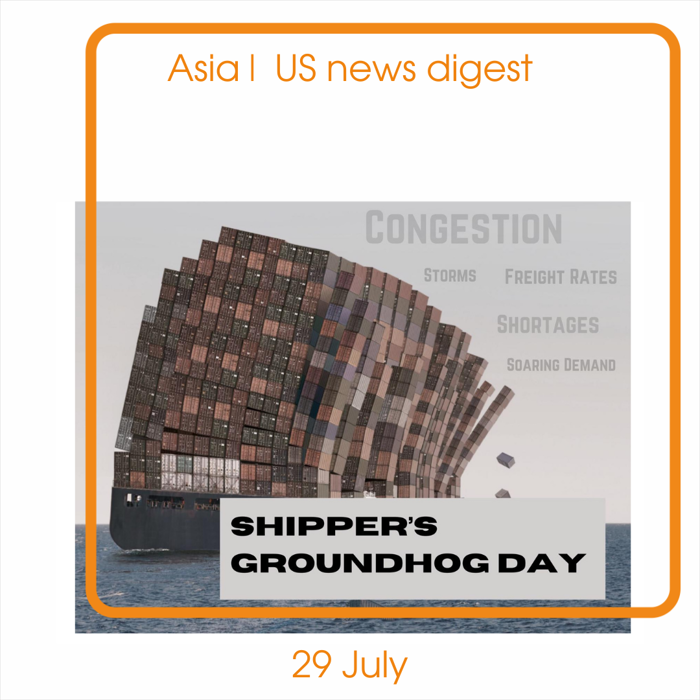
Meeting surging demand seems to be the same as chasing a tail – impossible to achieve. Why is the shipping sector stuck in the Groundhog Day?
The severe typhoons are not only Europe’s headache – the one that hit China does not seem to calm anytime soon, at least according to the new forecasts. Shanghai’s ports and some in neighboring regions will remain shut until the situation improves, which means that more delays are coming. The Yangshan port has already evacuated hundreds of vessel and this action alone add more pressure since it is a part of the world’s biggest cluster of container terminals.
Containers are a good indicator of how supply is doing and so far, they have not told any positive stories. In fact, the numerous congestions have been here for so long that shippers will need a miracle for the situation to resolve at least slightly on a positive note. Experts insist that now is the right moment to start booking, otherwise, Christmas can be considered canceled. Walmart is one of the brightest examples that can illustrate the impact of congestion issues – even with its flexible and agile supply chain, it was not able to escape delays that severely affected the shipment of its apparel and garments.
The skyrocketing demand still is not allowing container crunch to ease. Prices are at unprecedented levels, the production of million TEUs of dry containers has been reported at record levels (it is estimated that 2021 production could reach just over 4.5 million TEUs, more than double the annual totals in the prior two years), however, on the global scales the pace is not enough to address the growing needs of the market. Despite the increased production, there is still no splurge in inventory. Port congestion also plays a vital role, by tying up equipment. The only instruments in a carrier’s toolbox to overcome the schedule delays are either to blank a sailing or, more common now, to allow a vessel to slide on its schedule by one week. Companies like Hapag-Lloyd do not lose hope to meet the demandand chose the strategy of vigorous expansion of their ships to boost the box capacity. It has announced the discussions for the acquisition of 10 container ships with 13,000TEU capacity each. Singapore’s Pacific International Lines has also expanded its fleet size– besides, there is a unit of Singapore’s sovereign wealth fund coming in with $600m to save the SS Teo-led carrier.
However, the key to building agile supply chains can be in the hands of skillful employees – the concept MSC is trying to tap into by wishing to hire South Korean seafarers with experience of operating very large container ships. HMM is the only South Korean liner operator with VLCSs in its fleet, and in order to stand out MSC decides to offer more attractive salaries. HMM has already been recognized as the company with a staff salary growth of 2.8%, but it seems like there is still a chance to aim higher?
To facilitate better export especially in the light of the soaring freight rates, the government has told the Port Authority of Thailand to establish a national liner operator. Not now, but by 2022. So far, a committee to study the feasibility of re-establishing a national shipping line has been formed to help Thailand reduce its dependence on foreign ships, as well as to lower transportation costs. At the same time, Thai freight forwarder JWD has agreed to a $15m deal for a significant 20% stake in ESCO.
Meanwhile, the first Budapest-Xi’an return train left Hungary, crossed the border with Ukraine through Zahony, and finally arrived in Xi’an. Lately, the transit cargo in Hungary has seen a tenfold increase, so Zahony, comes in handy as an emerging transhipment point for China-Europe trains, where transit goods are transferred from broad gauge to standard gauge tracks.
There is a new trend of transport-related mergers and acquisitions among major carriers that are eating up smaller ones. The Knight-Swift with its $1.35 billion purchase of AAA Cooper, Werner closing its deal with ECM Transport Group for $142 million, and Uber Freight acquiring Transplace for $2.25 billion, are the perfect examples. As for what the future of transport, experts suppose that TL firms will buy LTL carriers, and vice versa.
The main driver of innovation in vehicle production remains Tesla, this time aiming to mitigate the semiconductor shortage's effects by substituting alternative chips and writing new firmware. The company has already achieved record production of impressive more than 200,000 vehicles in Q2.
Extreme weather conditions and congestions will not be the only challenges for the shipping sector in the coming days. Canadian border services officers have voted in favor of strike action, although the impact of their decision is still unknown, but of course, it could cause significant disruption to the flow of goods.
The Port of Savannah is now seen as a critical getaway for US goods. According to the recent data, it has already moved 5.3 million TEU for first time in its history as cargo volumes grew by 20% year-on-year (YoY) in financial year (FY) FY2021. For the most part, it has become possible thanks to its strengthened positions in Georgia.

Виталий, рады видеть Вас в мультимодальной сети MAXMODAL! Разместить тарифы компании Вы можете в корпоративном профиле компании. Благодаря размещенным тарифам в профиле, Ваши текущие и будущие клиенты смогут быстрее найти информацию и разместить предварительные заявки.
Получить информацию как создать профиль, можно на нашем канале https://youtu.be/nYFDbNSleaY. В случае если у Вас останутся вопросы, Вы всегда сможете запланировать демонстрацию вероятностей системы.

Виталий, я бы хотела ознакомиться с тарифами на автоперевозки, но не нашла профиль Вашей компании на MAXMODAL. Возможно ли посмотреть размещенные тарифы?
“After the storm always comes a rainbow”, although Europe might not be the case yet. It is busy times – apart from dealing with usual challenges, companies have to add some more exquisite tasks to their agendas.
As soon as Northern Europe survives the flood and heavy rain and takes a gulp of air, new forecasts predict that the region is about to be hit by new storms and more traffic delays could be expected. Previously the two vessels near the Liege container terminal sank and cargo-carrying barges have been forced to reduce speed near the site. In turn, Dutch authorities have already announced that they were extending their storm warnings.
The shortage of workers has not been the issue of the UK hauliers solely but also of the warehouses. During the COVID restrictions, the workers had to self-isolate which caused significant delays. Initially, those who were fully vaccinated were supposed to be exempted from self-quarantine; however, with many employees having to stay home, the situation has gotten worse. In this context, the CEO of the UK Warehousing has written to the Department for Transportto address this issue and seek clarification from the government on the process for individuals and businesses to apply for the exemption.
Meanwhile, the search for rail getaways continues and the next participant in the competition of becoming “the one” is Greece with the Rail Cargo Group that aims to be the leading provider. Some experts advocate for this option, while others see important obstacles. One of them is a need for better infrastructure – even the full electrification in the country’s main routes is still not in place. However, upgraded facilities would facilitate rail freight transport through Greece, reduce CO2 footprint, and increase the tonnage of trains.
Although green initiatives do advocate for “clean” consumption, responsible consumerism, and eco-friendly technologies, it seems like members of the International Plant Protection Convention have decided to impose their understanding of “clean”. In a quite literal meaning. They are now pushing for the industry to clean every container transported by ship, with certification that it is pristine, to prevent the spread of invasive species. The companies must be delighted to deal with another challenge that has landed on their “to-do” list.
The attempt of Volga-Dnepr Group to become the possible launch customer for the MC-21 freighter version has failed and been claimed as political posturing. After the discussion of the prospects of the production of a freighter version amid the capacity constraints, Manufacturer Irkut has not supported the plan.
As for ports’ throughput increases worldwide, many facilities are undergoing expansions. Thus, DCT Gdańsk S.A has been awarded the lease to a new container hub in the Port of Gdańsk. The new terminal will increase the handling capacity of DCT Gdańsk by 1.5 million TEU with the overall investment worth $480 mil. In turn, GB Railfreight finishes the upgrade of Eastleigh and Bescot Local Distribution Centers backed by major engineering associations. At the same time, the company commemorated the closure of the London King’s Cross Power Signal Box, the rail icon of the 70s.
The capacity shortage that has not omitted the automotive sector either, pushes Abu Dhabi Ports to complete its new big commercial and retail areas at Rahayel Automotive and Mobility City. A centralized hub will enable more effective cost-efficiencies and streamlined value chains for automotive enterprises.
The goal to achieve zero-carbon emission keeps taking one of the leading positions in the list of companies’ agendas. Hence, the global marine fuel and lubricants supplier bp together with Mærsk Mc-Kinney Møller Center has announced the beginning of their collaboration in the shipping industry. It is not a secret that achieving the long-term target of decarburization requires new fuel types and deep changes within the industry, however, both sides have something to bring to the table with their extensive expertise.
As pandemic slightly eases the grip, such agreement as to the one between pilots and Lufthansa Cargo, according to which during the pandemic, they would operate for longer than the periods designated in their contracts, has come to an end. As the result, the company had to cut between 3% and 5% of its freighter flights mostly concerning Asian destinations.
Earlier CMA CGM announced the suspension of the Le Havre call in its North Europe - East Coast South America service, and according to the recent update, it has extended it. The rotation remains as it has started before.
Hyperloop transportation may need to move for its potential competitor, a high-speed flatcar introduced by Sinara Transport Machines Holding. It promises to allow Russian Railways to transport containers from China to Europe in seven days.

Due to the closure of ports, China is no longer a piece of cake, so companies start favoring other options. Do the alternatives really work or is it equal to trading bad for worse?
Closures of ports all over the world continue to take place this time with the shutdown of Shanghai’s container port and airport that happened over the weekend due to a typhoon. Although things are slowly returning to normal, customs processing of imports into CGO is delayed as well as some flights. Floods have also affected other regions in China including Ningbo, one of the largest ports. As the result, transportation disruptions have moderately concerned local export.
Consequently, some companies start avoiding tariff risk in China and one of the brightest examples of such strategy is Guess. In the light of the new economic challenges, which also include the tension between the US and China, it starts leaning towards its suppliers in India and Bangladesh. However, taking the new health restrictions, the latter can be a challenging option as the lockdown in Bangladesh has started taking a toll on the shipping sector. Now importers are hardly taking delivery of containers. Among other valuable criteria is CSR that has become important for other industries.
The choice of the next step is such shaky ground that shippers all over the world are simply about to give up on trying to look for the perfect strategy. Especially when every time they look, the rates go higher – there are now indicators that the current situation will extend beyond Chinese New Year. What is more certain is that more and more experts agree that regardless of when things settle, the industry is not going to witness a return to pre-Covid pricing levels for ocean freight.
Meanwhile, the discussion of demurrage fees escalates as STB sends its letter to Class I railroads calling to explain their demurrage policies. According to the notice, demurrage does not provide any constructive incentives and consistently results in massive charges that can exceed the commercial value of the shipments. With the recent congestions at ports and railroads, it has only added another log to the fire.
Despite the challenges, there is always room for innovation. At least in rail. It is unclear whether Laude Smart Intermodal S.A’s new container is going to be a game-changer for the New Silk Road or it is a clickbait-like initiative amid to improve the company’s communication strategy. The highly developed container for transportation between China and Europe is expected to increase capacity by 25-30% compared to standard 40’ high-cube containers. In addition to the new technology, Laude Smart Intermodal is expanding its terminal in Zamość on the Polish-Ukrainian border.
To paraphrase a famous guessing game “Hot’n’Cold”, DP World and Rosatom seem to have decided to choose the “coldest” take and develop the Northern Transit Corridor in the Arctic as a sustainable sea route between Asia and Europe. DP World has already committed to invest $2 bn and is planning to tap further into the partnership. This is not the only sustainable initiative among the recent projects. The HyperPort project between Hyperloop Transportation Technologies and Hamburger Hafen und Logistik can offer a greener and more efficient inland supply chain for containerized goods.
Whether it will be technologies or new regulations that bring a much-needed change, the cargo throughput keeps increasing at the US ports. To address the issue, the Port of Oakland has identified areas of upgrades for its seaport focusing not only on the improvement of the facility but professional training of the employees. Experts back up this strategy outlining that cargo demand is outpacing capacity investment and improving cargo flow should be one of the main priorities. The skyrocketing throughput is also common for Chinese ports that has totaled 138.2 million TEU in the first half of 2021, a year-on-year (YoY) increase of 15%.
In addition, newbuild prices are also expected to go north after two Korean conglomerates have announced sharply contrasting fortunes.Underinvestment in shipping can drive prices further, although the final situation will depend on the sentiment in the direction of steel prices.
Maersk keeps expanding its capacity. This time Chinese CMB Financial Leasing has ordered two TEU ships from Guangzhou Shipyard International for a long-term lease to the industry’s giant. So far, MSC has been the most active in buying second-hand ships, with at least 60 bought since last September.
GL Terminal has declared that one of the world’s largest shipping lines (the name has not been revealed) has appointed the company to provide container depot and trucking services in Jakarta. The company will offer the following services, including empty container handling and storage, container inspection, cleaning and repair, and empty truck repositioning.
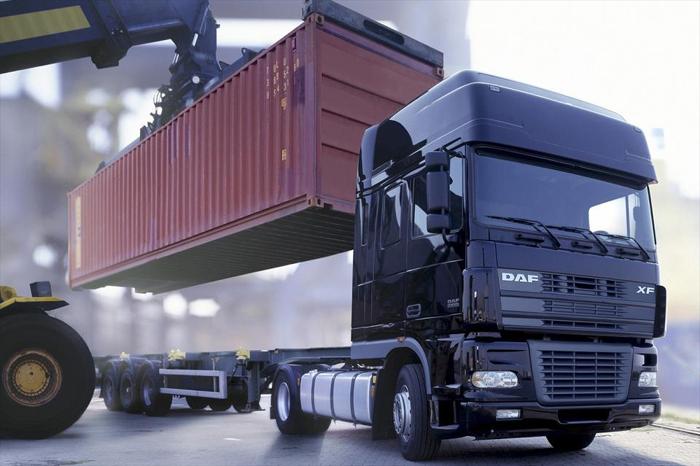
Despite the tough times the flood has caused to rail, the industry welcomes new advances
The recent floods have a truly disastrous character as, apart from causing severe damage on the local level in Belgium, they have paralyzed a major North Sea-Mediterranean Corridor. For the time being, even alternative routes are blocked so the repair is needed as soon as possible. Besides, long diversion routes and certainly not a feasible alternative. One of the options that are currently in the talks is a diversion via Paris.
France has drawn attention also thanks to the opening of the Calais-Perpignan route by CargoBeamer. The latest intermodal service is suitable for cranable and non-cranable semi-trailers. The company has ambitious plans for its new facility. It wants to transform it into an international logistics platform linking different European terminals and promoting multimodal traffic between Britain and southern or eastern Europe.
There is a tendency of ports experiencing the rise in TEU throughput worldwide, and the Port of Rotterdam is not an exception. The recent data has shown an 8.7% increase in H1 that has broken its six-month traffic record. The number is driven mainly by empty containers and a rebound from the COVID-19 pandemic. Experts consider the result satisfactory and claim that it allows continuing investing in the port, the transition to cleaner energy, and good accessibility.
Overall, the container market impresses experts and industry players not only with exceptionally high rates but also with orders, sales, and values. The ordering market for containers is at historic highs with an incredible 790% in H1 2021. There is a significant increase in activity in the secondhand Panamax container ship market. The number of sales is up 780% for the year to date 2021. In addition, the market sees a surge in values. Because of the increased S&P market, the Panamaxes tonnage has more than doubled in value in just three months. However, the soaring spot rates continue to cause pain to shippers regarding multiple trades, especially in the North Atlantic westbound route, where they have seen spot rates soar by 175% in just four months.
A new sustainable initiative is looming over the horizon involving Tarmac’s collaboration with electrical engineering specialists Furrer+Frey to develop a retractable overhead electrical supply system suitable for freight terminals. The new approach will bring significant changes if trials prove to be successful. The trial is part of the UK government First of a Kind competition that supports talents from companies to fund existing innovations that may be in use outside the rail industry but could also benefit operations.
Rhenus takes over Log Adria on its way to building its presence in the Balkans. Now it will become directly involved in freight forwarding and related services over the ports of Rijeka and Ploče. The cooperation started a while ago, but the new step is Rhenus’ first advancement in Croatia.
Meanwhile, working on development of a facility in the tropical jungles of Stoke on Trent, DB Cargo UK brings back covered steel wagons that have not been used for ages. The “pre-historic” wagons will be re-designed. The ability to utilize the same wagons on either open coil or slab traffic would benefit from increased utilization of the asset while reducing the reliance on older, life-expired steel wagons.

The usual horsemen of the current crises (rates, congestion etc.) cannot be solely blamed for the challenging environment. In fact, they have only revealed the issues that used to be ignored for ages.
Union Pacific has announced the end of a temporary halt to rail shipments of international containers from the US west coast. The company hopes the new adjustments will allow the transportation supply chain to begin working off the backlog of Chicago destined trains while freeing up railcar assets to support import loading needs.
Determined to tackle the monopoly in the shipping industry and focused on the investigation of detention and demurrage, US Federal Maritime Commission is now requesting an increased budget to enable carrier audits. The checkups are supposed to inform additional rulemaking or enforcement, and more money is needed for specific specialists.
After Panamax boxship, prices for sought have doubled, commemorating one of the sharpest vessel appreciations recorded in the history of shipping. For instance, a small TEU that used to be evaluated for $20m, by the end of March was already $48m. The number of secondhand containership sales is up 780% for the year to date. The usual fellows of the crisis – congestion, shortages, and high rates – have also contributed to the splurge in values.
Hauiliers’ crisis is no only the pain point of the UK, but the US too. The current challenging context has revealed the problems that have been present for decades. Apparently, deregulation in the 1980s paved the way for a worsening driver shortage in America now, as hauliers struggling to recruit as a once “essentially American” industry lose their appeal. Drivers are also not satisfied with the pay, hours, and conditions overall. The situation has to be resolved urgently since the country needs to hire some 1.1m drivers over the next decade to stave off calamity in its supply chains.
The dynamic of constantly increasing customer demand and the rates not planning to decrease any time in the future have demonstrated the signs that this year’s peak season can be expected earlier. Moreover, it will most likely extend. There are now two main challenges: shippers are unable to get equipment or space to get their cargo out in time; and congestion. Therefore, forwarders urge shippers to book now for Christmas peak goods. Understanding where the wind is blowing, shippers, especially small and medium ones, start seeking collaboration and ways to improve practices, especially for SMEs, which are sensitive when they face huge alliances of major industry players. Another example of what companies are doing to become more agile is adjustments the fashion sector. Pandemic has made everyone reconsider their supplier relationships. In particular, fashion brands are consolidating their source base and focus on key suppliers.
The crisis has clearly shown that when there is disruption of one cogwheel, it is going to affect the rest of the mechanism. Shipping delays in Hong Kong are causing significant problems for local manufacturers, tying up millions of dollars in cash flow. Outbound shipments are currently delayed by three to five days, and carriers are skipping calls at the port. For intra-Asia shipments, carriers have implemented $100 port congestion surcharges for all inbound and outbound containers, excluding transhipment cargo.
Meanwhile, ocean carriers are requesting the use of their own trucking and customs brokerage services, as part of spot market offers for exports from China. They are also adding conditions to short-term rate offers. The current problems lie with the fact that demand is too hot and the backlog is too big. Due to congestion and closures because of COVID, cargo does not get shipped and thus, there are no payments.
Wan Hai Lines has authorized a US$1 billion budget for asset acquisition and disposal preparing its fleet expansion. The company is also awaiting the delivery of ships from CSSC Huangpu Wenchong Shipbuilding. However, the situation in Vietnam continues to be challenging due to the new COVID-19 outbreak.
Another log in the fire is a surge in oil prices that affects airfreight costs. The airlines themselves face a dilemma over fuel price hedging. By one estimate, this has reduced their average hedging exposure by 24%. Cathay Pacific was one of the airlines that got hit by hedges in 2020, but the carrier’s management eschews short-term action. Meanwhile, Chinese airfreight is facing flights cancelation due to pandemic lockdowns and poor weather.
US west coast port Los Angeles continues to report the increase in the number of handled containers. The data has shown a 27% year-on-year increase, closing its year at just under 11m TEU.
Hapag-Lloyd has announced rate increases to the East Coast of South America. It will apply a general rate increase of $500 per container for all cargo and container types
Panama Canal celebrates more than 100 years of shipping and commerce. Its latest expansion allows it to accommodate Neopanamax ships, which doubles the canal’s capacity.