
The UK is struggling with driver’s shortages, floods are causing delays, and freight rates are not going to decrease. If there is no perfect strategy to stay afloat, is there one to remain sane?
The weather in the northern Europe has definitely added up to challenges facing shippers and forwarders. Due to high water levels and flooded rail and road networks, delays are worsening for cargo owners. However, there is a glimpse of improvement – at least most Dutch waterways are expected to reopen in the next few days.
The UK government makes another attempt to tackle drivers’ shortage but it soon receives a wave of criticism. Authorities have proposed greater support for driver training schemes via apprenticeships and to increase the numbers of new HGV licenses. Although the measures have potential, the government has made an additional statement that has become a stumbling stone in the search of a solution – the prospect of issuing temporary visas to non-UK drivers that surely will take time, thus a possible short-term relief is out of reach for the time being.
Among other initiatives adopted by the UK recently is the decision of the Environment Audit Committee to examine how the shipping sector can best achieve net-zero carbon emissions. It will also look at options that may encourage international action to lower global emissions in shipping; the project will also look at the aviation sector. On the domestic level, it wants the aviation industry to reach net-zero emissions by 2040.
Foreign buyers have started canceling the shipments boarding from India due to container logjam. In the context of high rates and clogged ports, local small exporters have to fight for their customers. In search for solutions, the export body has requested the shipping lines to bring in more empty containers and has requested the Indian Railways to provide free movement of containers from gateway ports to hinterlands.
The area of the Indian Ocean stays in focus of such companies as CMA CGM that aims to strengthen its presence in the region. It has confirmed the start of the new service connecting Réunion, Madagascar, Comoros, and Mauritius. It will be complementary to the existing services and expand the network.
It is no doubt that increased freight rates have severely affected every aspect of the industry, thus experts have conducted research identifying whether current record-high sea freight rates are ‘pricing out’ low-value cargo from the market to a significant level. No increase in the average value of the cargo has been spotted; hence, the premise is based on a false assumption. However, the analysis does not provide any basis to claim that low-value cargo owners are not being squeezed out of the market. It is important to notice that the fact that low rates are unluckily to return has been widely accepted.
The railway continues to be one of the most flexible sectors with new developments and adjustments. The JadeWeserPort Wilhelmshaven freight village has welcomed its first direct container-laden train from the Chinese city of Hefei as part of its new position on the Belt and Road Initiative. Its main objective is to provide competitive and environmentally friendly transport alternatives between China and Europe. Meanwhile, Rail Baltica sets an ambitious target to integrate the Baltic region with the rest of Europe and opens the Kaunas Intermodal Terminal. Ukraine has completed a major project – the reconstruction of the track between stations, which connects the Chernobyl exclusion zone with the main railway network.
It has previously been mentioned that such players as COSCO have started to use its vessels for various purposes following the rates boom and capacity constraints. While the wind is blowing in that direction, Wan Hai is reconsidering Asia-Europe trades – it has ordered smaller containerships, and luckily, the economic situation is in favor of such a move.
Among ambitious companies is also 3PL Global Reach Logistics that has expanded into Europe with today’s announcement of two new warehouses, in The Netherlands and Poland. Additionally, there are plans to expand the company’s warehouse in California and the development of its online presence. DHL is not planning to lose its positions and is building a logistics center close to Frankfurt to support growth in demand for pharma logistics capacity and facilitate its influence in the industry as well as develop sustainable agenda. Lufthansa follows suit with the refurbishment of its main hub facilities at Frankfurt Airport amid to provide flexible and tailored solutions to the current situation.


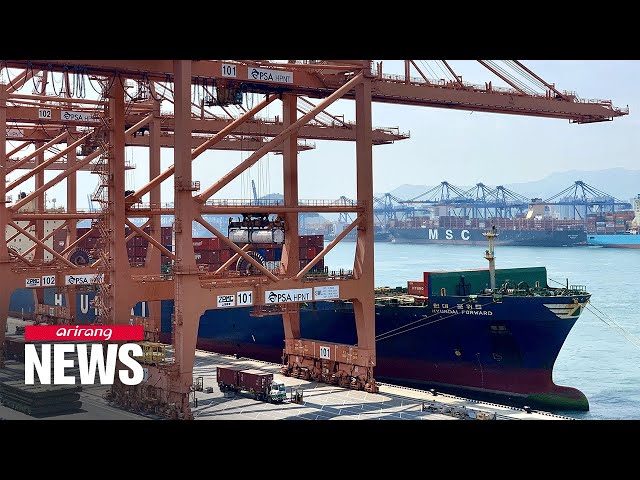

To paraphrase the classic: COVID eats globalization for breakfast.
The port congestion pandemic has truly become global, as it has spread out across five continents with 116 ports reporting disruption. The current situation differs from the time of Yantian: there is now the doubling of ships waiting outside Asian transhipment giant Singapore as well as the new pain points at twin ports of Los Angeles and Long Beach. Schedule reliability is still way down on pre-pandemic levels. In the light of these events, experts warn that even after Yantian goes back to normal fully, the aftershocks will be felt far and wide.
While trying to stay afloat skyrocketing rates and survive the pressure on the supply chain, the majority of the companies do not make customer service its main concern. The recent feedbacks have highlighted the lack of transparency. In turn, industry players blame blank sailings despite the high demand, which raises many questions and ignores the needs of long-standing shippers. Experts also note that the growing freight rates will push companies to switch to local sources than to transport, especially in the case of raw materials.
The situation gets more challenging as Bangladesh closes factories for 19 days due to the main reasons: Eid ul Azha festival, weekly holidays, and pandemic restrictions. Among the shutdown sectors is the top foreign currency earner apparel industry, which is directly affecting shipment of cargoes. Huge tolls are expected to take place as the peak season approaches, stores in western nations open, and demand is on the rise.
Vietnam is struggling – there is a challenging situation in the southern part of it due to congestion at previous ports. Cargo is often delayed due to congestion at transhipment ports like Singapore, or Chinese hubs. In the aftermath, there is also a lack of space and equipment. It is reported that shippers are waiting for lower rates, which is also a cause of delays.
The context is so hectic that Cosco has retrofitted an open-hatch cargo ship belonging to affiliate Cosco Shipping Specialised Carriers. The move will offer a temporary solution to the limited supply of containerships. Originally, the vessel was built to carry paper pulp cargo, but for the time being, it will be deployed to carry containers between Ningbo-Zhoushan and Brazil’s Santos port. This is not the only case. In general, experts comment that companies are starting to deploy any ship that can float.
Meanwhile, FMC is fighting its own battle. The US Federal Maritime Commission has established an audit program to assess carrier compliance with the agency’s rule on detention and demurrage. The top nine carriers will be taken for analysis. It may also review practices related to billing, appeals procedures, penalties assessed by the lines, and other restrictive practices. One thing is obvious – the government is determined to take action to cool down the nation’s overheated logistics sector. Among further changes, there potentially may be adjustments in FMC regulations and industry guidance.
Not only European railways have been suffering severe floods. China has been hit as well. The flood in Zhengzhou, one of the major consolidation centers for China-Europe trains, is putting the city under a red alert. However, the loss of goods accumulated in the warehouses is not significant thanks to the precautions taken before the rain.
The already mentioned constraints at US major ports are not the only challenges. Rail follows suit. MSC has reported that U.S. freight railroads have started to reduce import rail traffic at the ports of Los Angeles and Long Beach as well as New York due to the record import volumes. Consequently, the delivery of onboard or discharged cargoes to Chicago will be impacted since cargo will be held at marine terminals until the restriction is lifted.
Following the European Green Deal, many companies have realized the need to find greener ways to transport their goods. This is where New Silk Way Logistics can come in handy, as it can ship temperature-controlled goods from Europe to China with zero carbon emissions. The company’s main project – a reefer container, the Coolbox – provides a more economical and ecological approach.
The Northwest Seaport Alliance continues to face a huge growth in TEU volume. The new data shows that the volume has improved 18.9% to 1,860,174 TEU, with full imports growing 31.1% and full exports declining 11.2%. As the situation escalates, many call for the Federal Government to do more to alleviate pressure.

нужна грузоперевозочная компания есть груз в Японии б/у шины нужно привести в Кыргызстан
Abdukerim, создайте профиль компании и получите больше возможностей для Вашей работы в мультимодальной сети MAXMODAL!
Как создать профиль - можно посмотреть здесь https://youtu.be/nYFDbNSleaY. Если у Вас останутся вопросы, то Вы всегда можете запланировать персональную демонстрацию возможностей системы.
Буду рад вам помочь!

Abdukerim, здравствуйте. Где можно ознакомиться с информацией о грузе?Не нашла профиль вашей компании в Maxmodal.
When for rail it is the matter of trying not to drown. Quite literally.
The recent floods that hit Belgium and Germany the hardest recently have severely impacted the rail network. The damage will need a significant amount of time and investment to repair the affected facilities. So far, the current costs are estimated between 30 and 50 mil. euros for Belgium, while in Germany the restoration expenses may reach the amount of 2 bn euros. Maersk has disabled its intermodal rail connections between Antwerp and Athus. However, there is already a plan with the potential timelines to restore rail traffic in several lines gradually but it might take up to 6 weeks to complete. Among the alternatives, a deviation via the Netherlands was possible in theory, but it does not work in practice due to the tight capacity.
A major step towards the development of Europe’s inland waterway trade has been made as The Port of Rotterdam Authority has welcomed the European Commission’s NAIADES III Action Plan. It aims at the need to shift more freight to inland waterways and facilitate the industry’s transition towards a zero-emission inland system, all within cooperation. Among other vital goals is the boost of competitive position, preservation of the market share, and the possibility to avoid a modal backshift.
As many ocean carriers, non-operating owners, and other players have gone all-in on container ship newbuildings in the first half of this year, there is now a possibility of the containership orderbook rising to 24% of the existing fleet and causing oversupply if a spate of unconfirmed orders goes to completion. Taking into account that industry giants have lately been rigorously ordering, experts assume that the container ship orderbook might easily grow by another 1m TEU.
The launch of the new Hefei-Wilhelmshaven train service has celebrated the first time of the two provinces establishing a rail connection since transport between them was mainly carried out through maritime links. It will serve as a bridgehead for the transport of goods between China and Europe.
Having recently adressed the unfortunate drivers’ shortage, the UK authorities admitted that they will not be able to achieve short-term improvements at least until 2022. The last announcements include a commitment by ministers to work with industry leaders to attract new drivers, and simplify training and encourage people to remain in the sector. Many argue that the plan lacks concrete targets and timelines to help the industry recruit more drivers.
The Brussels directive regarding environmental development sets challenging objectives for the shipping sector. It calls for 50% of the carbon emissions on a voyage to or from a port in the EU, rising to 100% for intra-EU voyages, to be offset by purchasing carbon credits on European emission trading systems. Containers will face by far the greatest impact.
Аny bauble of folly…DHL has signed a partnership agreement with cargo drone developer Dronamics to jointly develop solutions and offer same-day cargo drone deliveries. This partnership has the potential to generate €1.86 bn to Dronamics’ revenues while the company also helps DHL come off as innovative. The trend is followed by the Port of Hamburg that is hosting a traffic system pilot that will allow flights in areas with a high volume of drones to be carried out in coordination with manned air traffic.
Among the recent developments in the rail sector there is also the opening of the Kaunas Intermodal Terminal for commercial traffic as part of the Rail Baltica railway. It will allow to capitalize on the section between the Polish-Lithuanian border and start initial freight shipments even before the full Rail Baltica project is developed.
Network Rail in the UK is planning to boost the reliability of a vital freight line with essential repairs to Aire Bridge in North Yorkshire. The line exclusively serves the massive Drax power station complex, which provides more than 10% of the renewable energy to the UK national grid. The whole British program of structure and track renewals is estimated at 2.4 mil. euros).
Meanwhile, Bulgaria starts construction of the largest rail tunnel in the Balkans. Not only it will upgrade Bulgarian rail infrastructure, but also facilitate freight traffic along the Orient/ East-Mediterranean corridor, which is part of the TEN-T network that such companies as Hupac use on the way to Turkey.


I am looking for a partner transportation company

Hi, how can i help you, our transport company in Uzbekistan
May be we can help you. Our company in Azerbaijan
What does it take to not only survive the storm of rates, congestion, and other hardships but also tame it and sail peacefully?
#MAXMODAL #multimodalnetwork #Asia #US #ports #congestion #monopoly #freightrates #logistics #rail
The new week starts with an already common phenomenon: container shipping remains extremely high and as for the ship-owning front, asset prices are surging as well. Additionally, shares of most liner operators and ship-leasing companies fell over the past three weeks minimum by 10% and 30% max, as the economic recovery is taking longer than it was expected.
Meanwhile, the debates over who or what is to blame (monopoly, high demand, price increase, etc. – underline whichever) for the constrained supply chains go on. The US Congress received a report from an industrial shipper on how rapid price increases for goods and services can be traced directly to bottlenecks in the supply chain. Joe Biden’s administration is leaning toward regulatory and legislative action to deal with the problem, while Republicans are advocating for the United States Innovation and Competition Act that establishes a supply chain resiliency program and includes emergency funds for semiconductor manufacturers.
China and South Korea have become the counterparts in the issue over Korean imposition of hefty fines on 23 liner operators, including Chinese ones, allegedly involved in collective freight price-fixing. The controversy could worsen diplomatic tensions with China, so the problem is being under expert investigation and is expected to resolve amicably.
For the US Ports of Long Beach, Los Angeles, Oakland, and Tacoma an already challenging situation tops with the rail operator Union Pacific halting its intermodal services from west coast ports to its global terminal near Chicago. The company is moving containers out of ports that were booked before the embargo, but there are no updates on the new reservations. Dwell times for containers leaving the terminal in June by on-dock rail had already increased by more than a day. In addition, shippers and consignees have been hit by high demurrage fees for containers buried at rail facilities. In the wake of these events, the National Retail Federation has called on the US Congress to upgrade the country’s supply chain using bipartisan infrastructure legislation as its guiding principle. Meanwhile, the US ports continue to demonstrate records in handling TEUs. This time New York & New Jersey has outperformed Long Beach and is about to become the second-biggest US port, behind Los Angeles.
The global character of the crisis requires global logistics that would be able to mitigate risks of future obstacles. At least this is what the governments have realized. However, there are challenges: the recognition of electronic documentation remains fragmented around the world, there is not enough interoperability of tools and standards continues to slow cargo transfer from ships to ports, and so on. Besides preaching for a greater political drive, the International Federation of Freight Forwarders Associations is also focused on sustainability. It has proposed to develop a repository of emission calculators serving as a platform on best practices.
Companies are on the lookout for alternative routes to avoid Chittagong congestion. Some Bangladeshi exporters are already sending containers to the Indian port of Krishnapatnam from where boxes are shipped to mother vessels that directly sail to Europe and America. However, this service is not a long-run solution as it is quickly getting overbooked.
As a result of Transair cargo jets crash-landing in the ocean, the Federal Aviation Administration has suspended the operating authority of Honolulu-based Rhoades Aviation. Earlier the agency notifies the company that it was moving forward with plans to rescind its ability to conduct maintenance inspections.
A big reduction in the shortage of semiconductors in the automotive manufacturing space is expected in Taiwan Semiconductor Manufacturing Company thanks to the increased production of microcontroller units. However, the surge in demand is still going to put the implemented strategy to test.

Ребята, основные направления, которые мы обслуживаем.
Украина - США
Доставка на Амазон
Морская доставка
Украина - Европа
Польша - США
Nazar, добро пожаловать в мультимодальную сеть MAXMODAL. Создайте профиль компании и уже сейчас публикуйте Ваши тарифы! Как создать профиль - можно посмотреть здесь https://youtu.be/nYFDbNSleaY . Можем провести демонстрацию возможностей MAXMODAL по будням в 9.30, укажите предпочтительное время для показа возможностей системы на неделе.
Буду рад Вам помочь!

Назар, спасибо. а здесь в максмодал есть тарифы? В каком профиле смотреть?