нужны доставить груз с Changzhou до Бишкека . Груз 102 куба. Характер груза медицинские товары.ТНВЭД коды
2мл - 9018311009
5мл.- 9018311009
Система -9018905001

Добрый день!
Какую компанию Вы представляете? У Вашей компании есть профиль в MAXMODAL?



As soon as the Ever Given’s saga has come to an end and Yantian seems to have sighed with relief, Europe-China rail freight traffic is under a threat of being cut. Misfortunes never come singly?
Keeping a sense of perspective when it comes to contract rates is almost impossible as they keep rising due to the strong demand in the U.S. Recent data demonstrates that the index for the State’s imports rose 9.3 and resulted in the benchmark being 36.9% higher than in June 2020. Experts state that no relief should be expected all the way into 2023-2024. This is extremely alarming especially when dwell times at the major ports in and around Shenzhen remain disruptively high. With Yantian no longer blocked, things do not seem to be improving – the sanitary measures could extend into the year, impacting seasonal shipments as far out as Christmas. However, such companies as Maersk cautiously resume the main lane’s services.
In addition, ocean carriers have left the S&P containership market dry by outbidding one another to acquire tonnage to insulate themselves from increasing daily charter rates. Data reports that there are around 301 containerships, changed hands in the first six months of the year, as carriers and non-operating owners tried to take advantage of the disconnect between ship values and charter rates.
Chronic supply chain delays have been a burden for the U.S. ports lately, but not everything about them was negative – California law enforcement authorities have announced that a recent influx of illegal fireworks could have been worse. However, the ports are still struggling with a massive backlog and upstream capacity.
Shortages are the recent plague of almost every industry. For instance, Ford is limiting or even stopping production at its multiple manufacturing facilities, affected with weeks of downtime, because of the global shortage of semiconductors.
Another log in the fire is Belarus that wants to ban the transit of EU products going to China. Rail freight is going to be hit the hardest due to the imposed sanctions by the EU. Belarus promises to fire back with the same measures, although it is still uncertain whether the announced plans are going to be implemented or not.
Meanwhile, rail does see further development with the latest UK service from Xi’an to the port of Immingham that will become available for eastbound services, increasing capacity. The uniqueness of the route is also justified by the fact that it reloads the cargo onto vessels from the port of Kaliningrad, rather than a western European port.
Despite the continuous challenges, the market’s speed keeps going with the new deals. Samudera Shipping Line sells its feeder boxship Sinar Bima to an undisclosed third party for $12.5m as part of its fleet renewal plan. The company has made a strategic decision since due to its size and specifications, Sinar Bima is not the most efficient vessel for the sea routes that the group operates. Others follow suit and expand the assets – Seaspan Corporation has entered into long-term charters worth more than $1.5bn with ZIM for the LNG-powered containership newbuilds. TS Lines has become the latest carrier to sign for four ships with Shanghai Waigaoqiao Shipbuilding. NBOSCO gets in for a trio of 3,300 TEU newbuilds at Yangzijiang Shipbuilding. The fastest-growing container line in geographic terms this year, China United Lines, is planning to take its bow on the transpacific. It has ordered six new ships at Chinese yards to go alongside its existing 19 vessels.
In contrast with ocean freight, average global air freight rates went down by 10% in June compared with the year-to-date high seen in May due to a drop in average dynamic load factors that was reflected in price declines. If rates continue to decrease, they are expected to take capacity out of the market, although load factors and rates will stay elevated.
Vietnam, being an exception to the current rather negative context of the countries’ supply chains, is experiencing a boom in trade. Unfortunately, it might not remain like that for long with the Southern commercial hub Ho Chi Minh City, the current ‘hotspot’, being under lockdown.
Addressing the issue of driver and truck shortages, Geodis has acquired the assets of US freight brokerage firm Velocity Freight Transport, expanding its freight brokerage capacity in North America. It aims to expand its solutions offering in the region at a critical time.



Уважаемые коллеги!
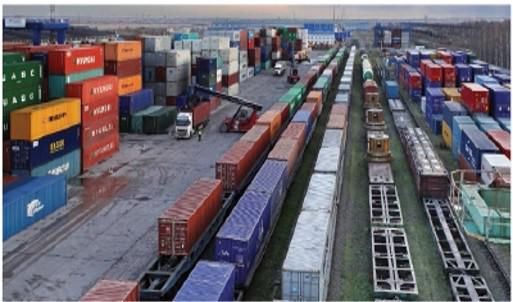
Группа компаний Восход/ВМТ рада предложить Вам сервис по отправке контейнеров по маршруту Шушары (СПб) - Базовые станции Китая (Shanghai, Qingdao, Taicang) через наземный погран. переход Забайкальск.
Все подробности в нашем профиле.


Скажите, а вы создали корпоративный профиль?


Respect ! Excellent Door to Door Container Operator !
Настоящий шорт-си оператор ! Ваши 45 фут контейнеры реально конкурируют с автотранспортом : стоимость за тонну ниже, транзитное время порой одинаковое!
В контейнере груз сохранее чем в тенте/ Вообщем одни +++++
The multimodal shift: when a former dystopia can become a reality.
The sad soundtrack for ocean freight might be coming to end with experts predicting $100bn profit for carriers this year due to a paucity of supply. Despite that the flood of orders for newbuild containerships stemming for delivery in 2023 will break records for an injection of liner capacity – and potentially tip the supply-demand scales back in favor of shippers – carrier profits in the interim will see them set up for a long time in the future. Meanwhile, CMA CGM and Hapag-Lloyd are going to implement the new Peak Season Surcharges in Europe. The German shipping carrier will apply a PSS of US$500 per TEU and US$1,000 per FEU from the Middle East and Indian Subcontinent to North Europe. For the big players, it is a bearable move; however, smaller shippers are again the ones suffering the most. For them, the matter is about not only spiraling freight rates but also the widening spread in the market that has become a critical competitive parameter for importers. It is especially difficult to handle in the light of continuous disruption in global liner schedules. On the brighter side – the situation at Yantian is improving and companies are reporting upcoming repatriation of their ships to the port.
Alternatives are coming from different frontiers. The new multimodal link, with a shipping link between the UK and Kaliningrad, will be launched from Xi’an to the port of Immingham with its availability for eastbound services. In turn, freight forwarders and cargo owners are shifting some containerized cargo to bulk vessels. They are trying to find affordable and available capacity to move shipments. However, the solution seems as a short-term means as it will have a limited effect on the current capacity squeeze. Who knows, perhaps, with all the skyrocketing rates hyperloop concept will become a pretty much mundane alternative? HyperPort aims to use high-speed capsules to transport containers between ports and inland destinations.
Maersk comes into the green spotlight becoming one of the few companies that are undertaking particular, beneficial steps orientated at more sustainable future. The majority has not even released their SR reports and those who have, do not include the ships they charter, which is absurd from an environmental point of view. They have to be taken into account for an accurate evaluation of the environmental performance of a carrier's fleet.
The e-commerce boom can bring a positive change into UK ports that can use it as an opportunity to improve efficiencies and remove bottlenecks in inland logistics through a more regionalized business model. For example, the Port of Liverpool has expanded opening times and improved handling capacity to alleviate bottlenecks. Consequently, the aftermath spreads over hauliers – there has been a remarkable turnaround in access to the Mersey gateway with the Port of Liverpool releasing additional slots through its hourly resource checks.
A significant milestone has occurred for Hellmann Worldwide Logistics as it has acquired the overnight express provider Innight Express, based in Hungary and Romania. The company aims to expand the Central and East European markets.
The train locomotive of the industry obtains a new connection between Cosco’s CSP Zeebrugge terminal and Strasbourg in eastern France with daily roundtrips thanks to cooperation among Naviland Cargo, CSP Zeebrugge, and Zeebrugge port authority. There is also a stopover in Antwerp. Moreover, InRail completed its first train trip connecting Škrljevo in Croatia and Creutzwald in north-eastern France in a unique route. This step can surely be counted as the company’s international benchmark. However, not everything is stress-free for rail. The Iranian government is not clear on its decision to build the railway line between Astara and Rasht, as it is hoping for other infrastructure through Armenia and Azerbaijan to play a leading role. As the result, the missing link on the railway corridor from Russia to India is likely to remain underdeveloped for much longer.
Not only rail will see a strengthening presence of women, but the shipping sector too. The UK Chamber of Shipping has confirmed that Sarah Treseder will succeed CEO Bob Sanguinetti. Currently, she is the CEO of the Royal Yachting Association, where she has been for more than 10 years.

На фоне астрономических ставок на традиционные виды транспорта hyperloop перестает быть утопией...

Is a win-win solution possible when the crises does not seem to back off? The search continues.
The crisis that does not seem to unclench its tight fist around the shippers, pushes them to decide to operate direct services from Chittagong port to the ports in the US and Europe. The challenges have created a capacity crunch of feeder vessels, and congestion at regional transhipment ports has become a reason for a stockpile of over 14,000 export laden containers at the inland container depots. Bangladesh Garment Manufacturers and Exporters Association believes launching the Chittagong to US and Europe direct services is the only way out.
Meanwhile, the government becomes a sufficient means of facilitating recovery in South Korea. Officials have launched a major support package for the domestic container shipping industry to make it a win-win solution for both liner operators and shippers. According to the plan, shippers would receive shipping services at subsidized rates for a significant period, with carriers assured of stable revenue. The U.S. Department of Transportation follows suit with its initiative to invest $905.25 million into the Port of Dubuque and Northeast Georgia Inland Port’s infrastructure.
A need for more cargo gateways in the US finds its reflection in the launch of a new Maersk line in a new Asian container service through Southeast Asia/Vietnam and China at the Port of Baltimore, an important site from the perspective of e-commerce combined with the number of local distribution, fulfillment and sorting centers.
Despite the leaps of support and slight improvements, shippers worldwide are hesitant when it comes to ordering new ships for fear of proven green propulsion technologies, which has sparked secondhand tonnage buys to hit all-time high volumes so far this year. Meanwhile, according to the forecasts, about 8% of the global fleet will change hands this year in which signifies another record year for brokers.
The Ever Given saga has come to its end – the ship will leave the Suez Canal after three months of ongoing disputes in the light of the agreement between the Suez Canal Authority and the vessel owners and insurers. The initial demand of SCA was more than $900m in compensation, but it was cut to around $600m.
The green vector of development continues its presence in the agendas of the companies, rail in particular. According to Kuehne + Nagel, a road-to-rail program in China with Honda involving the inbound-to-manufacturing transport shifting from road to rail had led to CO2 emissions being reduced by 70%. The IKEA project for Maersk has also demonstrated impressive results –the IKEA Supply Chain Operations footprint on this transport flow has been cut by 75%.
While looking for alternatives to switch to air freight due to the ocean constraints, shippers will have to study load factors, which reveal a tipping point of 80% for rate changes, as experts predict. In the current context, the market can easily shift from a buyers’ to a sellers’ market, or vice versa if utilization is falling. It also influences the tradelanes since this tipping point determines whether a customer wants a long or short contract. It changes the rules of the game, and it changes the conversation between airlines, forwarders, and shippers.
Overall, when assessing the situation, it is crucial to remember that despite record import volumes in the first half of the year, retail inventory-to-sales ratios are still historically low. Although people are starting to spend more on services, goods consumption remains elevated. The traditional peak season looms and importers face a rising risk of not getting goods on shelves on time. Experts universally agree that there is no indication that spot rates or charter rates will fall materially before next year.

Перевозим контейнера из портов и ж/д терминалов Прибалтики, Польши, Германии в РФ, РБ и обратно. Имеем большой опыт работы в перевозке контейнеров. Работаете с нами - работаете без сюрпризов и форс-мажора.