
Challenging times bring some down but lift others. Who is aiming to replace the glory of the Suez?
In the light of the Suez incident, Turkey is taking active steps aiming to become a global logistics power thanks to the launch of a new $15 billion project “Kanal Istanbul” that will relieve shipping pressure on the Bosphorus Strait. It is a needed development especially since the traffic is expected to increase to 78,000 vessels from the current 43,000 ones passing through the Bosphorus every year. India follows the example — its participation in advances of the International North-South Transport Corridor connecting it with Iran, Azerbaijan and Russia allows it to skip the Suez Canal on the way to Europe. Overall, the country is eager to explore and develop the region of Central Asia.
The madness with India’s ocean freight rates spurs on the waiting period to secure bookings that has again increased drastically. All majors liners have limited space, so whatever space is left they are trying to sell for premium. Many lines have intentionally kept higher rates on various routes to avoid new bookings. However, the problems are not solely about India. CMA CGM plans to stop calling at the French port of Le Havre for three months, citing congestion due to the lack of productivity. It is not expected to improve during summer.
The current context may be challenging for some, while for others it is an opportunity for another breakthrough. MSC, chasing its asset expansion, is acquiring additional five boxships following the recently purchased 60 vessels. In turn, Hapag-Lloyd is not planning to give up its positions either. It has ordered six ultra-large container vessels of 23,500 TEU capacity each, building on a previous order it made at the end of 2020.
However, the key possibilities for building momentum are for rail freight. Hupac is setting up a new cross-border liquid cargo service between Europe and China for the chemical industry in Europe. The aim is to make it a regular service with attractive transit times because the main route on the New Silk Road currently takes too long.
Green is the trend color of this summer. It has been decided that airlines must start measuring and informing customers of emissions for each aircraft on each tradelane. Transparency is one of the main pillars of a sustainable future, and it has to be addressed in all sectors. IKEA and Maersk seem to be sharing this idea by announcing that they will cut greenhouse gas emissions from the long-haul transport operations by shifting hinterland traffic at the Port of Barcelona from truck to rail using Maersk's solutions. In general, Maersk turns out to be everyone's go-to-choice and takes the lead even in the green development. It is signing a fully carbon-neutral transport agreement on ocean services with fashion company Bestseller.
To boost the activity of the port, the Port Authority of Valencia with Spain’s Ministry of Transport has formalised contracts for a $3.93 million of work to begin on the Logistics Activities Zone to improve the flow of trade. The UK is moving forward as well. The iPort Rail terminal in the South Yorkshire town of Doncaster has been granted Authorised Economic Operator status. It can now support goods moving in both directions through the Channel Tunnel. It is the first Strategic Rail Freight Interchange in the UK to achieve the designation. The positive improvement also concerns freight traffic through the Channel Tunnel between the UK and France. It is now recovering and reporting a 25% increase in operations. Moreover, the UK‘s Maritime Transport has announced a new rail freight service, which connects DP World London Gateway to Maritime’s intermodal freight terminal in Tamworth aimid to deliver a direct link to consumer and manufacturing regions in the West Midlands and south of England.


Is the post-pandemic world a new dawn for China? It is a tricky game of aiming to be first in the race. At least, Amazon can tell.
Among the candidates for the fastest recovery, China was probably the last one with continuous congestion, COVID-19 outbreak and the following lockdown. However, the forecasts about the virus crippling the country’s economy did not live up. Chinese exports are now much higher than they were before the pandemic, ships are full, and the county is experiencing the broadest economic upside. The ships at anchor waiting at California ports highlight the demand for Chinese goods as well, and despite all the talk of supply chain diversification, American sourcing remains China-centric.
In the light of the over-the-moon rates and disrupted supply chains worldwide, the most obvious solution would appear to be for the shipping lines to lay on more services and get things back to something manageable for importers. However, the lines are signing fewer long-term contracts and pushing customers, large and small, towards the erratic and extortionate spot market. The latter simply risk running out of cash.
Additionally, the reality is pushing shippers to pay 332% more per box than they were this time last year, according to the latest data. At the same time, yet they’re having to put up with the worst schedule reliability in the history of containerisation. Having taken this matter into account, some companies launched an initiative to provide full transparency on its schedule reliability for the sake of maintaining customer loyalty.
Major shifts in online retail might be witnessed in the near future as Amazon’s logistics arm, built around its Fulfilment By Amazon product, is in danger of being cut off from its online marketplace. If the US government paves the way into this initiative, Amazon will have to take onboard third-party business which can possibly lead to an increase in prices.
Meanwhile, e-commerce is on the rise for such companies as FedEx. It will invest in 20 more cargo jets as e-commerce continues to drive global growth of the parcel sector. In particular, it drove a 28% increase year-over-year increase in the company’s returns business.
As for rail, India aims to pace up developments in countries belonging to Central Asia thanks to the International North-South Transport Corridor as an alternative to the traditional routes carried out by sea through the Suez Canal and the Mediterranean, and the Baltic Sea. Can India become a leading rail freight force or will it have to move over?
While the question “to be or not to be?” will always be worthy of asking, another one about reshoring is up again. Experts note that accepting that there is scope for some ocean freight to migrate to air to get round the present logistics difficulties by ship, in most cases the business model of shippers is not able to bear the transport costs.
The stakes are very high for Canada where supply chains have already been under strain from the unprecedented volatility and surge in demand. Thousands of members of the Canada Border Services Agency are in the midst of voting on whether to authorize a strike . However, a shutdown of all ports is not planned.
MSC shows no sign of slowing down its buying spree with new data reporting the acquisition of another five boxships. The company already added around 60 secondhand vessels over the last 10 months, and now they have bought more Borealis Maritime’s 2,474 TEU.
Following an engine room fire that MSC Messina suffered, it has been reported that one of the 28 crew member team is missing. They flooded CO2 to control the fire, but once it was gained, the smoke was still coming out.

No time for rest — the spot rates are expected to grow as more obstacles come in sight. The UK’s importers are up for a challenge with the new context of post-Brexit reality.
The short-term freight rates are on the continuous rise this time breaching the $20,000 per 40ft mark from China to Northern Europe. Although these massively elevated rates include a premium fee guaranteeing equipment and space, shippers report that their cargo is still getting rolled. The situation is expected to get worse with the upcoming peak season. Similarly, rates on Shanghai-Rotterdam gained $779 to reach $11,975, a year-on-year change of 626%. Experts predict upwards pressure on essentially all headhaul trades.
The circumstances have also gotten more perplexed due to the Pearl River Delta port congestion that triggered another spike in volumes and rates for China-Europe rail freight. As a result, more delays and equipment shortages have been caused. The problem of the lack of space is becoming alarming since it is going to extend the growth of the rates. Now if shippers have the chance to ship goods, they are taking that chance and putting them in the warehouse already. Hence, strong demand will go on this year and there is probably no relief in the short term. Meanwhile, it has been reported that there are 17 blank sailings on the Europe to US east coast alone in the next 12 weeks.
The UK’s prestige route between London and Edinburgh is full, and rail freight is getting the blame. The government owned LNER had drawn a wave of criticism for its timetable proposals, which blamed the need for freight paths on its recast service. The company itself sees it as a disaster scenario for the North East and foresees the changes as a problem for the community.
The parcel flow from China to Europe will be hit by the end of exemption from duties on imports worth less than €22. From 1 July, parcels imported from non-EU origins will then require customs clearance, payment of VAT and, depending on national thresholds, customs duties. The €22 limit will be scrapped under a wave of protest from EU-based merchants, over a flood of cheap online purchases from China putting them at a competitive disadvantage. With the UK’s six-month moratorium on customs declarations coming to an end, importers are expected to fall into disaster. HMRC’s delay aimed to reduce strain on the system and provide importers sufficient time to adjust to post-Brexit procedures, but now they have too much on their plates to proceed the orders on time. Brokers believe the measure only postponed the inevitable crisis.
The train driver’s union GDL has conducted negotiations with Deutsche Bahn but the result has not been fruitful. Both parties agree to a wage increase, but GDL wants the increase earlier, while DB says it needs a longer term to cope with the financial corona damage. The call for warning strikes has been cancelled, but it does not mean that all issues have been cleared out. Deutsche Bahn has sharply criticised the GDL leadership’s blocking stance in the current collective bargaining round.
Sustainability is on and thriving. As part of the EU-funded Fastwater project which aims to demonstrate the feasibility of methanol as a sustainable marine fuel, Port of Antwerp has announced it is converting a tug boat to methanol propulsion. The European Commission approved the project. This decision will help the Port of Antwerp take another important step in its transition to becoming a sustainable and CO2-neutral port.

The long-awaited ease of Yantian’s congestion has not brought the needed relief. The new jaw-dropping increase in rates has shaken up the industry
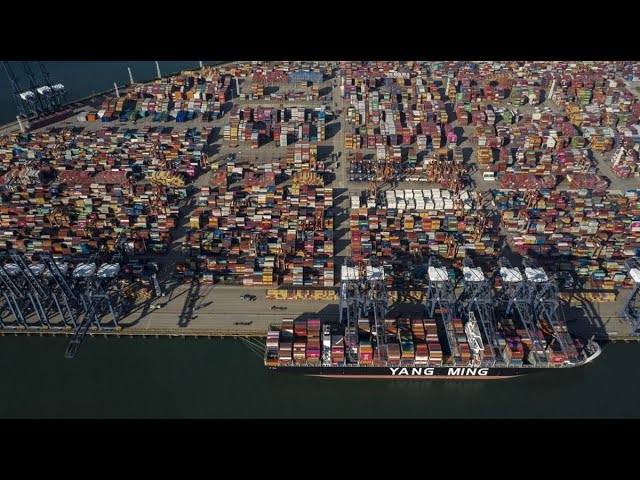
Despite Yantian resuming its full operations after weeks of severe congestion, normality is still far out of reach. Experts have estimated that it will take around 82 days to clear the backlog. The reality is yet to prove or disagree with the forecast. So far, the trend of increasing rates continues with a major hike including rises nearly 40% in the US. Even with the eased situation at the US west coast gateway complex, logistics companies are in for one hell of a ride. According to the predictions, there will be a surge in traffic that will renew strain on the ports of Los Angeles and Long Beach, as well as the rail and truck networks beyond them before the context will stabilize. As a result, the high prices and the lack of capacity have led to difficult decisions for shippers such as negotiations on a premium price. It hardly was a topic of discussion before but now companies, desperate for inventory space, are willing to spend any money just to receive the needed service. However, money cannot solve the problem as carriers’ capacity has peaked and there is no guarantee that they will not charge more. Rates are experiencing the steepest rise. From Shanghai to Los Angeles they increased to $8,548 this week. Some report $32,000 per FEU regarding the same direction. Rates from Asia to the US east coast also soared 39% to $11,180.
As a result, it may bring the shortages of essential goods, hence, the US government is broadening its focus from the food supply chain to the essential products supply chain, which incorporates personal care items that were lacking during uncontrollable buying in the beginning of the pandemic.
The problem of preventing the monopoly had the Korea Fair Trade Commission imposing a fine on 23 liner operators, but now industry stakeholders claim that the measure was a double blow amid tight shipping capacities. Following the complaints, KFTC’s investigations found that 23 liner operators and the Committee Of Shipowners For Asian Liner Service had come up with 122 freight-related agreements pertaining to the South Korea-Southeast Asia route.
While shippers are struggling to find space for their cargo and try to mitigate the threat of higher contract priceslooming over next years, Chinese COSCO has announced it will work with the Dalian Commodity Exchange to launch new shipping derivatives including a container capacity futures. In addition, COSCO is expanding its fleet by signing fixed agreements with Seaspan Corporation for 17 container ships.
Ripples from port blockage are going to affect booming rail freight that has been viewed as an alternative direction for development. The Pearl River Delta Port congestion has triggered another spike in volumes and rates (around $17,00 per FEU to Hamburg, for example) causing delays and equipment shortages.
Following the growth of spot rates, charter rates go through the roof and continue to be signed at jaw-dropping rates above $100,000 per day, in particular for short-duration charters. There are talks of uncertainty further out, in 2023.
Airlines are in need of more facilities since numerous airports are plagued by antiquated, cramped warehouses that haven’t kept up with growth in shipment volumes. Hence, the first new cargo facility built in 20 years will bring efficiencies at John F. Kennedy International Airport. Canadian airline WestJet will launch a freighter division to diversify its business.
The green debates over the stimulation to shift from fossil to low-carbon fuels have erupted again. NGO Transport & Environment claims the latest EU proposals will make matters worse, with an increased use of fossil fuels and the use of biofuels of dubious origins.
Automotive and industrial logistics specialist Gefco has been put up for sale in a deal expected to be worth more than $2.39 billion. It is also facing a very different competitive landscape and been badly hit by the Covid-19 crisis, with revenue falling back by almost €1bn.
FedEx is working to substantially increase its capacity by building out its infrastructure that will include 16 new automated facilities expected to be ready in time for peak season. The company is also adding a hub in Chino, California, in addition to the regional sortation facilities.


Это в 16 раз выше чем 1.5 года назад !!! Кто знает на сколько вырости ставки из Европы в РФ ? Уверен, что макс на 100 евро, а не в 16 раз ;)
Long read
Six Days in Suez: How the Ever Given and its billion-dollar cargo got stuck, got free, got impounded, and got taken to court.

Rail advances are sprawling all over Europe as ocean freight is still not showing promising signs of recovery.
All berths of Yantian including the West Port area will resume normal operations commemorating the end of one of the most damaging congestion. Laden gate-in tractors will be increased to 9,000 per day, and the pickup of empty containers and import laden containers remain normal. However, industry players have different opinions on how much time it will require to clear up the backlog with the best-case scenarios suggesting it could take several weeks to process it. Overall, such disruptors as Yantian and the Suez Canal incident have cost large companies an average of $184 million annually and unexpectedly taken a worldwide domino effect.
The path to a sustainable future is thorny and has never promised to be easy, hence, experts advocate for collaboration, which is why the shipping sector is looking within World Shipping Council framework to find a common carbon-free solution. Carriers want a global decarbonisation system rather than regional regulations from jurisdictions in Asia, Europe and the US. However, taking all factors into account, it is clear that the joint efforts are also subject to the laws of the countries they are in, which makes the process more complex and does not allow bypassing the discussion of jurisdictions.
While the green debates are on the roll, rail freight wastes no time, rigorously moving forward like a locomotive. Recently, CMA CGM has announced it will improve its intermodal coverage of Zaragoza, Spain, adding a new service from the Port of Valencia. The new Valencia — Zaragoza shuttle train is part of CMA CGM's active sales product Switch to Rail focused on development of the rail sector. There is now also a prime time to expand the transport capacity — the new terminal on New Silk Road, Dostyk TransTerminal at the China-Kazakhstan border, is proving to be successful. PTC Cargo LLP is managing it, and for the company it is a real milestone aimed to develop a multifunctional zone and strengthen its presence.
In the wake of rail achievements, the green agenda has not been omitted in this sector. The first zero-emission, fully electric shunting locomotives for the port of Rotterdam are in the production line as a joint initiative of the Netherlands and China that is expected to be implemented by 2024. Meanwhile, Deutsche Bahn will revive 20 lines with a total of 245 kilometres of track with regards to active climate protection.
Even such giants as IKEA are switching to rail understanding where the wind of potential recovery is blowing from. Maersk strives for success — together they are going for a distance of 100 kilometres to and from IKEA’s customer warehouse & distribution centre in Valls, Catalonia.
The UK hops on the rail train since the talks of development of the Great British Railways have been going on for quite some time. The planing has officially begun. The 2023 Periodic Review sets a five-year settlement that will determine the level of funding the network should receive for its activities. Others follow suit with a series of important connections sprawling over Europe. Kombiverkehr and Rail Cargo Group upgrade their services between Hungary and Germany. The two companies will offer six weekly roundtrips between Budapest and Neuss. Three of them will also include intermediate stops in Wels and Wien Süd terminals, both in Austria. The first container block trainconnecting Helsinki in Finland with the Nhava Sheva container port in India has recently departed. For Finland it is an actual momentum of growth — it is history’s first logistics operator that has sent a block train from Europe to India via the Western wing of the International North-South Transport Corridor. A new railway connection between Tilburg in the Netherlands and Kaunas in Lithuania is set to open in July.
Around 21 British logistics companies and associations are seeking Boris Johnson’s urgent intervention regarding the ease of truck drivers shortage. It has already hit the critical point and must be addressed as a priority. In particular, the Road Haulage Association is in need of a temporary work visa to allow hauliers to hire European drivers as the means of solving the staff problems.
Meanwhile, the 2,500 TEU container ship, CMA CGM Neva is under quarantine in Hamburg as five crew members, including the captain and chief officer, tested positive for Covid-19. In addition, according to the reports, it cannot be shifted to another berth or anchorage if there is not either crew replacement or the end of the quarantine period.

With Yantian’s congestion gone, the industry will have to seek an antidote for recovery and the search might take weeks to say the least.
The storm of congestion above Yantian is about to pass after a month-long cut in productivity, however, it is too early to celebrate the release as the aftermath of it has caused such damage that shippers have been warned that it will take many weeks to clear up the immense container backlog. The schedule reliability remains compromised despite the diminishing queue as well. The most challenging part of recovery regards moving the boxes around inside the clogged-up port perimeter and getting ships to berth. On the global scale, the ports will still struggle, meanwhile there is a premise for the Chinese ports to recover sooner — despite the severe fluctuations in container volumes since the beginning of COVID-19, four of the seven ports in the recent reports saw double-digit growth, indicating that the country’s maritime sector is robust. Shenzhen was the best performing port with growth of 29.3%.
The negative effect of the port blockage has resulted in a sharp increase in double sailings. It is the situation when two or more vessels are sailing within the same week on the same service string. It would not have been such a problem under normal market conditions, as such shifts would be of limited impact on the industry, but now due to the mass spread of the congestion, ports do not have buffers that would mitigate the risk. Consequently, spot rates are also expected to rise further on Asia-Europe services. According to experts, there are more blank sailings coming up in June-July and no improvement in equipment status. This most definitely explains why the National Retail Federation actively calls for a meeting with Joe Biden. The House Coast Guard and Maritime Transportation subcommittee will examine the impact of shipping container shortages. However, regardless of plans by Democrats or Republicans, US ports and inland waterways are due for just $17bn in spending under proposals by each of the two parties. That $17bn is a fraction of what ports alone need, so even bigger investments are needed urgently.
The forecasts do not predict any normality till the second quarter of 2022 at the earliest. The reason for it is that apart from inventories being pulled down by strong consumer spending combined, there are problems on both transportation and production sides. The retailers simply have neither the inventory they want, nor the possibility to place orders. The USA, for example, will need to add a lot of warehouse space dedicated to online fulfillment by 2025 in order to keep pace with the expected uptick in e-commerce sales.
One more obstacle has appeared on the way. In Shanghai, authorities have suspended the land transport of containerised non-essential dangerous goods after two recent fires in the port. They started when a reefer spontaneously combusted as it was being loaded onto a vessel.
The final accord of Ever Given deal has been struck. The agreement in principle has been reached over a compensation claim between the SCA and the owners of the ship. The deal follows a recently increased offer from Shoei Kisen to free the ship after an initial offer of $150m.
Meanwhile, Port Houston’s volumes have demonstrated a significant increase by 30% year-over-year in May. It has been driven by the new direct trans-Pacific Asian service and resulted in 288,127 TEUs. In turn, Port of Oakland awaits delivery of a new STS crane. It will improve cargo operations at the Everport marine terminal, run by Everport Terminal Services.
The Busan Port Authority aims at strengthening the logistics competitiveness of the domestic companies by signing a memorandum of understanding with KIFFA. It intends to help local companies enter overseas markets.