
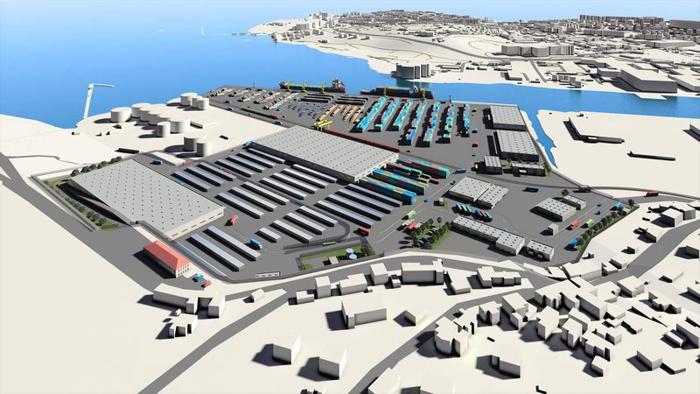
Landlocked Hungary has begun construction on its own sea terminal in Trieste, Italy, located approximately 200 kilometers from its nearest border.
The first phase of the 278,000 TEU Adria Port project includes a 250-meter quay, with plans to extend it by an additional 400 meters in the future.
According to Dynaliners report, the project is now expected to be completed by 2028, two
years later than originally scheduled.

This week’s FAK rate hikes introduced by carriers on the Asia-Europe trades managed to arrest 13 weeks of successive spot freight rate declines.
All the major spot rate indices this week showed a slight increase on the trades.
The Shanghai-Rotterdam leg on Drewry’s World Container Index (WCI) increased 2%, week on week to end at $2,636 per 40ft, while the Shanghai-Genoa leg was unchanged, at $3,745 per 40ft.
Xeneta’s XSI Far East-North Europe route showed a marginal week-on-week increase of just under 1%, to $2,733 per 40ft, while the Freightos Baltic Index’s Asia-North Europe increased 1%, to $2,973 per 40ft and the Asia-Mediterranean was up 1%, to $4,177 per 40ft.
Although these levels are considerably below the FAK [freight all kinds] rate of around $4,100 per 40ft to North Europe carriers were seeking with the 1 March increases, lines will find some comfort in the fact that three months of dropping prices have found some sort of floor.
How long that remains will depend on their capacity management over the next couple of months, which, as several speakers at this week’s S&P Global TPM25 conference in Long Beach noted, is particularly difficult while they are simultaneously rolling out new networks.
“Carriers are focused on getting the new networks up and running, which means blank sailings are not as effective as normal, and while this is under way they are also trying to hang on to market share,” Vespucci Maritime’s Lars Jensen told delegates.
However, new analysis of forthcoming capacity changes indicates carriers are on the verge of beginning to reduce capacity from Asia into Northern Europe, while increasing it to the better-paying Mediterranean destinations.
Using MSC’s upcoming proforma schedules as a proxy, liner database eeSea noted: “In Northern Europe, MSC’s expected (aka proforma) monthly capacity dips from an average of 432,000 teu in the six months leading up to the network upheavals, down to 358,000 average monthly teu in May and June, a decline of 17%.
“On the Mediterranean side, the six-month average of 268,000 teu up to January 2025 rises to an average 356,000 teu in May and June – a 25% increase,” head of operations and forecasting Destine Ozuygur said.
In contrast, spot rates on Asia-North America trades witnessed their eighth successive week of price declines – the WCI’s Shanghai-Los Angeles leg was down 9% week on week, to $3,166 per 40ft, while the Shanghai-New York leg decreased 6%, to $4,320 per 40ft.
Meanwhile, on the transatlantic trade rates have largely been flat for the best part of a month, in the range of $2,350-$2,400 per 40ft, according to the WCI, and a number of carriers have announced new FAK rates to be implemented at the beginning of April.
MSC said its new FAK rate on Antwerp-New York would be $7,000 per 40ft from 2 April, from the current $6,000.
CMA CGM also announced a new FAK level of a (weirdly precise) $3,026 per 40ft from Rotterdam to New York for 1 April, while Hapag-Lloyd is set to introduce a peak season surcharge of $750 per 40ft on all shipments from the Mediterranean to the US, Canada, and Mexico from 5 April.

US tariffs of 25% are set to hit Canada and Mexico today, while those on Chinese goods have doubled, to 20%.
Despite some hope there would be a last-minute reprieve, Donald Trump said yesterday there was “no room left for Mexico or for Canada” to avoid tariffs.
“They’re all set. They go into effect tomorrow,” he said. The tariffs will affect more than $918bn-worth of US imports from Canada and Mexico.
The stock market plunged after the announcement, with the S&P 500 falling nearly 1.8% in its worst day since December.
And all three countries look set to retaliate.
China will next week impose tariffs of 10% or 15% on a mix of imported US agricultural products, including meats, fruit, vegetables, and dairy.
Canada said it would immediately impose 25% tariffs on more than $20bn-worth of US imports, with a further $86bn-worth of goods being hit by tariffs in 21 days. Prime minster Justin Trudeau has previously mentioned goods such as bourbon, beer, wine, Florida orange juice, and home appliances.
Mexico is yet to respond, but said it had “a contingency plan”.
Mr Trump also warned of coming tariffs on imported produce, telling farmers, in a social media post, to get ready to sell their goods domestically.
“To the great farmers of the United States: Get ready to start making a lot of agricultural product to be sold INSIDE of the United States. Tariffs will go on external product on 2 April. Have fun!”
The US president also took time last week to suggest that the EU could face a similar 25% tariff on its US-destined exports.
Having claimed the EU had been “screwing the US for years”, Mr Trump said he and his cabinet had “made a decision… and it’ll be 25%, generally speaking”.
However experts from many fields have, in contradiction to the noise from the White House, predicted it would be US consumers that suffer the most from the tariffs, especially those applied to Canada and Mexico.
Columbia Business School professor Brett House said the union between Canada, Mexico, and the US made “North America an incredibly competitive place to build automobiles”.
“You can tap relatively cheap steel and aluminium from Canada, use the relatively low-cost labour in Mexico to assemble cars, and you can leverage the hi-tech expertise and technology of the US together,” he told Time magazine.
Without access to these neighbouring resources, US consumers could see car prices increase by $3,000, with pick-up trucks facing a $10,000 hike.
Such is the threat of looming price increases that Rice University Baker Institute for Public Policy fellow David Gantz added that, with taxes applied each time goods crossed the border, the move would create “an administrative and bureaucratic nightmare”.
Martin Balaam, CEO and co-founder of product information management platform Pimberly, warned that those not importing finished products could struggle, with the impact “being felt much further down the supply chain now”.
He added: “It could be that the impact is hitting them two or three suppliers down the supply chain.”


The Port of Barcelona's Management Board awarded a €72,359,045.87 (around US$75.35 million) contract for constructing the embankment of the new Catalunya wharf to the joint venture of Sacyr Construcción, SA and José Antonio Romero Polo, SAU.
The project, set to take 27 months, involves constructing a sea embankment as the initial phase for depositing materials dredged from the Spanish port docks, the navigation channel, and other ongoing projects such as the Adossat wharf and the new mooring points at the Energy whart.
This foundational work enables the commencement of the Catalunya wharf terraces.
Additional works include the preparation of a terrace for storing and managing construction materials, exemplifying the port's commitment to a circular economy by recycling materials and reducing unnecessary transport.
The primary goal of this reorganization is to equip the Port of Barcelona with the necessary infrastructure to decarbonize port operations and address the maritime and port sector's evolving needs.
The tender for this project was launched a year ago following Spain's Ministry for Ecological Transition and Demographic Challenge's approval of the Environmental Impact Statement
(EIS) in January 2024, with work anticipated to commence this summer.

Container spot freight rates on the main east-west trades saw another week of declines, although, in contrast to most of January and February, the falls this week were led by the Asia-North America trades.
Whereas the weekly falls in spot freight rates so far this year have largely taken place on the Asia-North Europe and Asia-Mediterranean routes, this week saw the steepest declines occur ex-Asia, to the US west and east coasts.
Drewry’s World Container Index’s (WCI) Shanghai-Los Angeles leg saw the spot rate decline 11% week on week, to end at $3,477 per 40ft, while the WCI’s Shanghai-New York leg dropped 10% week on week, to end at $4,593 per 40ft.
In contrast, the WCI’s Shanghai-Rotterdam leg saw spot rates slip just 1% this week, to $2,586 per 40ft, while the Shanghai-Genoa leg was down 2% week on week, to £3,747 per 40ft, providing carriers with some optimism that the spot declines on both trades – ongoing since the beginning of December – may have hit some kind of floor.
Liner analysts largely believe the spot rate declines will continue, given the large amount of new capacity that continues to hit the water on a weekly basis.
“We expect freight rates will continue to soften as vessel supply growth outpaces demand, an end to front-loading, and a return to Suez transits will catalyse this trend,” analysts at MSI wrote this week.
Indeed, they added: “Barring no major black swan event, we believe freight rates will drop substantially over 2025, meaning that GRIs scheduled for March are unlikely to hold, putting the market in a very different position to the highs seen in 2024.”
However, carriers are clearly hoping the GRIs will stick, if quotes for China-UK from the beginning of March are a proxy for the main Asia-North Europe trade. ONE, Hapag-Lloyd, and HMM are offering rates around $4,100 per 40ft, which is bang in line with Hapag-Lloyd’s published 1 March FAK announcement.
At the other end of the scale, however, Maersk is offering $2,500 per 40ft on a pre-paid spot basis, and Yang Ming $3,050 per 40ft, and the expectation among many customers is that rates will continue to come down.
“Carriers are being very bullish – even as rates slide, they deny it and advise they have control and the market is congested,” one forwarder said.
“We will see how long it is before the greasy slope drops rates down to the bottom of the hill.
“Hopefully it won’t – but I can’t see how it can be avoided,” they added.

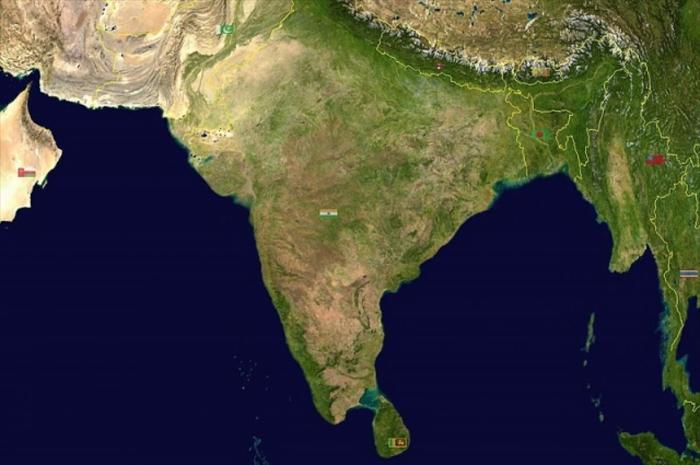
Container hauliers serving terminals at India’s Nhava Sheva port (JNPA) continue to voice concerns over lengthy vehicle turn times and low productivity.
The pressure on them seems in large part rooted in a mismatch of ocean and landside capacity at the port, which, along with Mundra, accounts for roughly 60% of India’s containerised trade.
Thanks to carriers’ expanding networks and ever-larger box ships, plus exporters trying to maximise shipments before the fiscal year-end on 31 March, Nhava Sheva has seen unusual volume growth of 23% last month, year on year, according to the latest data.
Sporadic vessel-bunching, due to the Red Sea-linked diversions, have also been a factor testing JNPA’s previously seamless port flow, say industry sources.
Despite intermodal rail service enhancements, over-the-road freight accounts for the majority of volumes passing through Nhava Sheva, making quicker vehicle turnarounds critical to its supply chain fluidity.
Truckers mainly blame BMCT, or PSA Mumbai, the newest concessionaire at Nhava Sheva, for the gate slowdown, rejecting its claims that the congestion had been resolved.
“The traffic congestion is causing significant inconvenience to our members, drivers, and the trade community,” said the Nhava Sheva Container Operators’ Welfare Association, which represents truck owners involved in container moves in the harbour.
But PSA told trade stakeholders the “off-and-on congestion” had been a result of volume changes across terminals, rather than through a single terminal.
The Singapore-based operator said: “We will continue to focus on the efficiency of our gates and yard, but there will always be a limit to how much we can handle within a given period of time, and we therefore ask again that we collectively try to avoid the surging which will definitely assist in minimising truck waiting time.”
“We have added the capacity required to handle the expected trade growth and additional demand, but there will always be an issue when trucks swarm to any one of the JNP terminals,” it added.
But the association said that as the trucking delays persist, containers for loading ran the risk of being shut out.
BMCT saw 870 containership calls from April through January, substantially more than the 704 in the period a year prior, and container volumes soared to 1.84m teu, from 1.7m teu, data shows.
Meanwhile, also due to the Red Sea crisis, Nhava Sheva has reported a meteoric rise in transhipment handling, another factor driving the port throughput.
Additionally, major carriers, Maersk in particular, are now using ultra-large container vessels on services out of India, which typically involve more container exchanges per call.
Meanwhile, PSA is close to opening phase 2 of its development at Nhava Sheva, providing a further 2.4m teu of capacity, meaning port capacity is expected to be adequate for near-term cargo volume projections.
But the landside pressure could challenge this if volumes continue to build.
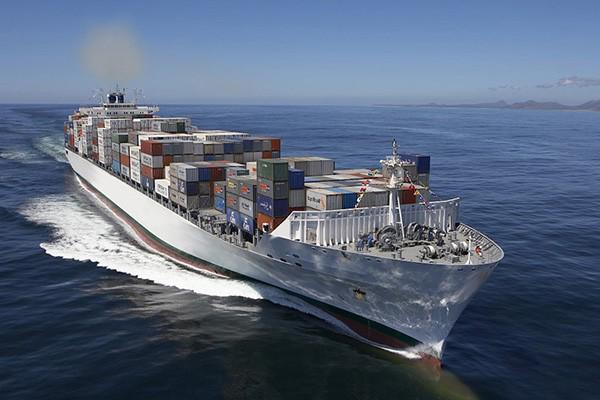
MSC has returned to Zhoushan Changhong International Shipyard for up to eight 21,700 teu LNG dual-fuelled ships, as the Swiss-Italian carrier consolidates its pole position among liner operators.
The yard announced the order on Friday, when it also clarified earlier reports that Greek shipping magnate George Economou’s TMS Dry had commissioned six 11,400 teu LNG dual-fuelled ships – in fact there are 10 firm orders.
MSC’s order is for four vessels, with options for four more, and TMS Dry also has options for four more ships.
MSC has ordered ten 11,500 teu, ten 10,300 teu and a dozen 19,000 teu ships from Zhoushan Changhong over the past three years. The yard said: “We have become MSC’s largest shipbuilding partner. It’s a testament to our skills in constructing LNG-powered boxships.”
The price of the latest order was not disclosed, but according to VesselsValue, the ships are estimated at $220m each. MB Shipbrokers reported that delivery of the first three will be in 2027, the rest the following year.
The vessels commissioned by MSC and TMS Dry will be built according to designs from CIMC ORIC, a unit of China International Marine Containers, the world’s largest container maker.
With the latest order, MSC’s orderbook now stands at more than 2.06m teu, equating to 32% of its in-service fleet. Interestingly, MSC’s orderbook now exceeds ONE’s whole operating fleet, of 1.97m teu.
Meanwhile, CMA CGM, which with an orderbook of 1.32m teu could overtake Maersk Line in the carrier ranks in due course, commissioned up to a dozen (eight firm orders and four options) 18,000 teu ships for $2.5bn at China’s Jiangnan Shipyard two weeks ago, following its order for 12 15,500 teu vessels from HD Hyundai Heavy Industries.
However, Maersk, with an orderbook at 758,622 teu, is reportedly not sitting back and is said to be looking to order another 30 containerships. The Danish carrier has approached to Chinese shipbuilders for up to a dozen 15,000 teu LNG dual-fuelled ships, and shipowner Seaspan is said to be in discussions on newbuilds for long-term charter to Maersk.
Turkey is making further inroads in its efforts to become the main link in Asia-Europe rail freight, as more Chinese volumes pivot away from Russia towards the Middle Corridor.
China was eyeing investing $60bn to help Turkey, straddling Asia and Europe, modernise its rail infrastructure – including plans to further electrify the network, build new domestic routes, and extend its high-speed network.
As part of that transformation, Turkey’s transport ministry confirmed completion of a tunnel in Istanbul, with Railfreight reporting it would form part of a high-speed link with Bulgaria, which when complete would halve freight transit times between the two countries, from eight hours to three and a half, with annual throughput of 33.5m tonnes.
Late last year, minister of transport Abdulkadir Uraloglu said the intention was to add 8,554 km to Turkey’s high-speed network by 2053.
The government is also aiming to bolster the number of logistics facilities – ports and warehousing and industrial sites – in an effort to expedite deliveries across Europe.
However, with more and more China-Europe volumes flowing through the Middle Corridor, at the expense of Russian rail freight, Turkey wants to position itself as a gateway within the Middle Corridor.
Central in this effort has been the participation of Kazakh national carrier KTZ, one of the main beneficiaries of the huge loss of business suffered by its opposite number in Russia, RZD.
Announcing a 13% uptick in volumes, KTZ said yesterday that, together with China’s Urumqi Railway, it would be doubling cross-border services.
KTZ said: “The parties agreed to double the number of trains from Kazakhstan to China via the Altynkol-Khorgos border crossing from eight to 15 trains a day from 1 March and, via the Dostyk-Alashankou border crossing, from 14 to 28 trains a day from 1 July.”
It added that this would “significantly increase export potential and open up additional opportunities for domestic producers”.
And, following a $660m injection from the World Bank, hopes are high that Turkey will be able to hoover-up some of volumes destined for Europe via its looming new high-speed network, set to reduce transit times and better compete with th higher-polluting airfreight options.

While spot rates across the major deepsea trades have been on the decline since the turn of the year, long-term contract rates appear to be heading in the other direction, according to new analysis from freight rates benchmarking platform Xeneta.
It found that contract rates on the Asia-Europe trade recorded on its platform on 1 January were 57% higher than at the same point the year before.
While spot rates are heading towards worrying territory for carriers, anecdotal evidence suggests that, in contract rate negotiations, carriers have managed to maintain pricing discipline.
“Despite the spot rate drops, long-term rates have maintained at a decent level,” Zencargo’s VP of global ocean freight, Anne-Sophie Fribourg told.
“2025 long-term rates on the Asia-Europe trades are being agreed at quite light levels,” she added.
And it would appear that the falling spot rates, in combination with continued geopolitical uncertainty, has led shippers to be far more tentative in the tender process, with forwarders reporting that many Asia-Europe shippers are only launching annual tenders “now that Chinese New Year is out of the way”.
Traditionally, Asia-Europe annual contracts ran from January to December, but many were delayed last year when low spot rate levels in early 2024 saw many contract rate negotiations extended by several months.
According to Xeneta data, while spot rates have continued to slide in the first months of the year, from a peak in the autumn, carriers have, understandably, attempted to capture greater volumes under contract, and are offering big discounts – said to be as much as 28% on Asia-North Europe, provided “shippers agreed to a contract greater than six months”.
“This is a fascinating negotiating dynamic between the seller and buyer,” writes Xeneta analyst Emily Stausboll.
“On the one hand, you have the seller trying to incentivise longer-term agreements to manage risk and protect market share. On the other, you have the buyer doing everything possible to keep their options open for as long as possible while not spending more than necessary,” she adds.
The situation is similar on the Asia-North America trades, where Xeneta reports 1 January contract rate levels were 64% up year on year into west coast ports, and 44% up on shipments to the east coast. Ms Stausboll notes that, although the transpacific trades are still warming up for their annual rate negotiations, ‘early bird’ discounts are already being made available.
“From the Far East to US east coast and west coast, the discounts [on six month-plus contracts] were 13% and 2% respectively – it should be noted that US shippers aren’t as far into tender season, so this figure could rise,” she says.
The European Commission (EC) has branded the latest US “reciprocal tariffs” as “a step in the wrong direction”.
After the past few weeks of tariff-pandemonium, the Trump administration has released yet another plan to boost the US trade deficit.
With its Reciprocal Trade and Tariffs Plan, the administration will examine the arrangements with all the US trading partners and determine an equivalent “reciprocal tariff” for each.
A White House statement yesterday said: “The plan shall ensure comprehensive fairness and balance across the international trading system by factoring-in losses as a result of measures that disadvantage the United States as applied, regardless of what they are called or whether they are written or unwritten.”
It added: “The US has one of the most open economies in the world, yet our trading partners keep their markets closed to US exports — and reciprocal trade will finally correct that imbalance.”
The EC has hit back saying it “sees no justification for increased US tariffs on its exports”.
It added today: “Tariffs are taxes. By imposing tariffs, the US is taxing its own citizens, raising costs for business, stifling growth, and fuelling inflation. Tariffs heighten economic uncertainty and disrupt the efficiency and integration of global markets.”
And, while the commission assured it “remains committed to an open and predictable global trading system that benefits all partners”, it vowed to react “firmly and immediately” against the US, adding: “The EU will always protect European businesses, workers, and consumers from unjustified tariff measures.”
Within 180 days, the director of the US office of management and budget will assess the fiscal impacts of the Reciprocal Trade and Tariffs Plan and deliver an assessment in writing to the president – however, there has been inconsistency between plan and action.
President Trump previously threatened a blanket 10%-20% global tariff on imports, with a 25% tariff on those from Mexico and Canada. But then he revoked it for “a 30-day review”, placed 25% tariffs on steel and aluminium imports, threatened 60% tariffs on Chinese imports but settled for 10%, and paused the de minimis exemption on Chinese shipments, but then re-instated it two days later, also for a 30-day review.
Meanwhile, India is establishing closer relations with the US. A meeting this week between President Trump and India’s prime minister, Narendra Modi, ended with reports of a “mega-partnership” deal for India to import more US oil and gas.
During Mr Modi’s two-day visit, President Trump criticised India’s high trade tariffs as “a big problem”, and the Indian leader said he was open to reducing tariffs on US goods.