
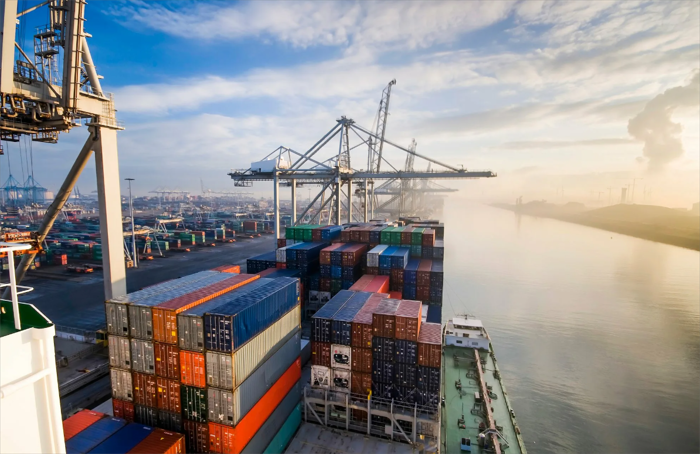
Indian importers and exporters are dealing with considerable cargo delays at Mundra Port, which leads the country’s containerised trade.
Local trade sources have raised serious concerns over the congestion plaguing Mundra’s container terminals over the past few weeks.
“The terminals at Mundra now seem to be hugely congested and the pendency (backlog) has increased to levels, which is affecting normal movement of boxes between CFSs [container freight stations] and terminals,” the Container Freight Station Association Mundra said in a complaint.
The association also noted: “All the efforts put in by CFSs are not witnessing any improvement, but are rather finding that the situation is deteriorating further.”
A change in the process of issuing port entry permits for freight vehicles by the port authority appears to be the major source of frustration for freight station owners.
According to them, truckers are facing longer waits to move in and out containers due to their inability to secure entry permits promptly.
The CFS association explained: “Vehicles are stranded on the road for hours together because of this. A corrective measure needs to be discussed with our members and worked out so as to ensure that movement continues without any hassles.”
The congestion has also left container rail operators piqued, as ICD (inland container depot) volumes represent a significant portion of Mundra’s box trade.
“There has been increased congestion at Mundra Port on account of delays at the port in terms of ability to effectively evacuate import containers in FIFO (first-in, first-out) sequence and on time, despite trains being provided for clearance by container train operators (CTOs),” Association of Container Train Operators (ACTO) said in a trade advisory.
According to ACTO: “This has led to restrictions being placed by Indian Railways on double-stack loading in order to speed up train evacuation from the port.”
The group added: “It is clearly informed to trade, port and shipping lines that the resultant levy of ground rent charges is not a result of any fault of the CTOs.”
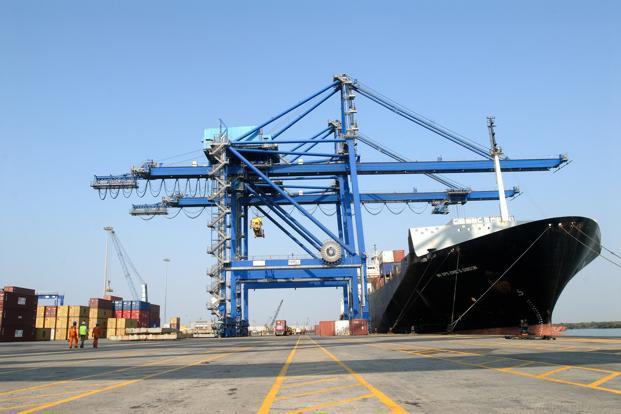

As East Asia's container shipping industry sails into uncharted waters, it faces a shifting tide of customer demand reshaping the very foundations of maritime trade. Amidst emerging trends and evolving preferences, stakeholders must adapt, innovate, and collaborate to stay ahead in this dynamic and competitive arena.
In the dynamic landscape of global trade, East Asia stands as a pivotal hub for container shipping, facilitating the movement of goods across continents and powering the engines of commerce. With its strategic location, robust infrastructure, and rapidly expanding economies, the region's container shipping industry plays a crucial role in connecting markets, driving economic growth, and shaping the future of maritime trade.
East Asia's ports are witnessing a surge in vessel sizes and container throughput,
necessitating investments in infrastructure and efficiency enhancements to accommodate larger ships and handle growing cargo volumes.
Changing landscape of customer demand
The geopolitical landscape is undergoing profound changes, with geopolitical tensions, trade disputes, and economic uncertainties reshaping global trade patterns and supply chain dynamics. As a result, customer demand in the container shipping industry is influenced by shifting trade routes, emerging markets, and geopolitical developments.
Amidst emerging trends and evolving preferences, stakeholders must adapt, innovate, and collaborate to stay ahead in this dynamic and competitive arena.
Along with sustainable technologies, shippers are more attentive throughout the entire
process, unlike in the past, when receiving a consignment meant the end of their
involvement. Currently, shippers understand that competition is intensifying, and any issues during the voyage could affect their profitability. This shift in mindset emphasizes the need to re-evaluate the quality of service provided. Hence, it is key to ensure all customers are well-informed and regularly updated about their operations to enable a close working relationship to cater to meeting the dynamic demands required.
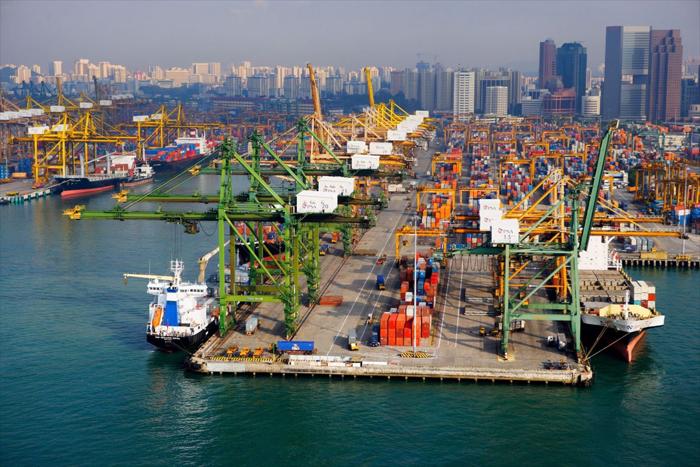

Welcome a new company on Maxmodal. You can see HIS Hamburg Intermodal Service Gmbh services on their business profile, drop them a message, add them to your contacts or submit a special request to them


The Global Port Tracker report, released jointly by the National Retail Federation (NRF) and Hackett Associates, forecasts that monthly inbound cargo volumes at U.S. major container ports will reach their highest levels in nearly two years this summer.
According to Ben Hackett, founder of Hackett Associates, this surge, expected to extend over seven months with import levels consistently exceeding two million TEUs, is partly attributed to shifts in the traditional peak shipping season.
In compliance with the Japan International Freight Forwarders Association (JIFFA), in April, the ports covered by Global Port Tracker handled 2.02 million TEUs, marking a 4.6% increase from March and a 13.2% rise year-over-year—the highest since October 2022's 2.06 million TEUs.
While May’s figures are yet to be reported, projections suggest volumes climbed to 2.09 million TEUs, an 8.3% increase, reaching the highest level since August 2022's 2.26 million TEUs.
June is anticipated to see further growth at 2.11 million TEUs, up 15.2%, followed by July at 2.1 million TEUs (+9.5%), August at 2.17 million TEUs (+10.6%), September at 2.06 million TEUs (+1.7%), and October at 2.01 million TEUs (-2.3%).
Overall, the first half of 2024 is projected to handle 12.1 million TEUs, reflecting a 15% increase from the corresponding period last year.
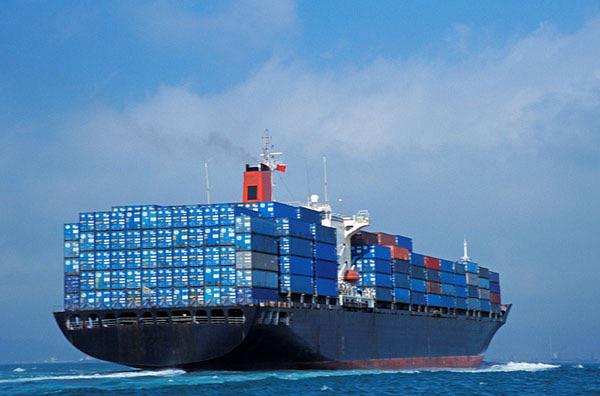

Nearly half of all Asia-Europe westbound sailings have failed to depart on time as congestion escalates in Asian ports.
Linerlytica’s latest report says last week only six out of 11 Asia-North Europe sailings departed on schedule, with congestion at Singapore and Tanjung Pelepas severely disrupting the market.
The consultancy said: “While bottlenecks in the second-busiest port, Singapore, have eased, the strain has shifted to Port Klang and Tanjung Pelepas in Malaysia. Waiting times have also risen across all main Chinese port regions, with Shanghai and Qingdao experiencing the longest delays.”
Ships have had to wait as long as five days to berth in the world’s busiest port of Shanghai, where logjams are at their highest since Covid.
S&P vessel-tracking data shows 50 containerships in Shanghai, including at anchorage. Some, like the Cosco Shipping Mexico and CMA CGM Big Sur, have been in the port since last week.
In Singapore, where authorities have temporarily reopened the shuttered Keppel Terminal to alleviate vessel queues, there are 56 boxships. The bottlenecks have caused some operators, including CMA CGM, to skip Singapore calls. That said, there is now about 380,000 teu of delayed vessels in Singapore, compared with 450,000 teu last week.
S&P also shows 51 containerships in Port Klang. Ports in south-east and north-east Asia are still the most congested, accounting for 29% and 23% of vessel queues worldwide.
The situation is such that management at Taiwanese liner operators Evergreen, Yang Ming and Wan Hai said last week they did not foresee any short-term let-up in the congestion, and that freight rates would remain high into Q3.
EMC GM Wu Kuang Hui pointed out that wage negotiations between port workers on the US east coast were due in September, which could cause shippers to rush out goods before that in a bid to avert any industrial action.
Linerlytica notes that, overall, liner capacity utilisation remains very high, while capacity forecasts for June, with continued delays from congestion, also see reduced capacity available due to forced blankings.

Flatbed linehaul rates remained mostly flat the last week of May, DAT reported.
Economic forces, consumer demand, seasonality, natural disasters and myriad other factors contribute to transport’s cyclical market.
Load-to-truck ratios
Load-to-truck ratios sprang upward for the week beginning May 12, compared to the previous seven-day period. DAT reported:
Load-to-truck ratios were mixed across equipment types for the week beginning May 26, compared to the previous seven-day period. DAT reported:
Dry van increased from 4.6 to 5.2 loads per truck
Reefer decreased from 6.4 to 6.3 loads per truck
Flatbed increased from 17.6 to 19.3 loads per truck
“Dry van load post volume was within 3% of last year following last week’s short shipping week following Memorial Day,” DAT noted in a blog post, adding that carrier equipment posts were 24% lower during the week than the same period last year.
Spot linehaul rates
DAT’s linehaul rates measure the seven-day weekly moving average for spot rates in dry van, reefer and flatbed hauls. They often reflect the balance of supply and demand in the spot market. The rates are derived from DAT’s RateView database and do not include a fuel surcharge.
National benchmark average rates varied across multiple equipment types the week beginning May 26, compared to the previous week, per DAT:
Dry van increased by 1 cent to $1.66
Reefer decreased by 1 cent to $1.97
Flatbed essentially remained flat at $2.07
“Flatbed linehaul rates have remained mostly flat for the last three weeks,” DAT wrote in another blog post. Flatbed spot rates stayed above $2 per mile since breaking that threshold in May, a national average weekly rate last seen in July 2023.

The Canadian government is investing up to C$51.2 million (US$37.5 million) in 19 digital infrastructure projects to bolster Canada’s global trade presence, including some projects that address the flow of container movements.
Funding will come from the National Corridors Trade Fund, a C$4.6 billion program to make domestic supply chains more efficient, bolster infrastructure resiliency and reduce trade barriers, among other objectives. The 11-year program will wrap up funding on March 31, 2028; so far, C$4.1 billion has been committed to projects since 2017.
"Strengthening supply chains is essential to reducing trade barriers and strengthens Canada’s international trade performance. These investments demonstrate Canada’s commitment to stronger supply chains,” said Vance Badawey, Parliamentary Secretary to the Minister of Transport, in a 31 May release from government agency Transport Canada.

The developmet of Trans-Caspian International Transport Corridor (TITR), construction and cooperation of the countries and operators along the corridor has become one of the most important topics in the branch, so as the optimizing Eurasian trade and logistics services in response to supply chain disruptions.
By the end of 2023, more than 82,000 train trips have been operated and 7.9 million TEUs transported. The routes reachs 217 cities in 25 European countries. In 2020, Zhengzhou was approved as one of the first 5 assembly centers for Eurasian rail freight in China. In 2023, China-Europe freight train(Zhengzhou) had beed operated more than 3000 trips and more than 10,000 trips in total since 2013.
Province Henan has 3 national first-class land ports, 5 comprehensive bonded zones. It should be noted that the Zhengzhou Airport Economy Comprehensive Zone is currently the most important development project in Henan Province, and the new Zhengzhou International Land Port is currently under construction in this zone. Industrial manufacturing and automotive companies such as Linde, Foxconn, Skyworth, Geely and BYD are located in the airport zone.
The first Eurasian Rail Freight Expo (Zhengzhou), organized by China Federation of Logistics and Purchasing and Zhengzhou Airport Economy Comprehensive Zone, will be held on 6-8 June, together with the International Rail Freight and Multimodal Transport Summit.
The event will be attended by the governments of Henan Province and Zhengzhou Municipality, the Logistics Port Office, Zhengzhou Airport and Zhengzhou International Land Port, as well as key platform companies. Well-known operators and logistics companies from Asia and Europe will also be invited.


It appears increasingly likely that the main east-west container trades have now entered an early peak season – which, combined with disruptions such as equipment shortages, port congestion and schedule volatility, has caused the recent spike in spot rates.
There were tentative signs this week, however, that the pressure might be easing.
After three weeks of consecutive double-digit rate increases, this week saw low-to-mid single-digit rises, indicating that the upward spiral has begun to taper off.
Both the Drewry World Container Index’s (WCI) Shanghai-Rotterdam leg and Xeneta XSI’s Asia-North Europe saw spot rates rise 5%, to $5,270 per 40ft and $5,280 per 40ft respectively, while on the transpacific, the WCI’s Shanghai-Los Angeles leg was up 2%, to $5,390, and the XSI rose 4.5%, to $5,170.
“The current spot rally on Asia-North Europe will start to reverse in June, while the transpacific will stabilise or soften in the second half of 2024,” predicted Drewry senior manager of container research Simon Heaney in the company’s Freight Loop briefing
Xeneta’s head analyst, Peter Sand, agreed that this week’s market may appear a silver lining, but warned that some shippers could continue to encounter supply chain issues.
“While average spot rates will increase again on 1 June, the growth is not as rapid as it was during May, which may hint towards a slight easing in the situation,” he said.
“This cannot come soon enough for shippers who are already having their cargo rolled – even for containers being moved on long-term contracts signed only a matter of weeks ago.
“Carriers will prioritise shippers paying the highest rates. That means cargo belonging to shippers paying lower rates on long-term contracts is at risk of being left at the port. It happened during the Covid-19 pandemic, and it is happening again now.
“We are also seeing freight forwarders being hit with new surcharges and being pushed onto premium services to have space guaranteed onboard ships. In such cases they have no other option than to pass these costs on directly to their customers.”
And he added: “Carriers will continue to push for higher and higher freight rates, so the situation may get worse for shippers before it gets better.”
Shipment delays in Singapore have more than doubled, hit by a shortage of ships and containers, and congestion at ports. This could translate into higher prices for consumers, amid an impending supply chain crisis. One analyst says some sectors in Singapore are expected to come off worse from container and ship shortages. These include firms in the manufacturing industry, especially those involved in producing heavy goods, like consumer electronics or electric vehicles. Nasyrah Rohim and Charlotte Lim report.
