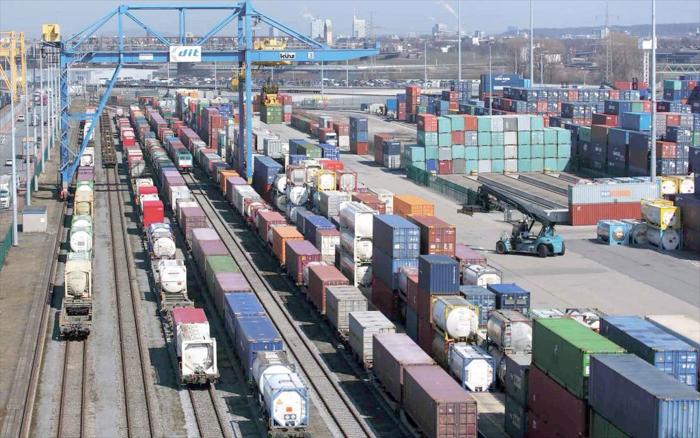
In the first half of the year, Port of Rotterdam's container throughput increased by 4.2% in tonnes to 67.1 million tonnes and by 2.2% in TEUs to 6.8 million TEUs.
The first quarter already saw a slight recovery in container throughput with this trend continuing in the second quarter.
"This is a direct consequence of an increase in demand for consumer goods," pointed out a port official. Additionally, there is an early peak season as importers order their products earlier than usual due to longer sailing times and fluctuating sailing schedules.
Moreover, roll-on roll-off (RoRo) traffic decreased by 4.1% to 12.8 million tonnes due to a weak UK economy. The other breakbulk segment fell 10.5% to 3.1 million tonnes. This is due to the containerisation of general cargo and the shifting of various cargo packages to other ports.
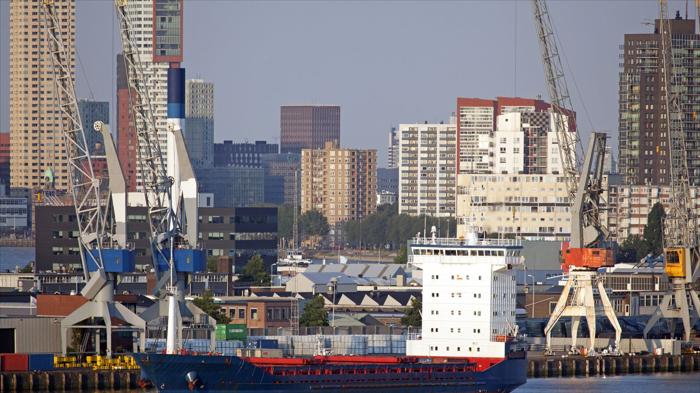

Almost all large containerships have been chartered until 2025, causing liner and feeder operators to turn their attention to smaller vessels, whose owners are seeking to lock-in higher rates for longer periods.
A report from consultant Linerlytica today says: “Availability of prompt tonnage is extremely scarce at the moment, especially for ships over 2,000 teu. The charter market remains effectively sold out for the larger vessels until next year.
“Charter rates continue to rise through the course of the week, although activity levels have slowed down noticeably.”
Linerlytica noted that while capacity was still being added to run services from Asia to the US West Coast, South America and Indian Subcontinent through August, there was still a shortage of vessels.
Clarksons’ latest Containership Timecharter Rate Index was up 3% from last week, to 182 points, nearly triple the levels in December.
It noted that Sinokor Merchant Marine had chartered two feeder ships, the 2008-built Atlantic Silver (1,338 teu) and 2002-built Atlantic North (1,121 teu) to CMA CGM, the former for five to seven months for $13,500 a day, and the latter for two years, at $20,000 a day.
One of the few post-panamax ship fixtures was that of Global Ship Lease’s 2013-built, 6,927 teu Costa Rica Express, which Hapag-Lloyd has chartered for five years at $43,500 a day.
Clarksons said: “Operators seem to have gaps in their services and are pursuing prompt positions that continue to diminish, while owners are reporting strong interest and aiming for rates above last done.
“Most owners have preferred to fix for long periods, however short periods are becoming more common, with six-figure rates for periods of two to three months gaining traction.”
According to Clarksons, daily rates for a vessel in the 1,700 to 9,000 teu range have doubled from the 2023 averages of $13,098 to $51,985.
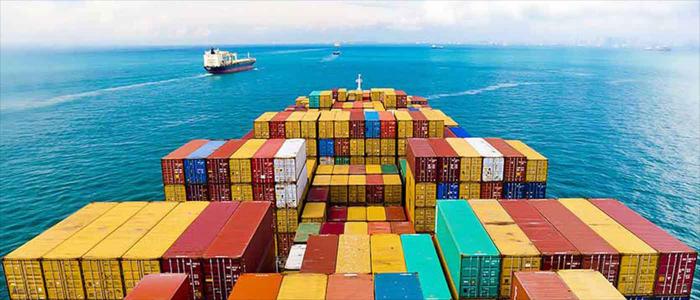

Global demand for ocean freight container shipping hit an all-time record in May amid soaring spot rates and severe port congestion.
The 15.94 million TEUs transported by ocean in May beats the previous record of 15.72 million TEUs set in May 2021, according to data released by Xeneta and Container Trades Statistics.
The record levels of demand in May brings year-to-date volumes to just under 74 million TEUs, which is an increase of 7.5% compared to the first five months of 2023.
"More containerized goods are being shipped by the ocean than ever before at a time when available capacity is impacted by diversions around Africa due to conflict in the Red Sea and severe port congestion in Asia and Europe," stated Emily Stausbøll, Xeneta Senior Shipping Analyst.
"This is a perfect storm of pressure on ocean supply chains which has resulted in the chaos of recent months. In many respects, it is impressive that global shipping networks have been able to transport this enormous volume of containers under such challenging circumstances."
The record-breaking level of global demand is largely driven by volumes out of the Far East, with China seeing an all-time-high 6.2 million TEUs exported in May (including 853,000 TEUs of intra-China container demand). This accounts for 39% of global container trade in May and coincided with spiralling spot rates on major fronthaul trades.
The latest data from Xeneta, the ocean and air freight rate benchmarking and intelligence platform, shows average spot rates from the Far East to US West Coast stood at US$7,840 per FEU on 9 July, up by 200% since 30 April.
On the US East Coast, average spot rates have increased by 130% in the same period to stand at US$9,550 per FEU. Into North Europe and the Mediterranean, spot rates have increased by 148% and 88% respectively to stand at US$8,030 and US$7,830 per FEU.
Stausbøll added: “Given we are already seeing record-breaking volumes in May ahead of the traditional peak season in Q3, you can understand why shippers are so concerned.
“The spot market is still climbing, the conflict in the Red Sea shows no signs of ending and the port congestion we are seeing in Asia and Europe will take time to de-pressurise.
“The big question for the market is whether the record volumes in May will mean reduced volumes in the traditional peak season. Numerous factors come into play, not only underlying consumer demand but also nervous shippers frontloading imports and the potential for further tariffs on China imports.
“While this combination could keep demand high moving through the next few months, there must be a limit to how long the record levels of demand can last.”
The impact of the record levels of demand combined with longer sailing distances around the Cape of Good Hope is demonstrated through TEU-mile calculations. This data reflects the distance each container is transported globally.
TEU-miles have increased by 17.9% globally in 2024 to date compared to the same period in 2023. This is mostly driven by the Red Sea diversions and longer sailing distances around the Cape of Good Hope.
However, the trades most impacted by the Red Sea diversions are the major deep-sea trades out of the Far East, which are also the trades which are driving record-breaking levels of ocean container shipping demand.
Had ocean container carriers continued to utilize the Suez Canal, TEU-miles would have increased by a lesser, but still significant, 8.6% in 2024 to date.
Stausbøll mentioned: “Earlier this year we saw increasing ocean freight shipping spot rates and wondered if there really was a capacity crunch or whether it was a case of the market panicking unnecessarily following the escalation of conflict in the Red Sea.
“We can now clearly see in the data the squeeze on capacity was very real, especially when you factor in the TEU-mile increase on top of the record-breaking global volumes and port congestion.
“It also demonstrates how much oversupply of capacity there would have been in the market in 2024 had the Red Sea conflict not occurred.”

Welcome a new company on Maxmodal. You can see Zaman Al Karam Sea Shipping services on their business profile, drop them a message, add them to your contacts or submit a special request to them
#shipping#warehouse#terminal


”It will probably be positive for the share if DSV lands the deal. But how much the share price would rise depends on the price,” says one senior strategist.
Danish logistics company DSV is among the final contenders in the acquisition race for German DB Schenker. And a possible takeover could have a big impact on DSV’s share price, according to investors and strategists, reports the business daily Børsen.
”The acquisition is the big joker in relation to the DSV share. They will be able to achieve significant synergy effects, and it will probably be positive for the share if DSV lands the deal. But how much the share price would rise depends on the price,” says Michelle Nørgaard, senior strategist at Jyske Bank, to Børsen.
She is backed by Johnny Madsen, chief investment officer and partner at Formue- & Investeringspleje, who predicts a possible price gain of up to 15% if DSV succeeds in buying DB Schenker or another major company. However, he emphasizes that it must be done at an attractive price. If you buy at too high a price, investors may lose confidence that acquisitions are made with shareholder value in mind.
From ShippingWatch (English edit by Kristoffer Grønbæk)

Maersk was also interested in the German company, but the shipping group has withdrawn from the bidding. DSV, the Saudi shipping company Bahri and a consortium consisting of CVC with the state investment funds ADIA from Abu Dhabi and GIC from Singapore are the three candidates remaining.
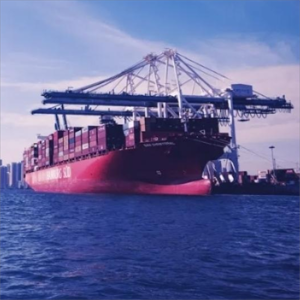
We are involved in export and import worldwide, with a primary focus on cross-stuffing in transit.

The looming FuelEU Maritime regulation will pose significant challenges and extra costs for the shipping industry, and ways to mitigate this won’t come cheap.
The regulation, coming into force on 1 January, sets targets for the greenhouse gas (GHG) intensity of the energy used on a ship, with targets getting stricter every five years.
The GHG intensity requirement applies to 100% of energy used on voyages and port calls within the EU, and 50% of voyages in and out.
To become compliant, companies will need to either pay a FuelEU penalty or take action to bring the GHG intensity within FuelEU limits.
According to data from Hamburg-based maritime technology firm OceanScore, the shipping sector will rack up FuelEU penalties of €1.35bn ($1.5bn) in 2025.
It noted that vessels will be hit with a penalty of €2,400 per tonne of VLSFO-equivalent [very-low-sulphur fuel oil] for failing to meet the initial 2% reduction target, relative to a 2020 baseline for average well-to-wake GHG intensity.
OceanScore MD Albrecht Grell warned: “As with the EU ETS, it is the container segment that will bear the brunt of FuelEU costs, accounting for 29% of gross penalties, followed by ro-pax on 14% and tankers and bulkers each on 13%.”
And co-founder and MD of maritime carbon solutions software platform zero44 Friederike Hesse added: “With targets getting stricter every five years and additional sub targets entering into force in later years, these costs will rapidly increase.”
Mr Grell urged: “It is critical for shipping companies to determine a baseline for expected FuelEU costs to secure proper planning and budgeting processes to compare different mitigation options, as well as to decide what to do with outstanding compliance balances.
“This will require, to a higher degree than the EU ETS, a corporate strategy to determine how to reduce the compliance balance/deficit, how to commercialise a surplus and deal with deficits that remain.”
But while costs associated with FuelEu Maritime targets are set to pack a punch, efforts to reduce GHG intensity and evade penalties “will come at their own costs”, due to “a significant amount of workload and therefore administrative costs”, warned Ms Hesse.
Mitigation tactics include increasing the share of more expensive biofuels in the fuel mix, or pooling with another company’s vessels.
And, according to Oceanscore, “pooling of vessels can roughly halve the gross burden for the industry”.
This is because, while penalties will arise for vessels using conventional fuels, surpluses of some €669m will be generated by vessels with significantly lower carbon intensity, mainly fuelled by LNG and LPG.
“Taking into account this estimated compliance surplus, the net cost of FuelEU penalties for shipping from 2025 would be €680m, which indicates that pooling vessels can roughly halve the gross burden for the industry,” said Mr Grell.
“It is therefore incumbent on shipowners to define their strategies, not only towards fuel choices and the use of onshore power, but also towards handling of residual compliance balances, such as pooling, banking and borrowing of balances, to mitigate the financial impact of FuelEU.
“However, pooling will also come at a cost, while banking and borrowing will incur interest costs and only push liabilities into the future.”
The FuelEU Maritime regulation doesn’t come into force until 1 January, but responsible parties must prepare and submit a monitoring plan to the verifier before 31 August.

MSC's share of the global container shipping market has reached 20%. Since 2018, it is the first container line to capture a fifth of the market. Six years ago, this share belonged to Maersk, which was able to hold it for only a few months, Splash reports, citing Alphaliner data.
To reach the 6 million TEU mark, MSC lacks just one container ship of the Megamax series, that is, a 24,000-tonne vessel. According to analysts' forecasts, MSC's carrying capacity in 2025 will be equal in capacity to the fleet of the Gemini alliance created by Maersk and Hapag-Lloyd, which will officially start operating in February next year.
Since its founding in 1970, it has taken MSC 37 years to increase its fleet capacity to 1 million TEU. After another four years, MSC surpassed the 2 million TEU mark. By early 2022, the line had surpassed Maersk, thanks to record orders and the purchase of container ships on the secondary market.
Consulting firm Sea-Intelligence recently forecast what the top 10 lines would look like in 2026, taking into account a variety of aspects including order backlog and aftermarket vessel sales. According to this forecast, MSC will significantly increase its tonnage gap with the second largest carrier, CMA CGM. Maersk will be in third place.
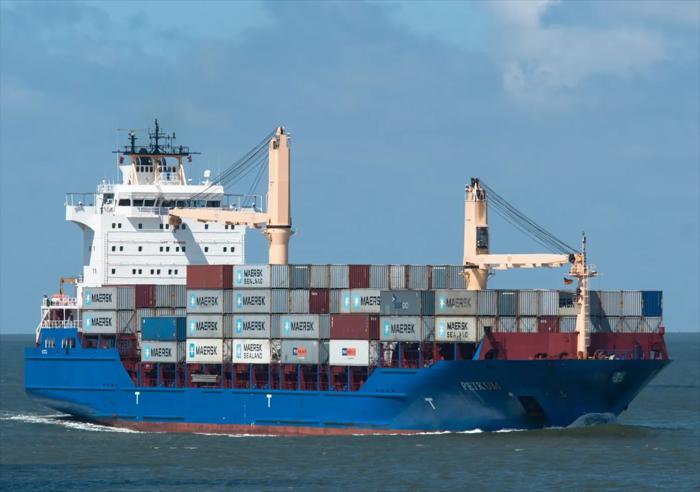

MSC is also a major player in the cruise segment and has diversified significantly in recent years amid record profits, investing in : airline, logistics, tugs and car carriers as well as media businesses.
A union proposal seeking to blunt China’s growing dominance in the maritime, logistics and shipbuilding sectors is finding bipartisan support among U.S. Congressional lawmakers, based on remarks made at a recent U.S. House of Representatives committee hearing.
The Congressional hearing, as well as the unions’ petition before the U.S. Trade Representative (USTR), reflect a growing concern among lawmakers and the private sector that China’s exponential growth in shipbuilding and in producing ship-to-shore cranes and shipping containers ultimately threatens U.S. national security.
Unions had petitioned USTR in March, arguing that the Chinese government “has funneled hundreds of billions of dollars” toward bolstering its shipbuilding industry so that now China dominates the world’s production of commercial vessels while the U.S.’s share is only 1%. The unions are pressing the USTR to take action against China’s practices under Section 301 of the U.S. Trade Act of 1974 by enforcing measures such as assessing a port fee on Chinese-built ships that dock at a U.S. port and creating a shipbuilding revitalization fund.
Congressional lawmakers affirmed the unions’ request at the June 26 hearing held by the House Select Committee on the Chinese Communist Party and entitled “From High Tech to Heavy Steel: Combatting the PRC’s Strategy to Dominate Semiconductors, Shipbuilding and Drones.”
“This committee should support unequivocally [the unions’] petition and demand that the USTR have remedies. I mean, it is unconscionable what we've allowed as a country,” said Rep. Ro Khanna, D-Calif.
“China started with 5% of the global market in shipbuilding in 1999. They're up to 50%. They're producing 1,000 ships every year. The United States, which used to lead, is producing 10 ships every year. This committee is for American leadership. We should be for ensuring that we're not losing 100 to one on shipbuilding to China,” Khanna said. “The request for a docking fee of about US$1 million would translate into about less than US$50 per container.“
In response to Khanna’s statements, Rep. Andy Barr, R-Ky., said at the hearing, “I’m open to what [Khanna is] saying about a fee because I think China is an exception case… I do not think we should try to counter China by imitating Chinese industrial policy. … I think it would be a mistake to try to copy Chinese industrial policies because that’s actually the best way to misallocate resources. Free markets are the best answer in our competition with China, generally.”
Scott Paul, president of the Alliance for American Manufacturing, testified at the hearing that existing policy measures are not enough to address China’s “predatory market distortions,” adding that his trade association supports the counteracting measures that the unions proposed under Section 301 of the Trade Act.
Paul said that China controls over half the world’s shipbuilding today, beginning construction on nearly 1,800 large ocean-going vessels in 2022. The United States, in contrast, was constructing five vessels that year, he said. The decline in U.S. shipbuilding since the 1970s and the rising dominance in China’s shipbuilding efforts have also led to a situation where the U.S. Navy relies on Chinese-made dry docks in certain circumstances.
“We currently have a tonnage advantage, but it’s not sustainable. We don’t have a surge capacity,” pointed out Paul.
As congressional leaders debated what actions Congress should take to bolster U.S. shipbuilding capacity, USTR has been undergoing its four-year review of Section 301 of the Trade Act.
In addition to receiving the March petition from the unions, USTR said in May that it plans to raise the tariff rate on ship-to-shore cranes from China from zero percent to 25% in 2024.
However, that plan is getting pushback from U.S. port interests, who argue that the tariff could cost at least US$131 million for seven U.S. ports that have preexisting orders with Chinese manufacturers for 35 ship-to-shore cranes.
President and CEO of the American Association of Port Authorities (AAPA) said the association “is confident that the tariff, if imposed, will not meet its stated objectives."
He emphasized that "it will only result in negative outcomes, including grave harm to port efficiency and capacity, strained supply chains, increased consumer prices, and a weaker U.S. economy.”


Halfway through 2024, and Statistics Netherlands (CBS) has announced that the preceding year had been less than exemplary for the country’s rail freight, recording a 12.5% year-on-year volume decline, with a little over 39.3m tonnes of goods moved in the 12-month period.
Containerised volumes dropped off 11.5% year on year, with a loss of more than 2m tonnes, from just shy of 20m tonnes in 2022 to 17.3m tonnes last year, with CBS noting that the country had particular struggles when it came to exports.
Sources within the sector said much of the decline could be attributed to the continuing post-Covid normalisation process, but the disappointing figures have coincided with a difficult period for European rail freight as it looks to sell itself as the green alternative to trucking.
Over the past year, sources have made clear that rail and barge offers one of the quickest and easiest routes to transitioning from carbon-fuelled road fleets – with others stressing that, amid the global truck driver shortage, it should be something of an easy win.
But there appear signs of government resistance to rail freight superseding road: Angela Merkel’s former party, the German Christian Democrats, having stated that road will remain the main freight mode in Germany.
One pro-rail and -barge source told The Loadstar governments needed to be moving more onto alternative modes, but stressed that the messaging needed to make clear there was not an agenda to remove road haulage – “road will be pivotal for final mile”.