
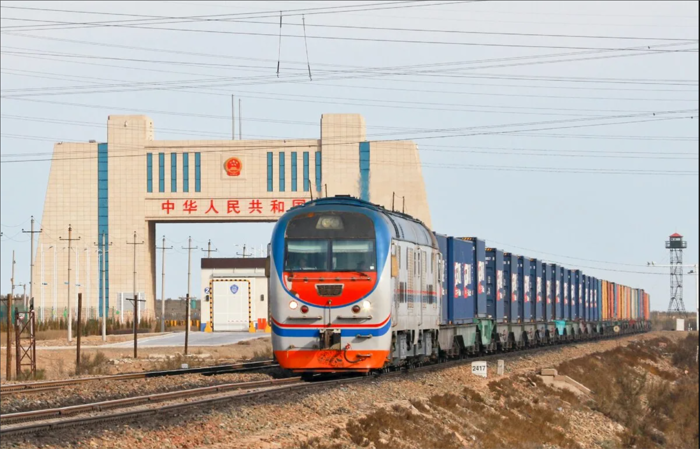
Rail freight traffic between China and Kazakhstan will be redirected through the Altynkol-Khorgos border crossing. Most of the affected traffic will concern cargo between China and Central Asia and, specifically, Uzbekistan, Turkmenistan, Kyrgyzstan, and Tajikistan. The Alashankou border crossing is still running for trains between China and Europe and Russia and for trains destined to Kazakhstan.
The traffic restriction is due to the fact that the Alashankou-Dostyk border crossing will be partially closed for construction work to double the track capacity. The traffic restriction will be effective as of 1 April. As Kazakhstan’s national railway company Kazakhstan Temir Joly (KTZ) pointed out, works will be carried out on both sides of the border crossing. China will upgrade the section between Jinghe and Alashankou, while Kazakhstan will take care of the stretch between Dostyk and Moyynty.
“Today, the share of traffic along the Dostyk-Alashankou junction in the total volume in Central Asia does not exceed per cent”, KTZ added. The company also pointed out that transiting through the Altynkol-Khorgos border crossing is 10-15 per cent cheaper and 500 kilometres shorter than via Dostyk-Alashankou. These decisions were announced at a meeting of the Organisation for Co-operation between Railways (OSJD) held in Warsaw on 21 March.

Some liner services are reported to have full ships again, container spot rates have stabilised, the charter market is bullish and ocean carriers are back at shipyards ordering new tonnage.
It seems the week has started positively for carriers and shipowners, with ‘green shoots’ of a recovery starting to emerge.
Today’s Ningbo Containerized Freight Index (NCFI) commentary reports that during the past week, container spot rates increased on 15 of the 21 export routes it tracks from the Chinese port.
For instance, on the key Asia to Europe tradelanes, it says “some voyages sailed with full loads”, and that carriers had “pushed up market rates for April voyages”.
The return in demand across their networks has prompted carriers to go back into the charter market to secure more tonnage, thus firming-up rates and extending time-charter periods. Indeed, both Braemar and Maersk Broker are seeing more activity, which is leading to increased daily hire rates.
“The activity level continues to be high which has now led to increasing charter rates for specific segments and a 12-month period is becoming the new normal,” said Braemar, echoed by container market analysts at Maersk Broker who added: “Prompt tonnage across all segments is very scarce, and we expect time-charter rates to continue their firming trend and average periods to carry on rising.”
The shipbrokers noted that modern tonnage was “attracting healthy premiums” and added: “While a few clouds remain on the horizon, the economic outlook is brightening and a general sense of longer-term optimism is slowly creeping into the market.”
Meanwhile, brokers have told CMA CGM had taken over from MSC as “the most aggressive carrier” in snapping up ships as soon as they become open. It has been linked with more than 20% of all fixtures concluded so far this year.
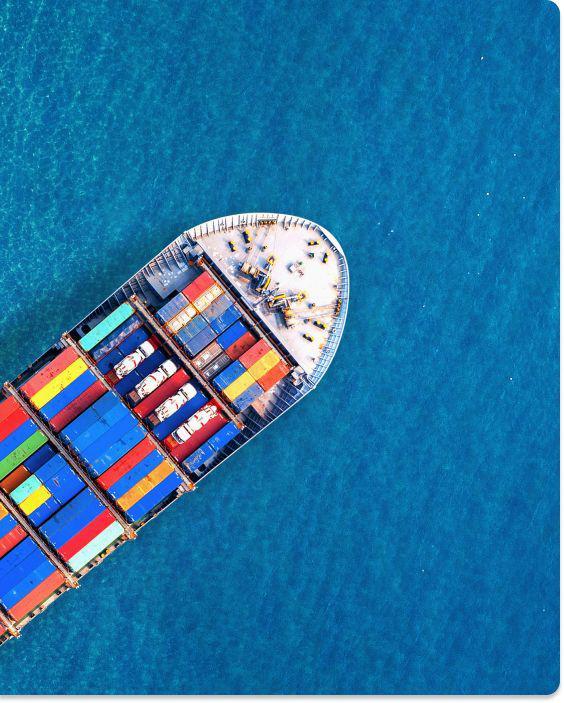

While some ocean trade lanes are stabilizing, the transatlantic rates are still declining, and this trend is expected to continue as the market remains oversupplied with vessels. In the meantime, retailers are warning of challenging orderbooks because of high inventory levels, particularly in the United States, where inventory-to-sales ratios remain near record highs and supply chain disruptions continue to impact the availability of goods, leading to a drop in sales. There is too much inventory in Europe as well.
West Coast ports in the United States are suffering as container imports have plunged by 37% in February 2023 compared to last year, with analysts attributing the decline to a combination of supply chain disruptions, factory closures, and weaker consumer demand, leading to a decrease in volumes, higher inventories, and a potential ripple effect on other sectors of the economy.
Consequently, Maersk decides to idle more ships, citing low demand and severe congestion at ports as the main reasons for reducing its capacity. In contrast, MSC has chosen a different strategy. The company has sought to redeploy more of its surplus tonnage to other routes or new services which may be a better approach in the long-run.
Hot topic
- The strike in the Port of Hamburg has led to the Port’s closure for 48 hours. Overall, the strike action has caused a backlog of vessels waiting to enter the port, bringing significant disruptions to supply chains.
- The rail strike in Finland has ended after a new collective agreement was reached. While it lasted, the strike had led to significant disruptions to rail freight transport in the country, with cargo shipments delayed or rerouted to other modes of transport.
Routes & services
- China's Belt and Road Initiative is expanding its rail network with the addition of Shenyang as a new rail hub for trade with Russia and Europe. Shenyang's central location in China and its existing transport infrastructure make it an ideal location for the consolidation and distribution of goods between Asia and Europe.
- China and Russia are collaborating to develop new rail and river trade routes, with the opening of a new bridge across the Amur River linking Mohe, China’s northernmost city, with the town of Dzhalinda in the republic of Sakha on Russia’s north-east border. The project is part of China's Belt and Road Initiative and will enhance trade relations between the two countries by providing a more direct and efficient route for the transportation of goods.
- Despite facing difficulties in finding enough cargo to fill their ships, container lines are planning to proceed with a modest increase in shipping rates for goods shipped from India to the United States and Canada. MSC, CMA CGM, and Hapag-Lloyd have agreed to coordinate their rate increases, which will amount to a $500 per TEU hike, starting from March 29th.
- Italy will improve its Alessandria Smistamento rail terminal to enhance the intermodal connections on the Rhine-Alpine corridor. The total investment for this project will be 75 million euros.
- MSC has added a new vessel, the MSC ScanBaltic, to its USA route, which will call at the Jaxport port in Jacksonville, Florida. This move represents the latest investment by MSC in the port and underscores Jaxport's strategic importance in the company's global network. The new rotation will include calls at Klaipeda, Gdynia, Goteborg, Bremerhaven, Felixstowe, Antwerp, Le Havre, New York, Philadelphia, Norfolk, Jacksonville, and then back to Klaipeda.
- ONE has updated its service from Singapore to Yangon, Myanmar. From April 4, the rotation will be Yangon (MIP) – Singapore – Yangon (AWPT) – Singapore.
Other
- The EU has approved a new law that will gradually reduce the use of high-carbon fuels in shipping by imposing stricter limits on sulfur emissions from marine fuels. It will require the use of low-sulfur fuels or the installation of exhaust gas cleaning systems, which remove sulfur from the emissions before they are released into the air.The law is part of the EU's broader strategy to decarbonize the shipping industry and achieve net-zero emissions by 2050.
- Knight-Swift Transportation Holdings has acquired US Xpress, a leading privately-owned trucking company in the US, for $2.48bn. The deal will help Knight-Swift to increase its market share and expand its reach in the US trucking industry. The acquisition will create one of the largest trucking companies in North America.
- ONE has opened a new office in Mombasa, Kenya, which will serve as the center for its commercial activities in the East African region.
These are only several changes that occurred in more than 250 bn freight rates across 25 million routes with more than 1 million market players. Want to share some news about your company, services, and routes? Just post them on MAXMODAL, a multimodal network that digitally connects routes and rates worldwide to automate sales and operations across container transportation & logistics industry. Join to innovate.


A rail strike in Germany on Monday is expected to cause delays and rail freight disruptions, with freight forwarders and shippers calling for flexibility on timings to help the movement of goods, with more disruptions in France also expected.
The latest action follows a port pilots’ strike, which ended this morning, and disruption in France as demonstrators protest against the president’s plan to extend the pensionable age.
Stefan Genth, CEO of the HDE retail association, called on the German government to lift the Sunday driving ban this weekend to allow logistics firms to bring forward some shipments and avoid “supply chaos”.
Leader of the EVG union Martin Burkert said industrial action was “a sharp sword that we also handle very responsibly”.
Pointing to the fact that Germany has few strike days compared with other countries, Mr Burkert said the dispute pursued by EVG and the Ver.di union centred on demands for pay and collective agreements.



We are an asset-based trucking company actively looking for intermodal drayage loads.
Email to reach: ben@bmbunited.com
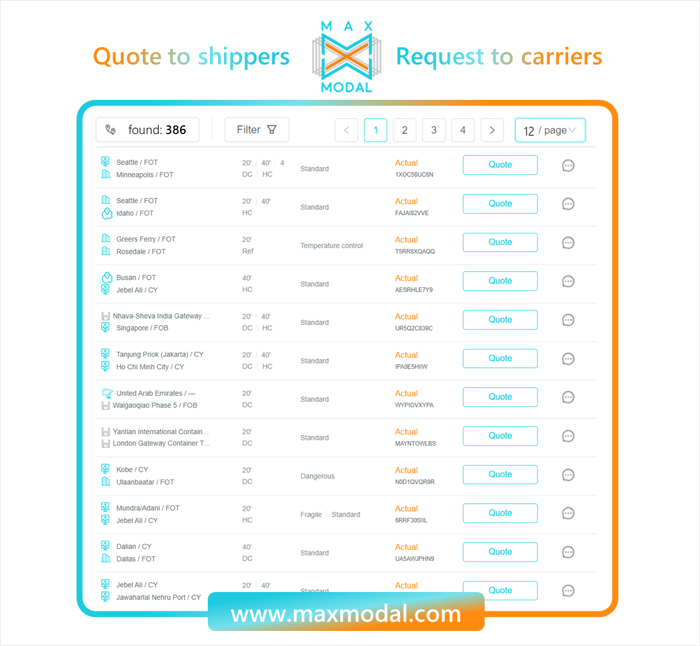
These are just a few examples of new requests of clients from across the world. To get more fresh inquiries and\or best quotes click here or push the «request management» button in the left menu.
Hi,
I am an Account Executive for ARI shipping Corporation, an American based transportation company with over 30 years of experience. I see that your company has a lot of need when it comes to shipping, what if I could help save you some money and provide you better service? We are giving 10% off and free custom clearance to new customers as part of a new promotion. Because of our history and strong relationships with all major shipping lines, we can match or beat any competitor’s price, guaranteed. If you are interested , provide me the following details below to my company email address at the end of this correspondence :
Name of the shipper:
Address and contact info:
Origin port:
Destination port:
Commodity/weight/dimensions:
Intended ship date:
Please let me know if there’s any shipment I can quote you for. I look forward to hearing from you and if you need anything, please let me know.
I wish you a happy day.
Thanks.
Regards,
Md. Mahamudul Alam
Account Executive
ARI Shipping Corporation
80 Sheridan Blvd, Inwood, NY 11096
Email: alam@arishipping.com
Mobile and WhatsApp: + 8801706076388


Bring on the fair game!
Freight rates on major trade lanes have stopped dropping so drastically, falling just by 1% which may signal a possible ease of the rate erosion seen in previous months. However, experts warn that rock-bottom prices are not good for anyone, as they can lead to overcapacity and financial stress for carriers, while shippers may face service issues due to carriers cutting corners to save costs. Moreover, the current supply chain disruptions caused by the pandemic have resulted in a shortage of containers, which is driving up prices and further complicating the situation. Experts suggest that a balance needs to be struck between fair pricing and maintaining healthy competition in the market.
Hot topic
Employees of German rail company Deutsche Bahn have expressed dissatisfaction with the company's collective bargaining offer, which they feel is insulting and insufficient. The offer includes a wage increase of 2%, which union representatives say is not commensurate with the hard work and dedication of railway workers, particularly in light of the challenges posed by the COVID-19 pandemic. Negotiations are ongoing, and unions have not ruled out the possibility of industrial action if a satisfactory agreement is not reached.
Routes and services
- Maersk has announced improvements to its Oceania and Americas service with a new direct call to New Zealand and increased capacity to the west coast of South America. The rotation will be: Seattle (US) – Oakland (US) – Long Beach (US) – Auckland (New Zealand) – Sydney (Australia) – Melbourne (Australia) – Tauranga (New Zealand) – Papeete (French Polynesia) – Surrey (Canada) – Oakland – Long Beach – Auckland – Sydney – Melbourne – Adelaide (Australia) – Tauranga – Seattle.
- The capitals of China and Russia have been connected for the first time on a new rail route under the Belt and Road Initiative, creating a direct freight service from Moscow to Beijing.
- Italian intermodal company Arcese has launched a new triangular rail freight service between Italy, Austria, Germany, and Romania to connect the regions with faster and more sustainable transport.
- Eurotunnel has introduced FIRST, a new subscription service to give priority to trucks that want to hop on the rail freight shuttle to cross the Channel Tunnel between France and the UK.
- Hapag-Lloyd’s new Vietnam Indonesia Straits (VIS) service will replace the old VNF and SPL services. The rotation will be Cat Lai – Singapore – Port Kelang – Belawan – Penang – Port Kelang – Singapore – Cat Lai.
- MSC has introduced a new container service that connects Saudi Arabia with India, Pakistan, and Sri Lanka, with the first sailing to begin in April.
- The Valencia rail port has seen a 13.6% rise in container traffic, handling over 145,000 TEU, during the first two months of 2023. The increase in container traffic has been attributed to the growing trend of shippers opting for rail transport as more sustainable and less congested.
Other
- FMC has adopted a new rule that expands shippers' eligibility for carrier refunds for service failures. Under the new rule, the FMC requires ocean carriers to amend their rules governing service contracts to allow shippers to claim refunds for failures in container delivery or return. The rule also provides greater transparency for shippers by requiring ocean carriers to publish their refund policies and procedures.
- The Jawaharlal Nehru Port Trust in India is facing operational challenges as it deals with a surge in cargo volumes due to the festive season and the year-end rush, leading to congestion and delays in cargo handling. To address the challenges, JNPT is implementing measures such as increasing the number of cranes and streamlining processes to improve efficiency.
- Union workers at the Panama Canal have gone on strike, protesting the use of tugboats operated by non-union workers to guide larger vessels through the canal. The Panama Canal Authority has defended its use of non-union workers and proclaimed that safety standards are being met. The strike has caused delays in canal operations, affecting the transit of vessels through the canal.
- The US Surface Transportation Board has approved Canadian Pacific's acquisition of Kansas City Southern, creating the first rail network linking Canada, the US, and Mexico.
- Freight forwarding and logistics firm Expeditors has sued its long-term client, footwear company Skechers, for unpaid invoices totaling nearly $20 million. Skechers has disputed the charges, claiming that the invoices are inaccurate, and the case is now being heard in a US court.
- Freight forwarding and logistics firm Expeditors has sued its long-term client, footwear company Skechers, for unpaid invoices totaling nearly $20 million. Skechers has disputed the charges, claiming that the invoices are inaccurate, and the case is now being dealt with in a US court.
These are only several changes that occurred in more than 250 bn freight rates across 25 million routes with more than 1 million market players. Want to share some news about your company, services, and routes? Just post them on MAXMODAL, a multimodal network that digitally connects routes and rates worldwide to automate sales and operations across container transportation & logistics industry. Join to innovate.