
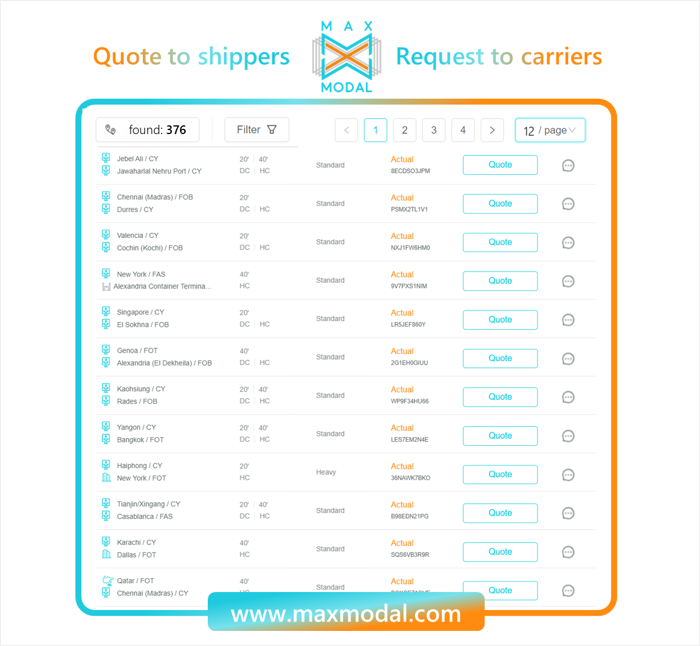
These are just a few examples of new requests of clients from across the world. To get more fresh inquiries and\or best quotes click here or push the «request management» button in the left menu.

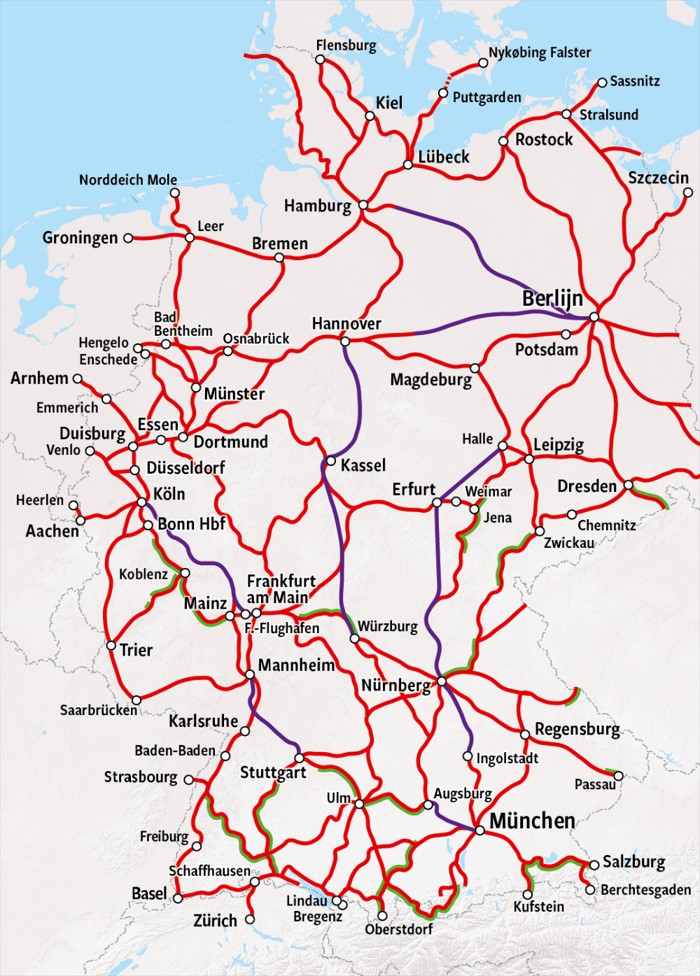
The German rail industry is quite upset with the recent comments made by representatives of the Federal Government regarding the Deutschlandtakt and its timetable. The German Federal Commissioner for Rail Transport Michael Theurer was quoted by German media ZDF as saying that the Deutschlandtakt is a project that might take over 50 years to realise. The main issue is that the project was planned to be ready by 2030.
The Deutschlandtakt entails that the national rail infrastructure should be expanded with priority and make it reach as far as possible. RailFreight.com contacted the rail freight association Die Guterbahnen (NEE), which counts 67 companies as members, for comments. “These statements from the Ministry of Transport are incomprehensible and the political signal is devastating”, said NEE’s executive director Peter Westenberger.
The traffic light coalition is not keeping its word on the Deutschlandtakt
One of the complaints exposed by Westenberger and the NEE is that the current ‘traffic light’ government coalition is not keeping its pledge to significantly improve the German rail network. “The current ruling traffic light coalition promised extensive acceleration steps and a priority expansion of rail in the coalition agreement of December 2021. However, nothing has happened yet”, Westenberger stated. He added that the statement made by Theurer came out of nowhere and may be a sign that the current ruling coalition is no longer supporting the Deutschlandtakt.
In 2016, the legislature at the time approved the Federal Railroad Expansion Act, which included 180 expansion measures. However, “this ministry prefers to continue and even accelerate highway expansion”, Westenberger claimed. In addition to railway infrastructure enhancement, the Deutschlandtakt also includes the creation of a target timetable for all trains. A new implementation plan is supposed to be drawn up for the period after 2025, which according to Westenberger would cause a revision of the target timetable project. “It is clear that this will still identify additional infrastructure needs”, he concluded.

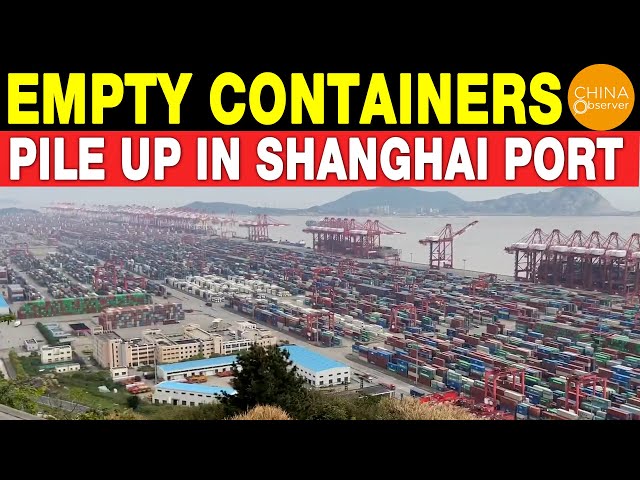
The outlook for ocean carriers is a sharp decline in earnings this year, as average freight rates fall and inflation drives cost increases hitting bottom lines.
Last week, both CMA CGM and Hapag-Lloyd posted record results for 2022 and warned that this year would be very different.
On Friday, CMA CGM reported a net profit of $24.9bn for last year, but said there had been a “marked slowdown” in the fourth quarter that was expected to continue in 2023.
The group saw a 33% increase in revenue, to $74.5bn, of which $59bn was contributed by its core liner shipping activities, noting an average rate of $2,711 per teu, compared with $2,055 in 2021.
Liftings were down just 1.3% on the previous year, to 21.7m teu, an above-par performance compared, for example, with OOCL’s volume decline of 5.6% and Maersk’s 14%.
Nevertheless, the Q4 demand contraction resulted in CMA CGM transporting 5.4% fewer containers in the period, and its average rate sliding to $2,402 per teu.
Group CEO Rodolphe Saadé said: “As trade returns to normal and freight rates decline, our strategy and recent investments will prove all the more relevant, and allow us to look forward to 2023 with confidence.”
CMA CGM’s logistics business saw a steep 48% year-on-year rise in turnover, to $16.1bn, boosted by an expansion of its freight management business and recent acquisitions, for a 39% increase in ebitda of $1.2bn.
Meanwhile, Hapag-Lloyd updated preliminary results announced in January, posting a net profit of $18bn for last year.
Revenue was up 38%, year on year, at $36.4bn, achieved by a best-in-class flat transported volume of 11.8m teu, for an average rate of $2,863 per teu. This compares with an average of $2,003 the previous year.


I'm Tony from Amber log Vietnam(Wca id 125411)
For your Logistics and Customs Clearing inquiries at Vietnam pls contact me:
WhatsApp: +84394117864
The pressure persists.
Spot rates for container exports from Shanghai have fallen on all major shipping routes despite capacity adjustments that resulted from shipping lines’ decision to favor blank sailings. On east-west trade lanes, spot rates for containers from Shanghai to Europe fell 3.1% to $882 per TEU. Average prices fell 3.1% to $1,234 per FEU on the route to North America's west coast. The Asia-Europe trade saw the lowest on-time performance, while the intra-Asia trade saw the highest percentage of delays.
Although schedule reliability increased in 2022, the new year started off bumpy with a 3.8 % decline. In January 2023, Maersk was the most reliable out of all the top 14 carriers followed by MSC. Overall, the pressure on supply chains persists worldwide.
Routes and services
- Hapag-Lloyd has divided its Gulf Caribbean Service into two new services. The North Loop will have the following rotation: Houston (US) – Altamira (Mexico) – Veracruz (Mexico) – Puerto Barrios (Guatemala) – Puerto Cortes (Honduras) – Caucedo (Dominican Republic) – Kingston (Jamaica) – Houston. The South Loop will have the rotation: Cartagena (Colombia) – Manzanillo (Mexico) – Santo Tomas / Puerto Barrios (Guatemala) – Puerto Cortes (Honduras) – Puerto Limon (Costa Rica) – Cartagena (Colombia) – Caucedo (Dominican Republic) – San Juan (Puerto Rico) – Cartagena.
- ZIM has withdrawn its China Los Angeles Express (CLX) service, which connects China, South Korea, and the US West Coast.
- Hong Kong-registered OVP Shipping plans to strengthen ties with Russia by launching its first China to St Petersburg service.
- KTZ tries out a new rail route for China-Europe cargo transportation via Azerbaijan and Georgia to bypass the congested Black Sea. The train was sent from Jiaozhou, in eastern China, to the port of Koper, in Slovenia.
- A new rail service connecting Rennes and Lille in France is set to be launched soon by LaHaye Global Logistics, which will improve the transportation of goods between the two regions and support the development of the French rail freight sector.
- CMA CGM will be serving Comoros via Mtwara in Tanzania. The rotation will be: Colombo – Jebel Ali – Berbera (1/2) – Mogadishu – Mtwara – Beira (1/2)- Nacala – Port Victoria – Colombo.
- Two new shipping services are set to launch in April and May to connect East Africa, the Red Sea and Saudi Arabia (to link Jeddah Islamic Port and King Abdullah Port to the trade hubs of Djibouti, Mombasa, and Dar Es Salaam) by MSC.
- Maersk has removed Doha's call on the revised Arabian Star Service to deliver more efficient and reliable services.
- CMSA has launched a new block train service in Mexico in partnership with CMA CGM and Walmart.
- PIL has introduced an intermodal service in South Korea. The inland connection to Pugok is via rail service. we For Gunsan, Gwanju, Hwaseong, Incheon, Kwangyang, Pohang, Seoul and Yongin, the linkage is via truck service.
- WEC Lines has expanded its services to Liverpool, UK, with the addition of new port calls in Northern Spain, Portugal, North Africa, and the Canary Islands.
- ONE has launched a new direct service linking the United Arab Emirates), Bahrain, and Kuwait.
Rates
- Hapag-Lloyd will increase rates from the Middle East to the US in the range of $450-$500.
- Several ocean carriers, including Maersk and MSC, have announced a General Rate Increase of $500 per TEU for all cargo from India to the US, citing increased demand and rising costs as the reasons.
- CMA CGM updated rates for container shipping services from the Indian subcontinent, Middle East, Gulf, Red Sea, and Egypt to the US East Coast and Gulf of Mexico. Quantum per 20': US$50 and per 40': US$600.
Other
- US exporters are calling for more regulatory scrutiny and enforcement to protect against potential abuses by carriers as high freight rates and capacity constraints continue to disrupt supply chains, causing significant financial losses for exporters.
- Finnish dockworkers have reached an agreement with the Finnish Port Operators Association to end the strikes. The work will be renewed soon.
- Cosco has acquired the remaining 25% equity interest in Xiamen Haicang Investment Co Ltd, in a move to increase its control over the Xiamen Port's Terminal and expand its presence in the Fujian province of China.
- MAWANI has launched a new shipping service that connects King Abdulaziz Port in Saudi Arabia to ports in India and Iraq.
These are only several changes that occurred in more than 250 bn freight rates across 25 million routes with more than 1 million market players. Want to share some news about your company, services, and routes? Just post them on MAXMODAL, a multimodal network that digitally connects routes and rates worldwide to automate sales and operations across container transportation & logistics industry. Join to innovate.


I'm Tony from Amber log Vietnam(Wca id 125411)
For your Logistics and Customs Clearing inquiries at Vietnam pls contact me:
WhatsApp: +84394117864

Hello!! We just want to introduce to you our company Franklin Logistics Company Limited, Based here in Dar Es Salaam Tanzania, Our company deals with Clearing And Forwarding, Import & Export, Overland Transport, Consultants And Commission Agents, Dear customer if you need to Import or Export any goods through Dar Es Salaam Port please don't hesitate to contact us, We work in a good way that we are assured you to handle the business in a nice and interesting way....You are most welcome to start to work with us.
Our Contacts:
Call/WhatsApp: +255754749889
Telephone: +255 22 2863132
Emails:
Regards,
Frank Kivenule,
Chief Executive Officer,
Franklin Logistics Company Limited.
I'm Tony from Amber log Vietnam(Wca id 125411)
For your Logistics and Customs Clearing inquiries at Vietnam pls contact me:
WhatsApp: +84394117864

I'm Tony from Amber log Vietnam(Wca id 125411)
For your Logistics and Customs Clearing inquiries at Vietnam pls contact me:
WhatsApp: +84394117864

I'm Tony from Amber log Vietnam(Wca id 125411)
For your Logistics and Customs Clearing inquiries at Vietnam pls contact me:
WhatsApp: +84394117864

We looking for Customers, freight forwarders and connections that needs containers to be moved in South Florida. We are located near Port Of Miami, FL and available to go anywhere. In and out of State! 20'/40' or PowerOnly Door to Door "Moves" Drop & Hook "All of the above".
We Have 10 Trucks and 13 Chassis, there's only one way to deliver and that's safe and on time
I'm Tony from Amber log Vietnam(Wca id 125411)
For your Logistics and Customs Clearing inquiries at Vietnam pls contact me:
WhatsApp: +84394117864
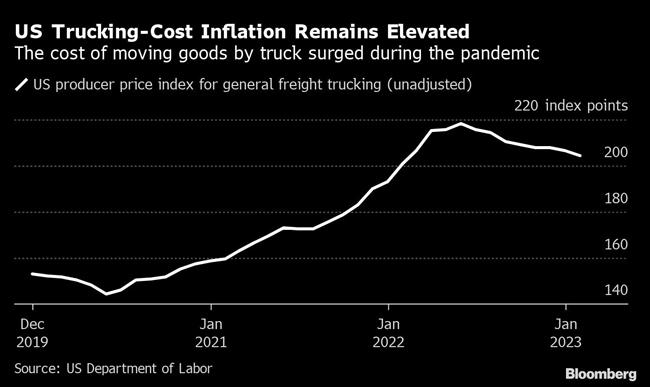
Supply chains across the world are healing up almost as fast as they broke down. That doesn’t mean the pressure they’re exerting on inflation will disappear as quickly.
Take the cost of shipping containers. Spot rates from Asia to the U.S. West Coast increased more than 15-fold during the pandemic and have since returned to pre-COVID levels as trade between the world’s two largest economies cools from a frenzied pace.
But the relief is uneven. Short-term prices for containers from Europe to the U.S. East Coast are still more than double what they were in late 2019, according to data from Freightos Ltd.
What’s more, an estimated 70% of goods transported in steel boxes on giant ships do so under long-term contracts — not the spot market — and those deals were renegotiated in 2021 and 2022 at much higher rates. Big retailers and manufacturers may not be seeing enough shipping-rate reductions yet to warrant slashing prices further.
“We need to be cautious about the drop in spot prices for containerized freight,” said Jason Miller, an associate professor of supply chain management at Michigan State University. “Most freight moves under contract prices that are still well above pre-COVID levels.”
Such stickiness may help explain why inflation in some regions remains stubbornly high. U.S. producer prices rebounded in January by more than expected, underscoring persistent inflationary pressures, and another closely watched gauge of consumer costs came in hotter than forecast on Feb. 24. In the euro area, underlying inflation hit a record in January, revised data showed earlier in February.
Another reason the cost of living is slow to fall: It’s easy to underestimate how long it can take for inflationary trends to work through supply chains. That’s partly because companies don’t like to change their pricing more than a couple of times a year, according to Chris Rogers, head of supply chain research at S&P Global Market Intelligence.
“Whilst the underlying prices have been coming down, it could take quite a long time for that to feed in,” Rogers said. “We’re still seeing some of the inflationary hangover coming through to product pricing now and it could take much of the rest of the year for that to flow through to prices, whether it’s producer or consumer.”
I'm Tony from Amber log Vietnam(Wca id 125411)
For your Logistics and Customs Clearing inquiries at Vietnam pls contact me:
WhatsApp: +84394117864