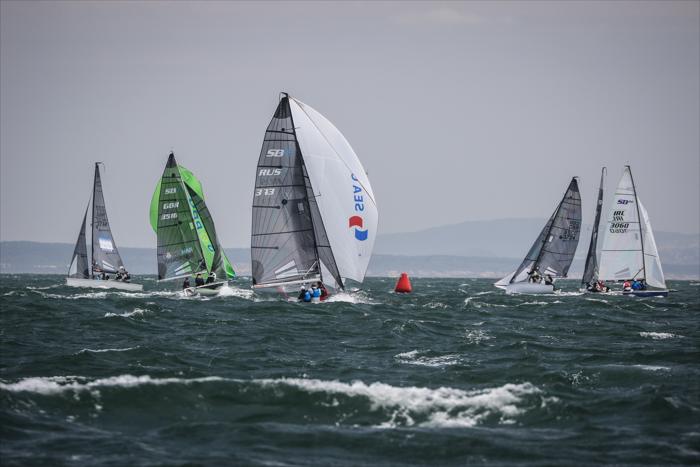


Those guys should get 1st place at August Race, I admit !


Молодцы!!! Поздравляем!!! Мы за вас болели!

Shrinking ocean capacity is forcing companies to switch their attention to different sectors for development. It is the matter of time before we see who is adjusting or who is only focused on keeping face.
With the epicenter in Yantian, the ship congesting keeps shaking up the ports around the world bringing a 300% increase in blank sailings just in one month. The numbers spill trouble across the maritime shipping world, and particularly for companies that rely on Asian routes, although even shipments not directly impacted by the Yantian situation could feel the disruption, as carriers adjust their networks to avoid congestion at YICT. As the result, the increased demand and worsening conditions are making the east-west alliance carriers to temporarily adjust their liner service networks. 2M Alliance has decided to change the sailing programs of its network to manage severe port congestions globally. In addition, Hapag-Lloyd has announced a new peak season surcharge from East Asia ports to North American destinations. The new splurge will amount to $1,000 per all 20' container types and 2,000 per all 40'.
Consequently, the perplexed context of the current reality is attracting new players – previously not even associated with trade – as opportunities for development and launches of new serviced emerge. BAL Container Line is set to launch a regular service between China and Los Angeles. Matson has announced the launch of a new seasonal China-US west coast "China-California Express" service for the peak season. The transpacific box shipping market is destined to become more crowded. Overall, the global containership orderbook continues to expand. Recently, Ever Given and SITC ordered more newbuildings. A similar type to the one of Ever Given is now valued at $180m. The global containership orderbook is now over 18% of the active fleet.
Meanwhile, there is hope that the Ever Given deal might move from the deadlock in the near future. UK P&I Club has delivered what it believes will be a satisfactory settlement to its dispute with the Suez Canal Authority – it has offered $150m deal, but experts expect that the level of compensation will likely be higher than that and lower than the $600m demanded by the SCA. The decision is yet to be announced, and again it is going to take a while since the court proceedings have been put on hold.
As ocean capacity keeps shrinking and the ongoing disputes are moving with the speed of a snail, Maersk implements its expansion strategy by launching its first block train intermodal service between Europe and China, using Malaszewicze, Poland, as an EU exit point. Transporting chemical cargo needs extra dedication, as it requires high levels of complexity. In turn, modal shift covers New Zealand’s exporters too, but in a different direction. Since the bottleneck in South China is causing further headaches more of the country’s exporters switch to airfreight to reach crucial overseas markets. Rail Cargo Group in Austria has welcomed its first train from China in the city of Graz.
At the same time, supply chain constraints are pushing up trucking rates. The current picture is worrying – according to recent data, the load-to-truck ratio elevated, increasing almost 220% YoY for vans, 674% YoY for flatbeds, and 324% YoY for reefers. Strong demand resulted in rates continuing to rise MoM and YoY across van, flatbed, and reefer.
Northwest Grains International has opened a new transload operation at Inland Port Dillion to improve the supply chain of containerized agricultural goods through the Port of Charleston.
Despite the splurge in demand, the e-commerce giant, Amazon, is going to launch its megasale, meaning that another mini-peak in sales is inevitable. However, experts argue that most sellers do not have the cash to bring in the inventory the storage of which they have to pay besides working with slim margins.
The green locomotive is rushing forward with the International Maritime Organisation that has adopted a new series of key mandatory measures to cut carbon emissions in container shipping, including a ship rating system to measure carbon intensity. Ships will get a rating of their energy efficiency (A, B, C, D, E – where A is the best). Administrations, port authorities, and other stakeholders are encouraged to provide incentives to ships rated as A or B also sending out a strong signal to the market. The Busan Port Authority has begun a joint study with the Korea Institute of Ocean Science and Technology on the impact of pollutants generated from vessels on air quality. Based on the study, BPA and KOST will be able to identify the impact of operating vessel emissions on the port area.


Ищу Машины Бишкек-Екатеринбург
Бишкек-Челябинск
груз пустой контейнер 20, фут
40 фут
Уважаемый Даниил, добрый день. Рады Вам в MAXMODAL. Размещать запросы могут только компании. Для создания профиля компании необходимо нажать на кнопку "+Корпоративный профиль" и заполнить небольшую форму. здесь можно посмотреть видео как создать профиль компании.

Бишкек Екатеринбург фрак какой?
Left out and ignored – carriers strike the last nerve of European shippers
It is tough times for both – customers and consumers – as carriers are being accused of welching on newly signed contracts to go after more lucrative premium business. As more pressure adds up, carriers no longer want to respect the MQCs of new contracts with shippers making the latter feel frustrated and abandoned. Overall, customer relations continue to deteriorate. The shippers are forced to send a percentage of their contracted volumes at highly elevated rates, plus premium fees and surcharges. The UK forwarders complain that they are getting a few boxes released under rates only due to long negotiations and “pleading”. Is there more to come? So far, there is no light at the end of the tunnel since the chronic congestion in Asia increases rates on some directions for the 10th consecutive week. Spot freight rates to move a 40ft on the headhaul transatlantic lane from Rotterdam to New York increased by around 16% to $4,607 per FEU, with spot rates on New York to Rotterdam growing 11% to $1,121 per 40ft box. Meanwhile, continuing strong Asia-Europe demand saw rates from Shanghai to Rotterdam a further 6% to reach $11,196 FEU. Major delays at Yantian have seen other carriers, including Hapag-Lloyd, Ocean Network Express, and MSC, shift service calls to Nansha. According to the recent data, there are 304 ships in front of ports around the world waiting for berth space to open up. In total 101 ports have reported congestions.
The impact of the COVID and post-Brexit trade has hit the UK in a particularly severe way. Statistics show that the country’s food and drink exports to the European Union (EU) fell by 47% in the first quarter of the year compared to the corresponding period in 2020. The industry experts set out a plan to mitigate the effect of the disruptors by boosting support for exporters. The initiative has been backed by the Trade and Agriculture Commission. Additionally, they advocate for the government to take a more active role, otherwise, the situation will get even worse. The extreme shortage of HGV drivers in the UK has already reached a crisis of national importance. Suppliers state that if things do not improve, Supermarket shelves and restaurant plates are going to be empty. However, it is not all a one-way decline: the EU exports to the UK were also down across the board, with wine shipments down 20%, for instance.
Maersk pushes forward by organizing another eastbound block train, connecting South-Eastern Europe and China. It is a win-win move since besides strengthening the giant’s presence, it satisfies the needs of the chemical industry. Departing from Madrid in Spain, the train’s final destination in China is Nansha. Rail Cargo Group has made some other advances and launched a new TransFER connection between Verona in northern Italy and Regensburg in southern Germany. It is open for those goods that are currently banned from the road, such as wood, scrap and grain, thus contributing to the modal shift across the Alps.
The green agenda is still up and thriving. Deutsche Bahn will reduce its climate impact faster than initially planned, moving the previous target of being climate neutral forward from 2050 to 2040. The company has announced that will use 100% green electricity for factories, office buildings, and train stations. To reach the target, Deutsche Bahn aims to emit less CO2 in the coming years with significantly younger train fleets in long-distance, regional, and freight traffic and investments in operations.
German speed logistics company Time: Matters has introduced its measures regarding intra-European air cargo capacity by offering additional dedicated air freight capacity between Germany and the UK and Ireland. Its primary objective is to offer the customers flexible solutions for maintaining supply chains. In a separate, recent development, Time: Matters has “significantly” expanded its Sameday Air service between Europe and the US via Paris.

Получите больше возможностей, создав профиль Вашей компании

Предлагаю грузы с Таджикистана на Россию город Иваново, также на Беларуссию город Барановичи, оплата налом. Предлагайте авто, стандартные тентовки.
Уважаемый Рустам, добрый день. Добро пожаловать в MAXMODAL. Размещать запросы могут только компании. Для создания профиля компании необходимо нажать на кнопку "+Корпоративный профиль" и заполнить небольшую форму. здесь можно посмотреть видео как создать профиль компании.
Worldwide congestions push railway underwater
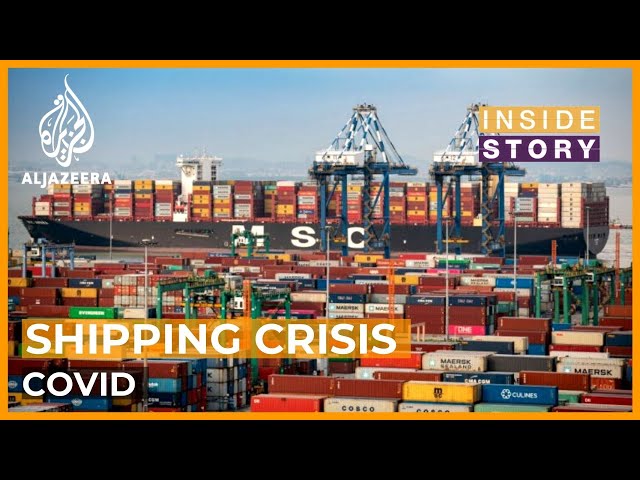
Liner congestion fever is spreading across the planet – there are now 304 ships idle in front of ports around the world waiting for berth space to open up. This global character represents a clear change from the past weeks when the congestion was mostly concentrated in south China. Intra-Asia hubs are now reporting tailbacks and in the US, east coast ports are suffering all manner of disruptions. Experts report that more than 600,000 TEU has now been affected from the fallout of an outbreak of Covid-19 around Yantian Port. Although current overall operational capacity has returned to 70% of normal levels, and container yard utilization has dropped from 100% to 70%, such big players as Maersk are perplexed with such rapid spread of Yantian’s effect and the impact it makes on the rates. Asia-US West Coast prices now stand at $6,614 per FEU, up 206% year-on-year. Asia-US East Coast prices are now at $9,889 per FEU, 244% higher than rates for this week last year. It has been reported that more than 130 omitted calls and over 60 added calls have been noted for the period 23 May - 26 June.
The situation pushed the U.S. authorities to bring the discussion of reshoring back to the table; however, it actually may not be as profitable and strategically wise as the government believes. Asia is still a viable option for many supply chains. It proved its resilience during the pandemic with its exports recovering more quickly than other regions, and its consumer market is growing. North America's share of global exports is expected to remain unchanged, at 14% by 2025, while Asia's share is expected to grow two percentage points to reach 38%. In this case, collaborative initiatives could be a solution. One of them is an enormous project of a 13,000km-long railway line from China to the USA, running partially underwater to cover the Bering Strait. This ambitious initiative would be the finishing touch of the Belt and Road initiative, as it would connect the world by rail, but it will hardly happen due to the high cost and numerous actors with different expectations involved. Hence, Maersk looks for alternatives. It has organized another eastbound block train, connecting South-Eastern Europe and China.
In the U.S. supply chain battlefield, the parties continue accusing each other of the failures. ILWU has laid the blame for supply chain woes across the country on foreign companies, including shipping lines and terminal operators that have failed to invest in staff. Another issue regarded the D&D charges against which shippers have been advocating. Hapag-Lloyd has stated that the new draft legislation from the US Congress will not solve the crisis faced by US exporters after lawmakers put forward plans to force carriers to accept bookings from domestic businesses. There is a call for action from the U.S. government to protect the interests of local exporters and provide more financial support for the supply chain. It is crucial especially in the light of the protracted crisis – the ports are struggling to keep up amid more record imports. The ports of San Pedro Bay and Los Angeles have recorded a total throughput of 8.6m TEU – a 45.3% increase from the 5.9m TEU handled in the first five months of 2020. Port of Oakland has handled a record of 1.08 mil. containers from January through May, while it said annual volume could surpass 2.6 million boxes for the first time in 2021.
The current context is challenging for all industry players, but the small ones are particularly vulnerable. Small and mid-sized Korean liner operators voiced their frustration claiming the imbalance in state funding (regarding HMM) for the country’s vessel operators that imposes a threat to them. The government has reacted with the assurance that smaller operators would be supported. Feeder operators also indulged Korean exports and said more funding would be made available to them. In total $856.39m are planned this year for shipping companies – with nearly 91% reserved for mid-sized companies.
The dynamic of the air freight sector is similar to other segments of the industry – Asian air freight’s export capacity is expected to remain tight over the next two months before the start of the peak season. This capacity reduction along with robust consumption, especially in the US, should keep rates elevated during July and August. Among significant achievements, the U.S. and the EU have agreed to end a 17-year dispute over aircraft subsidies. Additionally, they decided to suspend the application of harmful tariffs worth US$11.5 billion for a period of five years that hurt companies and people on both sides of the Atlantic.
It seems like the authorities of the Panama Canal have done their due diligence regarding the Suez incident. It has increased the maximum allowable length for vessels transiting the Neopanamax Locks. The increase means that now 96.8% of the world’s fleet of container ships can transit the Panama Canal, shortening routes and benefiting economies around the world.
The challenges that have hit the retailers did not omit such e-giants as Amazon. While the logistics and e-commerce platforms Amazon has built over the last 20 years are rightly admired, its HR systems have simply not kept pace with the aggressive expansion of its network, leading it to lose market share to rivals such as Walmart during the height of the pandemic, as it struggled to overcome severe warehouse worker shortages.