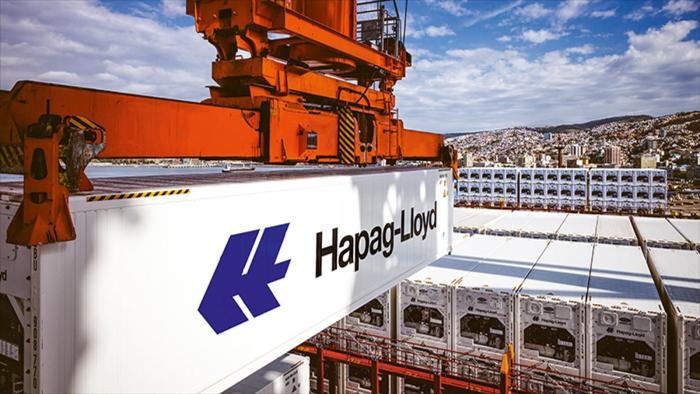
Pakistan trade, hit by Indian port access restrictions, now faces a wave of emergency surcharges from container lines.
The latest moves come from MSC — a hefty $800 per container fee for all Pakistan exports on major westbound routes, which include Europe, the US and Africa markets.
The carrier has also announced an extra $300 per container charge for intra-regional trades, including the Middle East and Indian subcontinent.
The levies are set to begin on 19 May for all trades except to the US, which will start on 11 June, due to FMC filing requirements.
“In order to maintain the continuity, safety and reliability of its services in Pakistan due to the ongoing geopolitical challenges, MSC announces the implementation of an emergency operation surcharge applicable to all shipments (exports and imports) from Pakistan,” the carrier said.
Several carriers have already announced or implemented similar charges on Pakistan bookings following the diplomatic/trade ‘tit for tat’ cutoff with India.
However, the port embargo imposed by both sides has opened a lucrative opportunity for feeder operators, as mainliners are forced to reroute Pakistan cargo to hub ports such as Sri Lanka’s Colombo and Salalah and Jebel Ali in the Middle East.
Hapag-Lloyd has announced the launch of a second, dedicated feeder capacity option for Pakistan transhipment cargo, as industry sources do not expect the regional trade deadlock to settle any time soon.
The new Sophia Express will run on a rotation of Salalah-Port Qasim-Karachi-Salalah, and complements Hapag-Lloyd’s Pakistan Shuttle service (PKS) between Hutchison Port Holdings’ South Asia Pakistan Terminal (SAPT) in Karachi and Salalah.
“In response to the current trade and operational restrictions, we are adjusting our service network to ensure seamless connectivity for cargo flows to/from Pakistan,” the carrier said. “This solution will enable smooth movement of cargo across our global network, with seamless connections through Salalah – a key hub in our Gemini Cooperation.”
The move follows the German carrier’s announcement of a contingency surcharge of $500 per container for Pakistan cargo moving to Europe from mid-May.
Hapag-Lloyd had regular weekly calls at ports in Pakistan on its TPI service connecting the Indian subcontinent to the US east coast, as well as on a regional string between India/Pakistan and the Gulf, called the IG1, according to available data.
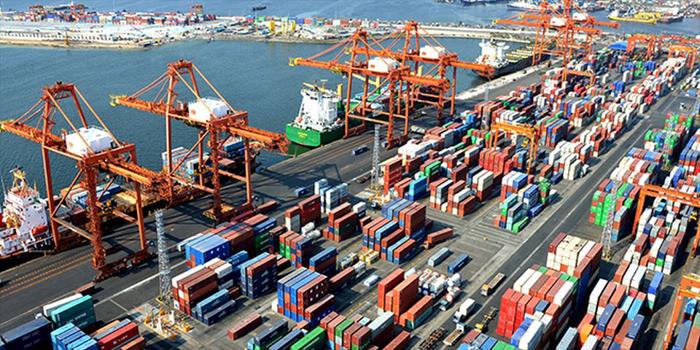

Employment in the US logistics sector changed course to cuts last month, and predictions envisage massive layoffs soon.
Meanwhile, professionals at the top are in high demand, as companies look for leaders with expanded skill sets to navigate the ongoing volatility.
UPS made headlines last month with its plans to cut 40,000 jobs – about 4% of its workforce. This prompted immediate pledges of resistance from the Teamsters union and signalled a drastic deterioration in labour relations at the integrator.
But UPS is no outlier; other logistics firms have announced job cuts – albeit of a lesser magnitude, but that could well change, according to predictions from Apollo Global Management, which anticipates a recession that will ravage employment in transport and retail.
The slump in imports triggered by the Trump administration’s tariff moves, especially on imports from China, is going to cause a sharp slowdown in domestic freight activity, Apollo predicted, noting that imports make up around 20% of US trucking volumes. Its analysts expect the slowdown to unfold by mid-May, followed by hefty layoffs.
By one estimate, the domestic freight market could contract by as much as 5%, potentially causing similar bloodletting in employment that could translate into more than 400,000 jobs disappearing.
Apollo warned that the economy could fall into ‘stagflation’, a protracted period of economic woe. And more jobs could disappear if companies buckle under. S&P Global Ratings recently noted that risk of corporate defaults have increased in the wake of the tariff offensive.
“The longer tariff uncertainty lasts – or if it worsens – the greater the likelihood that speculative-grade corporate default rates increase. Our pessimistic cases are 6% for the US and 6.25% for Europe, respectively,” the ratings agency warned.
Hiring was still up in March (although recent numbers have adjusted earlier reports downward). However, those gains were largely related to a surge in front-loading activity, momentum which slowed sharply in April. After 7,000 jobs had been added in transport in March, last month saw an increase of 1,400 jobs – less than a tenth of a percent, according to Bureau of Labor statistics. Employment in trucking was down 3.2% from a year earlier. The rail industry added 100 jobs in April.
Meanwhile, the view from the top is strikingly different. At executive level, the logistics industry shows no signs of impact from the economic headwinds. The 2025 Logistics Salary Survey. produced by Peerless Research for Logistics Management. shows a picture of executives satisfied with their situation, notwithstanding an increase in their responsibilities.
The authors of the study, which was based on input from over 200 qualified respondents, wrote that demand for qualified professionals was outpacing supply as companies try to engineer more resilient and agile supply chains. This keeps leaders in the position of high esteem attained in the volatility since the pandemic. Plus, it ensures fairly attractive remuneration.
If anything, their importance has grown as their range of responsibilities has expanded. Two-thirds of the respondents (67%) reported an increase in the number of job functions they perform over the past two years. And this does not appear to have weighed on their job satisfaction, as 93% said they were satisfied with their careers.
At the top end of the pay scale, 24% of the respondents earned more than $150,000 a year, whereas 8% received less than $50,000. People at VP or general manager rank topped the scale, with an average salary of $208,300.
After years of increases, the average salary actually slipped, from $128,300 last year to $120,600, but this can be attributed to demographics, as top earners – typically aged between 55 and 64 – retired. Only 10% of the respondents reported a decrease in their pay in the past 12 months.
And the wage gap between male and female employees appears to be narrowing. The average annual salary for men sank from $145,200 in 2024 to $133,400, while for female managers it climbed from $101,700 last year to $120,500.
However, women may earn significantly less than their male counterparts the longer they stay in the industry, commented Abe Eshkenazi, CEO of the Association for Supply Chain Management.
But for employees down the hierarchy facing the possible loss of their jobs, the improvements for senior executives are cold comfort.


Misdeclared shipments are causing delays at US borders, with full truckloads being turned away if just one item is non-compliant, Canadian shipping company ChitChats warned this week.
“As you know, China-origin goods have been excluded from de minimis entry into the United States. Our border crossings on 2 May and 3 May were denied due to some shipments being misdeclared, but were in fact of Chinese origin,” said ChitChats.
It said any misdeclared shipments discovered during a US Customs inspection would result in the truck being turned around – taking with it any compliant shipments on board.
“US CBP is thoroughly checking parcels for verification of country of origin, immediately refusing our entire truck upon discovery of a single misdeclared or ambiguous country of origin. Shipments crossing at the New York state border were refused again, and we are awaiting the status of the shipments crossing in Washington.
“We’re actively identifying and removing misdeclared packages from our trucks so we can promptly schedule an additional border crossing for compliant goods,” it added.
ChitChats said evading tariffs or de minimis charges was a “serious offence” and penalties would be issued if a shipment’s “country of origin, value, or any other detail intended to evade tariffs” had been altered.
The firm’s own measures could include a C$1,000 fee, disposal of the misdeclared shipment and termination of the client’s ChitChats account, and it warned that CBP would likely take its own measures as well.
“CBP will retain your information, making future attempts to circumvent tariffs highly likely to fail, and can impose civil penalties up to $50,000 and bar you from shipping to the US, regardless of carrier or method,” it warned.
It was reported by Criptopolitan that some Chinese social media sites were displaying adverts that promised to lower tariffs by sending goods to another Asian country, from where they wouldl leave with a fresh certificate of origin, allowing them to clear US customs at a lower duty rate.
But US trade rules state that a shipment must undergo “substantial transformation” — processing that adds real value — before it can legally claim a new national origin.
“One post on lifestyle app Xiaohongshu urged shippers to ‘transit Malaysia to ‘transform’ into South-east Asian goods’, and another advised: ‘Wash the origin in Malaysia for smooth customs clearance,” read the Criptopolitan article.
While “origin washing” is a main tactic, the site also revealed that some shippers were mixing expensive items with cheaper goods in a consignment and declaring an average price, so the duty bill is lower.
However, Malaysia’s Ministry of Investment, Trade and Industry (MITI) announced on Monday that from 6 May it would be the sole issuer of all non-preferential certificates of origin (NPCOs) for shipments to the US, “to address the issue of possible transhipment from certain countries to the US market through Malaysia’s entry and exit points”.
And it added:”Issuance of NPCOs to the US market by business councils, chambers, or associations appointed by MITI will cease immediately. MITI will enhance audits on NPCO applicants, investigate and take the necessary action in collaboration with the Royal Malaysian Customs Department to curb any transhipment offences to the US.”


The Board of Directors of the Bilbao Port Authority has awarded approximately €50 million (US$57 million) for the construction of new electrical infrastructure that will allow ships at the Port of Bilbao to connect directly to the power grid.
The contract has been granted to a joint venture comprising Sampol Ingeniería y Obras, Comsa Instalaciones y Sistemas Industriales, and Montajes Eléctricos San Ignacio.
This initiative will enable vessels to shut down their auxiliary engines upon docking, significantly reducing greenhouse gas emissions, noise, and vibrations-contributing to both the energy transition and the decarbonisation of maritime transport.
The project represents the second and most ambitious phase of the port's electrification strategy. It focuses on Docks A1, A2, A6, AZ3, and Getxo 2 and 3, which serve container terminals, ferries, ro-pax and ro-ro traffic, and cruise ships.

Bangladesh’s port of Chittagong’s recently inaugurated Patenga Container Terminal (PCT) is ramping up its operations allowing carriers to explore fresh options for serving Bangladesh.
The terminal is currently serving the 2,750 teu Maersk Chattogram and for the first time handling export, import, and empty containers simultaneously.
Chittagong Port Authority (CPA) completed construction of PCT in June 2022 and signed a deal with the Saudi operator Red Sea Gateway Terminal (RSGT) for a 20-year operating concession in December 2023.
PCT subsequently started commercial operations in June 2024 solely handling export containers but following the installation of a container scanner to check imported goods, Bangladesh Customs authority deployed officials to conduct customs procedure and it began to service imports.
According to Omar Faruk, spokesperson for Chittagong Port Authority, PCT had handled two import container laden vessels in February and March on a trial basis.
Meanwhile, the arrival of the Maersk Chattogram could also indicate that Maersk is looking to consolidate more of its Chittagong services at PCT.
Meanwhile, the Maersk Chattogram is deployed on Maersk’s South China-Bangladesh IA7 service that has a port rotation of Shantou-Hong-Kong-Nansha-Yantian-Tanjung Pelepas-Port Klang-Chittagong, and its usual terminal in the Bangladeshi gateway is Chittagong Container Terminal.
The service deploys five vessels of 2,800 teu capacity.
“We will increase the frequency of vessels in the terminal,” an RSGT official told.
It is not the only carrier apparently redesigning its network out of Bangladesh, with German line Tailwinds Shipping, owned by supermarket giant Lidl, replacing a call at Colombo on its Asia-Europe PAX service with a call at the Malaysian transhipment hub of Port Klang.
The Colombo call had linked up with Tailwinds’ TEX service that called Chittagong-Colombo on a fortnightly roundtrip deploying the 1,800 teu Nordtiger.
Henceforth that transhipment link will take place at Port Klang.
“We always watch the shipping market in Asia closely – it is for operational reasons that we have adjusted the schedules of our PAX and TEX services,” a Tailwinds spokesperson told.
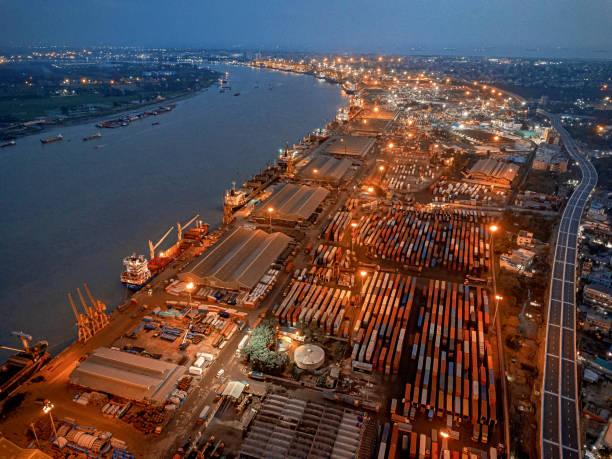
The hefty $81m in fines imposed by the Korea Fair Trade Commission (KFTC) on 23 liner operators is expected to confirmed, after the country’s Supreme Court ruled this week that the Fair Trade Act does apply to collusion on fixing freight rates.
In January 2022, 23 liner operators, including 14 from South Korea, and others including Evergreen, Cosco, Maersk Sealand, Yang Ming, HMM and SM Line, were taken to task after timber traders complained about their simultaneous raising of freight rates between 2003 and 2018. The investigation took three years.
During the KFTC probe, the Ministry of Oceans and Fisheries (MOF) moved to exempt such joint action from the Fair Trade Act. However, the exemption came too late, and the KFTC said it could not be retroactive. The subsequent fines brought backlash from the MOF, Korea Shipowners’ Association and Chinese government.
All the liner operators and feeder trade association Korea Near Sea Freight Conference filed individual lawsuits to challenge the legality of the penalty.
They argued that Article 29 of the Shipping Act explicitly permitted joint actions, thereby excluding the application of Article 58 of the Fair Trade Act. They also claimed that the authority to regulate such joint actions lay with the Minister of Oceans and Fisheries, not the KFTC.
However, KFTC lawyer Kim Seol-I argued” “Collusion should only occur to the extent that residual competition is protected. The purpose of Article 29 can only be upheld if procedures such as prior consultation with shipper associations and subsequent monitoring by the MOF are conducted to ensure that competition is not unduly restricted.”
The freight rates were fixed without discussing with shipper groups and the MOF, the lawyer claimed.
The Supreme Court judges agreed with the KFTC’s position, and dismissed the suits brought by HMM, KMTC Line, Pan Ocean and Heung-A Line. The suits filed by the other 19 shipping lines and Korea Near Sea Freight Conference are pending in the Seoul High Court, which stayed these proceedings, pending the Supreme Court ruling.
The high court is npw expected to also rule in favour of KFTC.


Mexican ports are in expansion mode. If the tariff offensive by its northern neighbour raised questions over future trade flows with the US, it does not appear to impact ambitions for further expansion, both in the private and public sectors.
At Veracruz, the nation’s top Atlantic gateway, CICE Group opened the first phase of a new terminal for containers and mixed cargo in the port’s north area. A little over 22 ha, it includes a dock of 550 metres, a 500,000 teu-capacity container yard, zones for reefers and hazmat shipments, and an intermodal yard with 1,970 metres of rail.
According to CICE, a provider of port and logistics services, the development was finished in the “probably record time” of little over one year. Work on the second and final development phase is set to begin this quarter.
Veracruz handled 279,937 teu in the first quarter, a decline of 12.2%.
CICE has a presence at other Mexican ports, notably Tampico, where it operates a mixed cargo terminal. It also runs logistics parks in Veracruz, Monterrey and the Mexican capital, and operates a ground transport division. Management declared at the opening of the new facility in Veracruz that it intends to expand in the country, both at ports and in the interior.
At Lazaro Cardenas, Mexico’s second-ranked Pacific gateway, behind Manzanillo, Hutchison Ports is now in the third and final phase of the expansion of its facility, which aims to add 28 ha of operating space and expand the dock by 345 metres to 1,278 metres and the facility’s surface area to 104 ha.
Hutchison’s volume at the port reached 1.5m teu last year, more than 20% higher than its 2023 throughput.
Rival APM Terminals deployed 14 new hybrid shuttle carriers at its Lazaro Cardenas facility at the end of last year, each with a cargo capacity of 50 tons, a $14m investment to optimise operations, improve cargo flow and reduce wait times for truckers.
Meanwhile, more funds may well be headed to Mexico’s logistics and transport arena. The government is looking to funnel some money into the marine transport sector, with funds from the Mexico Plan, announced in January, a stimulus package of up to $1.53bn, a fiscal tap that will be open until 30 September, 2030.
According to one report, projects that require the acquisition of machinery, equipment, and ships will be prioritised, with deductions of up to 73%. There is also going to be a 25% deduction on spend on technological and scientific initiatives.
Jose Manuel Urreta Ortega, national president of the Mexican Chamber of the Marine Transport Industry, welcomed the government decree as a watershed for the national marine industry and called the financing plan an unprecedented fiscal instrument in its scope and focus on naval construction and port operations.

Container freight spot rates maintained their downward trajectory this week, as tariff uncertainty continued to plague the transpacific market and demand elsewhere failed to match supply.
However, the rising number of blanked sailings appears to have at least limited the weekly losses to single-digit declines.
Liner analyst John McCown noted in his monthly analysis this week that “the very early signs point to the industry having already blanked 81 sailings for April in the transpacific tradelane, well above the 51 sailings blanked during the monthly height of the pandemic”.
This week’s World Container Index (WCI) from Drewry saw its Shanghai-Los Anglese leg shed 2%, to finish the week at $2,617 per 40ft, while the Shanghai-New York routes lost 3%, to end at $3,611 per 40ft.
On both trades, spot rates have now fallen for two consecutive weeks, after a fortnight of rising pricing at the beginning of April, which suggested that turn-of-the-month general rate increases (GRIs) had stuck.
However, it also transpires that transpacific eastbound volumes were strong in March, with inbound shipments at the 10 largest US container ports up 11.2% year on year, according to data published by Mr McCown.
But he warned that the twin threats of trade tariffs and the US Trade Representative’s proposed port call fees on Chinese-built ships and Chinese carriers could send this growth into reverse.
“Growth in 2025 will be well off the 2024 pace. In fact, if the tariffs and USTR ship fees in place now continue, my view is that it is almost certain there will be a double-digit percent reduction in annual volume for all of 2025, compared with 2024,” he said.
On the Asia-Europe trades, the WCI showed a 1% week-on-week decline on its Shanghai-Rotterdam leg, to finish the week at $2,312 per 40ft, while its Shanghai-Genoa leg was unchanged, at $3,012 per 40ft.
Looking ahead, today’s Shanghai Containerised Freight Index (SCFI), which records rates quoted this week and often gives an indication of pricing the following week, shows spot rates on transpacific routes to the US west and east coast remaining flat, while Asia-Europe trades could see further slight declines.
The SCFI’s Shanghai-North Europe base port leg this week declined 4% week on week, to finish today at $2,520 per 40ft, while the Shanghai-Mediterranean base port route was down 1.5%, to $4,258 per 40ft.
Meanwhile, transatlantic spot rates continued to hold steady, as they have for the best part of a month, with the WCI’s Rotterdam-New York leg seeing a 1% decline, to $2,109 per 40ft, while the backhaul route was up 1%, to $825 per 40ft.
The relative strength of the trade has seen carriers announce the introduction of peak season surcharges (PSS) next month, possibly in anticipation of tariff-related front-loading.
Hapag-Lloyd today said it would apply a PSS of $600 per teu and $900 per 40ft on shipments to Mexico and Canada from 15 May, and on shipments to the US from 25 May.
Similarly, CMA CGM is set to introduce a PSS of $400 per teu and $800 per 40ft on all North Europe to North America shipments from 15 May.
Whether any of these price increases stick will be a good indication of how demand holds up over the next four weeks.
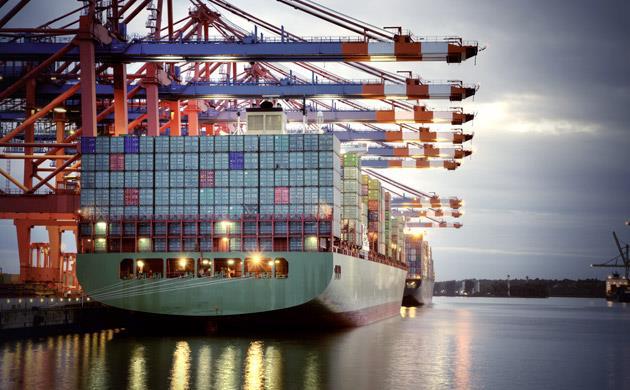
Forwarders are warning shippers not to under-declare the value of goods they export to the US as they look to mitigate the cost of tariffs.
Lee Griffiths, MD of NNR, said all employees were told to “completely avoid any breach of the law – follow culture before profit”, stressing that any such requests made to the company would be “met with a flat ‘no’”.
He added that NNR, “luckily, has several experts” on both tariffs and customs. They had been busy recently, with NNR’s US division running regular webinars that attracted strong participation, with 200 customers having signed in for the latest live chat.
Director of customs and trade services at DSV Pete Mento urged cargo owners to make customs compliance “the foundation of all your decisions”.
Since the onset of the tariff war, he said, he had received multiple suggestions on how to bypass additional import costs, including having suppliers “invoice for half what we intended to pay, but actually pay them what we agreed, after the import”.
Mr Mento wrote on LinkedIn: “Please don’t make foolish changes to avoid tariffs. CBP will catch you. They just will. And when they do, the impact will be nothing short of brutal. Talk to your broker, make compliance the foundation of all your decisions.
“Lastly, advise your suppliers and leadership that tough times won’t last for ever, and that they don’t give you licence to make bad decisions.”
Despite warnings against under-declaration, numbers provided by customs consultant Tom Gould suggest there is a rise in the practice: in January, 30 audits by CBP identified an additional $71m in duty due on imports, this dropped to $2.9m in February.
Alessio Bruni, a co-founder of Heroes, an advisory for SME e-commerce firms, gave an indication of the scale of the problem, claiming that one forwarder had offered to under-report the value of a shipment by 86%.
He said: “These numbers are mind-blowing. These freight forwarders would bring in products into the country and under-report the true value of the goods by 86%. It’s the equivalent of carrying two large suitcases full of contraband and going through the green ‘Nothing to Declare’ gate at the airport.
“If you get busted, you are screwed. Too many sellers seem to think this is a no-brainer.”
Mr Bruni warned that, with fines being two to three times the true value of the goods, the company could end up paying $750,000.
Hapag-Lloyd will apply a General Rate Increase (GRI) / General Rate Adjustment (GRA) from the Indian Subcontinent and the Middle East to North America for cargo transported in 20' and 40' dry, reefer and special containers, including high cube equipment.
This GRI/ GRA adjustment will be implemented for all containers gated in full from 20 May and will be valid until further notice.
The GRI amount has been set at US$1,000 per container
The Indian Subcontinent & Middle East area covers India, Pakistan, Bangladesh, Sri Lanka, UAE, Qatar, Bahrain, Oman, Kuwait, Trag, Saudi Arabia and Jordan, while North America includes the United States and Canada.