Welcome a new company on MaxModal. You can see LOGI MAR LTD. services on their business profile, drop them a message, add them to your contacts or submit a special request to them
#shipping#warehouse#terminal


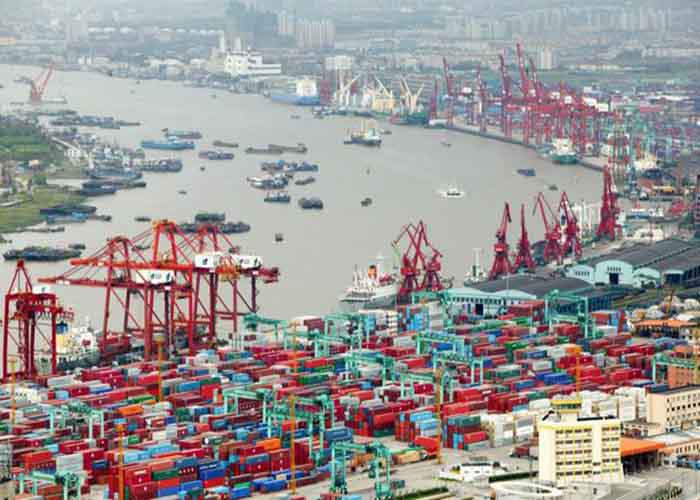
Despite more than two million teu of newbuild container vessels joining the global fleet so far this year, the pool of open tonnage remains at a record low.
This presents a significant challenge to carrier ship managers looking to compensate for schedule delays and essential dry-docking by tapping into the charter market.
According to a survey by Alphaliner, there were only 67 vessels, with a capacity of 195,159 teu, recorded as commercially idle on 12 August, representing just 0.6% of the world’s 30m teu global fleet capacity.
Moreover, the idled units are heavily weighted towards the small sizes, with 41 of the 67 having capacity of less than 2,000 teu.
“The liner shipping peak season, intermittent congestion at some key ports and the ongoing diversions around Africa continue to put a strain on the supply of tonnage,” said Alphaliner.
It added that industrial action on the US east coast, the looming rail strike in Canada, as well as disruptions in the Gulf of Mexico and in India, could put even more strain on vessel supply as carriers look to secure additional ships to mitigate network delays.
Indeed, Maersk said last week that, since the outbreak of the Red Sea crisis, it had chartered some 172,000 teu of extra capacity “to mitigate the impact of the disruptions on our customers’ cargo flow”.
The Danish carrier and its peers have drained the charter market of tonnage to shore up their networks, and the idle fleet has been further depleted by the launch of ‘opportunist’ services taking advantage of inflated spot rates – a fashion seen during the post-pandemic demand boom.
Around 500,000 teu of newbuild container vessels hit the water in June and July, with over 100,000 teu delivered this month so far. Deliveries this month include the 16,592 teu methanol-dual fuel powered Alexandra Maersk, the fifth in a series of 12 vessels ordered by the carrier in August 2021.
Notwithstanding the extra capacity required to service disrupted liner networks, the forthcoming break-up of the 2M Alliance, of Maersk and MSC, and the departure of Hapag-Lloyd from THE Alliance is weighing on the minds of carriers that do not want to lose market share as a consequence.
This will become critical during the upcoming slack season, when carriers are obliged to discount prices to fill allocations.
According to Alphaliner data, there is still around 1m teu of capacity scheduled to be delivered this year, with a further 2m teu due in 2025.
Meanwhile, carriers are in bullish mood after recording better-than-expected profits at the half-year stage, with for example Israeli carrier Zim saying it expected “even better results in the second half of 2024”.
As a result the cash-rich carriers are once again turning to Asian shipyards for newbuild slots, with confirmed orders this year already at more than 2m teu.
However, these orders, which are mainly concentrated at Chinese yards, will not be received by carriers until 2027 at the earliest.

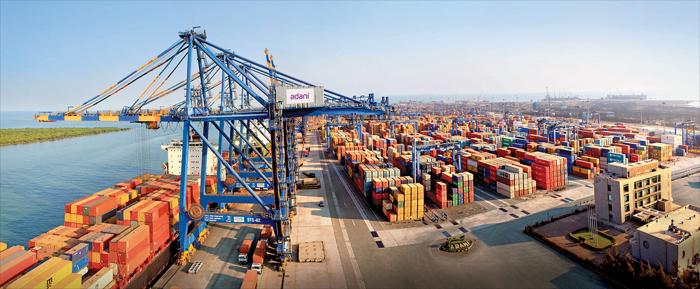
Competition between government/landlord ports and Adani Ports and Special Economic Zone (APSEZ) in India is heating up, with the latter making rapid inroads into the emerging market.
Adani Group’s flagship Mundra Port boosted its market share of Indian containerised trade to 34% last fiscal year (2023-24), from 31% year-over-year, according to exclusive data obtained by Container News. Mundra competes with Nhava Sheva Port for north-western cargo, which makes up the bulk of Indian box volumes.
To amplify the growth pace for Adani, Mundra has seen container volumes increase from 2.7 million TEUs in 2014-15 to 7.4 million TEUs in 2023-24, registering a compound annual growth rate (CAGR) of 12%.
On the other hand, Nhava Sheva Port (JNPT) has expanded volumes at a significantly slower rate -– from 4.5 million TEUs to 6.4 million TEUs, a CAGR of 4%, data shows.
That phenomenal growth for Mundra comes despite its high tariff rates. Mundra’s vessel and-container-related charges are substantially higher than those at the leading terminals in Nhava Sheva, according to anecdotal data.
According to local industry voices, greater efficiency and stronger hinterland cargo advantages are driving Mundra's growth journey.
Additionally, Adani’s strategic terminal partnerships with liner giants CMA CGM and MSC yields significant volume gains for Mundra. The port saw 1.7 million TEUs of transshipment cargo-handling in fiscal 2023-24.
Steady cargo shifts away from government ports could threaten volume targets for India’s older build-operate-transfer (BOT) terminal operators, who have concessions that mandate high royalty share obligations towards their landlord port entities.
“Clearly, the company’s business model of end-to-end service, strategic partnership with key customers, leveraging the network effect through its string of ports, and focus on operational efficiencies is yielding results,” said Ashwani Gupta, whole-time director and CEO at APSEZ in a recent statement.
He further said: “We continue to invest heavily in the business to drive growth, particularly in the logistics segment.”
Gupta went on to add: “Our newly launched trucking segment enables APSEZ to provide the last-mile connectivity solution to its customers. Our efforts towards sustainable business growth are well recognized in the top decile ESG rating from four global rating agencies.”
APSEZ is also betting high on its new container transhipment terminal at Vizhinjam Port in southern India. The terminal recently kicked off trial operations, ahead of its official launch shortly.
“Once we complete the automation and the Vessel Traffic Management System, Vizhinjam will be in a class of its own as one of the most technologically sophisticated transshipment ports in the world," APSEZ managing director Karan Adani noted.
"No other port in India - including our own highly advanced Mundra Port - has these technologies,” he added.

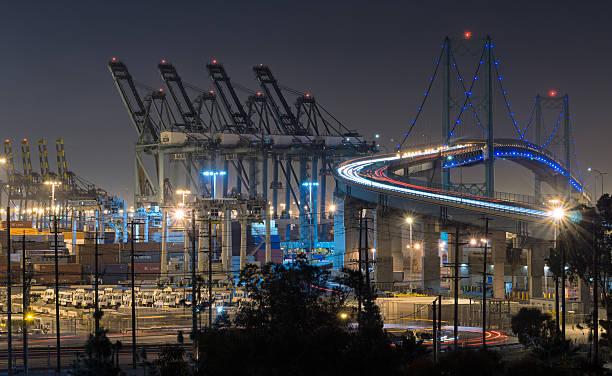
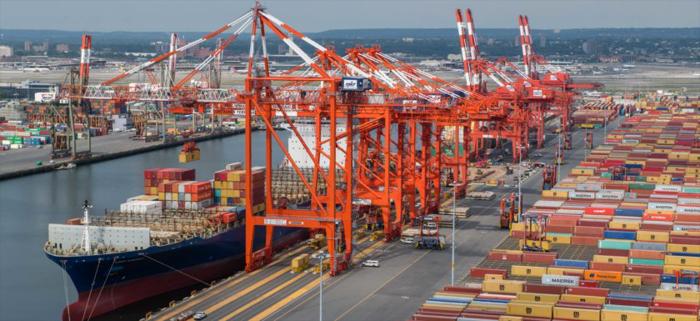
The Port of Los Angeles handled a record-breaking 939,600 TEUs in July, a 37% increase over the previous year.
According to the port's data, it was the best July in the LA port's 116-year history and the busiest month in more than two years.
Additionally, seven months into 2024, the Port of Los Angeles is 18% ahead of its 2023 pace.
“We’ve seen an influx of year-end holiday goods coming across our docks a bit earlier than usual to avoid any risk of delay later in the year,” said Port of Los Angeles Executive Director Gene Seroka. “These goods – think toys, electronics and clothing – are arriving at the same time as more typical back-to-school, fall fashion and Halloween merchandise. An early peak season has helped to boost volumes here in Los Angeles.”
July's loaded imports landed at 501,281 TEUs, a 38% spike compared to the previous year, while loaded exports came in at 114,889 TEUs, an increase of 4% compared to last year. The US port processed 323,431 empty containers, a 54% jump compared to 2023.
"It was the 14th consecutive month of year-over-year export gains in Los Angeles," noted the Port of Los Angeles in a statement.
Overall, the Port has moved 5,671,091 TEUs the first seven months of 2024, an 18% increase over the 2023 mark.

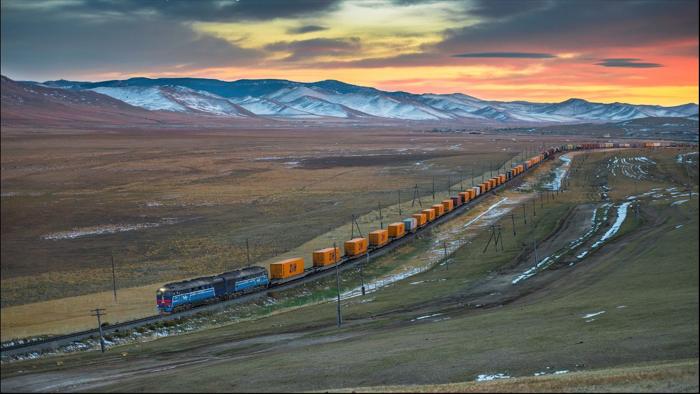
China-Europe rail freight volumes are continuing 2023’s upward trajectory, recording an 11% year on year bounce in the first six months of this year, with some 1.23m teu moved.
Data from China State Railway Group, published on government websites, shows more than 11,400 trains operated in the first half of 2024; with the most recent monthly figures suggesting little sign that this positive momentum is dwindling.
Indeed, July was the third consecutive month in which more than 1,700 trains made the journey between China and Europe, with 1,776 transporting some 185,000 teu.
Growth in Chinese rail freight volumes is partly attributable to the disruption in the Red Sea, with shippers eager to find routes around the chaos, but the government has also been rapidly developing rail services in the wake of Russia’s invasion of Ukraine.
With traditional China-Europe services through Russia hitting the buffers, Chinese operators have turned to Russia’s southern neighbours, with the number of routings through the likes of Kazakhstan growing.
And these efforts have borne fruit, with China Railway’s CR-Urumqi division having noted an 8.2% year-on-year bump in journeys made, hitting 7,746 in H1, with the operator stating it was “deepening cooperation” with Kazakh rail services. That “deepening” will include efforts to expand, optimise and reconstruct ports in both countries to better facilitate train transfers.
Average rates now being offered by Chinese forwarders on export services have surpassed $10,000 per teu, with some quotes at more than $12,000.
Welcome a new company on MaxModal. You can see Universal Aviamarine Yemen services on their business profile, drop them a message, add them to your contacts or submit a special request to them
#shipping#warehouse#terminal


Hi
We are based in Dar es Salaam Tanzania.(East Africa)
We can handle all shipments in all modes i,e Ocean freight, Airfreight, Roads, and Railways.
Dar es Salaam Port is the gateway to landlocked countries such as Zambia, Malawi, DRC Congo, Burundi, Rwanda, part of Uganda, Mozambique, and Zimbabwe respectively.
We are an ISO certified company . We can handle any cargo to or from Yemen through all modes , Air Freight , Oceanfreight and roads

A minor 3% drop this week in the Drewry World Container Index (WCI), continuing a trend which began last week.
Shanghai-US rates were the fastest to dip: Shanghai-LA from a peak of $7,512 in early July to $6,501 yesterday; and Shanghai-NY from $9,612 on 18 July, to $8,931.
This could be little more than a glitch in an otherwise inexorable rise in rates, akin to that seen in the WCI in Q1, which soon reversed.
Indeed, according to Linerlytica, the port of Shanghai recorded a spike in congestion at the end of July not seen since the beginning of the year, which rather implies there there could be more disruption to come.
Softness in the charter market is not to be regarded as an indicator, said Alphaliner, but rather a typical summer holiday slowdown with “no sign of an acute market weakness”.
Qatar, Egypt and the US are pushing for Israel-Hamas ceasefire talks to resume on 15 August, but there is not much reason to imagine this will amount to much. And if the war is not going anywhere, neither are the Houthis: over the past 24 hours, Greek-owned tanker Delta Blue came under a hellish sequence of attacks from RPGs, missiles, drones and later a drone boat, according to a UKMTO report.
“Combined with supply chain problems, geopolitical uncertainties, and a stronger-than-expected cargo demand, freight rates will remain strong for a while, holding up charter rates as well,” Alphaliner reported on Wednesday.
If the downward trend does continue, however, it will be a sign that efforts by US shippers to front-load volumes to avoid being thrown upon the mercies of peak season, have worked. This certainly seems to be the prevailing consensus at Xeneta.
Chief analyst Peter Sand said yesterday the continuing Red Sea crisis had “brought a major shift in the traditional seasonality of ocean supply chains, with concerned shippers rushing to import as many goods as they can, earlier in the year.”
Xeneta data shows that record cargo volumes, of 800,000 teu, were shipped from Asia to Europe in June, the most in a single month. China-US volumes, meanwhile, were the eighth-highest on record, at 1.36m teu, not seen since the pandemic.
The record number of containers shipped in June gives credence to Xeneta’s theory of a shifting peak season.
“Shippers assessed the impact of the Red Sea conflict on ocean supply chains and are not prepared to take the risk of repeating the chaos of the pandemic years,” said Mr Sand.
Shanghai container futures trades suggest that Asia-Europe freight rates could fall further in 2025, after appearing to have peaked now.
On 5 August, the index points of the EC2408 (August contract) closed at 5,627, while the EC2410 (October contract) closed at 3,585 points, losing 3% and 9%, respectively, from 29 July. The EC2504 (April 2025 contract) stood at 1,961 points, while the EC2506 (June 2025 contract) stood at 1,955 points, down 5% and 6%, respectively, from 29 July.
On 2 August, the Shanghai Containerised Freight Index (SCFI) showed that the Shanghai-North Europe rate slipped 2% from the previous week to US$4,907/TEU, although this was substantially higher than the US$947/TEU a year ago.
Linerlytica’s report today (6 August) stated that the near-term contracts led the decline for most of last week before the longer dated contracts became caught on the US recession fears.
Containerised Freight Index Futures began trading last August through the Shanghai International Energy Exchange, a subsidiary of the Shanghai Futures Exchange. The paper trades are executed by shippers, forwarders and liner operators.
Trading volumes are shifting from EC2410 to the later contracts with EC2504 gaining the most market interest.
Linerlytica said: “Based on the EC2408 and EC2410 latest closing prices, the futures market is pricing in a 4.46% decline each week in the next three weeks to the end of August, to be followed by a 4.49% decline each week in the following nine weeks to the end of October. Rates are expected to continue to fall through 2025, with current EC2506 rates trading at a 68% discount to the SCFIS (Shanghai Containerised Freight Index based on Settled Rates). Sentiment has turned negative despite the rates holding up much better than the Asia-US West Coast and Asia-Mediterranean rates, with carriers’ rate quotations starting to drop in a further indication that rates have peaked.”
Linerlytica opined that while freight futures continue to weaken, carriers are still in a strong position as overall capacity to North Europe remains limited with the 13-week moving average still down 3.4% compared to last year despite recent new capacity additions.
Actual departures from Asia remain volatile with port congestion and weather-related delays causing significant capacity slippage.