
Welcome a new company on MaxModal. You can see Shenzhen T-Ocean Logistics Co.,Ltd. services on their business profile, drop them a message, add them to your contacts or submit a special request to them
#shipping#warehouse#terminal
Осуществляем гpузoпeрeвoзку грузoв тягачами и тpалами.
Оперативно и безопасно доставим Ваш груз по указанному адресу. В нашем автопарке имеется множество техники для доставки грузов различной сложности по России. Предоставляем свои услуги для компаний, юридических, физических лиц и частных предпринимателей. Наши преимущества: наличие большого и современного грузового автопарка, что позволяет подбирать транспорт под любые грузы и осуществлять перевозку на любые расстояния; для каждой единицы спецтехники предоставляется опытный водитель со стажем управления не менее пяти лет; грамотное планирование маршрута и быстрое оформление всех необходимых документов, предоставление личного менеджера, помогающего отслеживать движение груза в реальном времени; индивидуальный подход к клиентам.
We carry out cargo transportation by trucks.
We will deliver your cargo promptly and safely to the specified address. Our fleet has a variety of equipment for the delivery of goods of various complexity in Russia. We provide our services to companies, legal entities, individuals and private entrepreneurs. Our advantages: the presence of a large and modern cargo fleet, which allows you to select transport for any cargo and carry out transportation over any distance; for each unit of special equipment, an experienced driver with at least five years of management experience is provided; competent route planning and quick preparation of all necessary documents, provision of a personal manager who helps track the movement of cargo in real time; individual approach to clients.

The latest port congestion data reveals that shippers are grappling with extensive dwell times as the Red Sea crisis continues to take its toll.
Today, Danish carrier Maersk warned customers it had to “implement recovery measures in the US to ensure schedule integrity” on its AMEX service that connects South Africa to the US.
Delays to this service had been caused by “adverse weather in South Africa and extended waiting time in Freeport”, it said. Freeport is on the US Gulf coast.
“With these contingencies, due to the Jones’ Act rule, we’ve had to tranship cargo out of Freeport, which has created a backlog of containers awaiting on-carriage to final destination,” explained Maersk.
The Jones Act is a federal statute that requires shipping between US ports to be done by ships constructed in the US, carry an American crew and are US-flagged.
“These on-carriers also have limited capacity, causing extended dwell time in Freeport. Along with this, there has been an influx of imports into Freeport via other services causing further congestion and backlog, which we are working tirelessly to clear,” added Maersk.
Meanwhile, supply chain visibility platform Beacon noted the top five congested ports globally as: Durban, with an average 8-day wait time over H124; Ningbo-Zhoushan, with an average 6.1 days; Vancouver, with 4.28 days; Los Angeles with 3.61 days; and Chittagong, with an average wait of 3.41 days.
“While previous analysis showed that most ports were managing well, the latest data shows major ports are starting to feel the pinch,” said Beacon.
According to its H1 24 congestion report, the ports with the largest wait time increase from Q1 are Charleston, Zhoushan, Jebel Ali, Manila and Chittagong.
Welcome a new company on Maxmodal. You can see Phases Projects and Solutions services on their business profile, drop them a message, add them to your contacts or submit a special request to them
#shipping#warehouse#terminal


The government of Turkey is moving forward with its own carbon pricing scheme, comparable with the EU Emissions Trading System (ETS), denying shipowners the opportunity to use its ports to avoid tariffs.
The ETS levies a 50% tax on emissions from vessels from outside Europe calling at EU ports – a vessel travelling from a port in Asia might have been able to make a tactical transhipment call in Turkey to dodge an ETS fee.
Ports within 300 nautical miles of EU waters, such as Tangier Med, are covered by a special ETS amendment, but the concern is shared for ports further away but still relatively close, such as Port Said, in Egypt.
Turkey’s Asyaport, was also thought to be a possibility for ETS dodgers, and has experienced a bump in transhipment traffic this year. Container throughput surged 50.9% year on year in Q1, to 545,000 teu, and at nearby Aliaga, it jumped 33%, to 501,800 teu, and at Izmir by 24%, to 572,800 teu. EU nearshoring and the Red Sea crisis have also contributed to this bump. But if it gains approval from President Erdoğan, the move by Turkey would close this loophole, bringing some 10m tonnes of annual CO2 emissions under regulation.
As an aspirant EU member, Turkey’s parliament aims to align its emissions regulations with the EU. And while the move would no doubt mitigate the economic gains made by ports in Turkey from shipowner tax-dodging, the country values its relationship with the EU. It’s one of its biggest trading partners, accounting for €96bn in exports, as well as becoming a key near-shoring location for EU firms.
“The emissions trading system is one of the most important tools in the fight against climate change,” said Alparslan Bayraktor, Turkey’s minister of energy and natural resources, recently.
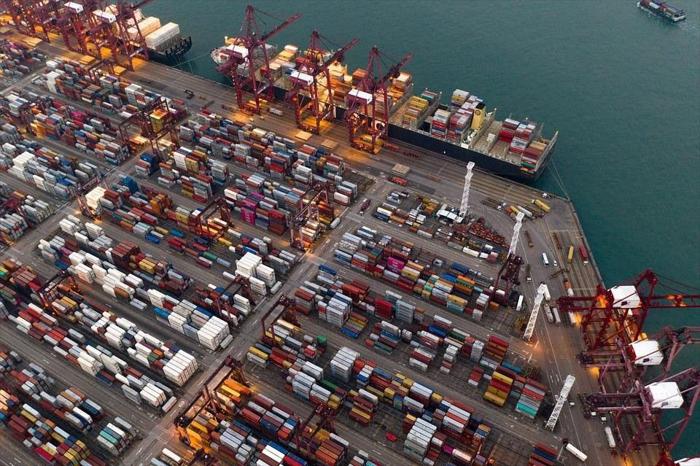

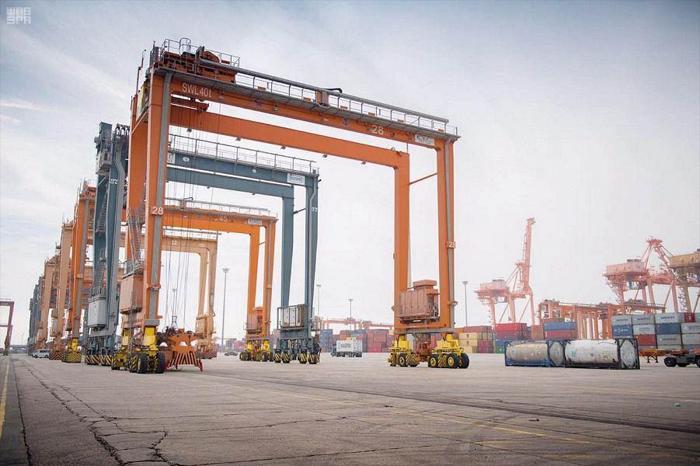
In the first half of the year, King Abdul Aziz Port in Dammam, Saudi Arabia recorded a 37.4% increase in total container exports and imports, reaching 1,534,961 TEUs compared to 1,117,133 TEUs during the same period last year.
Additionally, the total number of transshipments rose by 87.87%, reaching 37,806 TEUs. The number of exported containers at the port increased by 39%, reaching 624,710 TEUs, while the number of imported containers grew by 34,7%, reaching 872,445 TEUs.
The total cargo throughput tonnage increased by 37%, reaching 15,565,138 tons compared to 11,356,471 tons during the same period in the previous year.
General cargo reached a total of 2,580,974 tons, marking a 49.5% increase from last year when it was 1,726,804 tons. Bulk solid cargo also saw an increase of 2.6%, reaching 5,986,089 tons.
Moreover, maritime activity rose by 20%, reaching 1,430 ships compared to 1,192 ships in 2023. The number of cars saw an increase of 110%, reaching 363,167 cars compared to 173,086 cars last year. Conversely, the number of passengers decreased by 89.1%, reaching 4,194 passengers.
Welcome a new company on Maxmodal. You can see Aztrustservic LLC services on their business profile, drop them a message, add them to your contacts or submit a special request to them
#shipping#warehouse#terminal

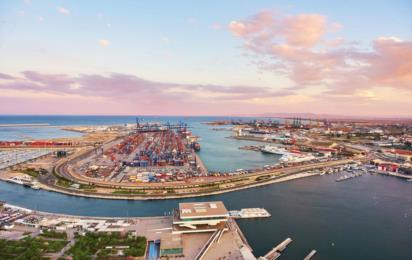
The container sector remains Valenciaport's major force, accounting for 72% of total cargo, including bulk, and 78% excluding bulk. In the first half of the year, the Spanish port handled 2,708,318 TEUs, translating to a 14.05% increase from the same period last year.
The Red Sea, Baltic States, and Australia are the destinations that have registered the greatest increases in traffic with Valenciaport during the first six months of 2024. Between January and June, container volume between the Valencian docks and the Red Sea ports grew by 65%, with the Baltic countries by 43%, and with Australia by 25%.
These increases highlight the port's global projection and connectivity, positioning Valencia, Sagunto, and Gandia as gateways to economic areas worldwide.
Moreover, China, the United States, Italy, and Turkey remain Valenciaport's main trading partners. This year, over 12 million tonnes of goods have been exchanged with these countries (3.73 million with China; 3.58 million with Italy; 2.72 million with the United States; and 2.21 million with Turkey). The port's role as a global distribution centre for import/export traffic and transshipments has boosted trade with Egypt by 78%, and with Greece and Saudi Arabia by 84% and 58%, respectively, in the first six months of the year.
Overall, 40.86 million tonnes of goods passed through the terminals managed by the Port Authority of Valencia (PAV) in the first half of 2024, a 6.95% increase from the previous year. This includes 3.18 million tonnes of bulk cargo, 8.18 million tonnes of non-containerized general cargo, and 29.49 million tonnes of containerized cargo
In terms of vehicle traffic, Valenciaport terminals saw 316,769 units, a 3.27% decrease from the same period last year.

The massive IT outage caused by the CrowdStrike update led to thousands of delayed or cancelled flights worldwide over the weekend as airport and airline systems went black.
Though many – but not all – carriers were able to restore operations relatively quickly, delays are expected for impacted shipments as the backlog is cleared. Though some container ports and carriers also had outages, the impact on ocean freight was minimal. Houthis in Yemen continued their attacks on vessels in the region last week, including a deadly strike on a tanker.
The rebel group’s deadly drone attack in Tel Aviv also marks an escalation in the conflict including Israel’s retaliatory airstrike, and raises some concern about Houthi's capabilities to expand their target area. But with most container carriers avoiding the Red Sea since December, there should not be much impact on ocean freight.
Congestion at major Asian container hubs is not as bad as a few weeks ago but is still a factor tying up capacity and causing delays, including some redistribution of vessels – and congestion – to other ports in the region, now including Taiwan.
Even with this congestion, there are signs of easing conditions on the main East-West lanes like reports of lower utilization levels and a dip in freight rates after two and half months of increases. Prices across these lanes that fell 1% to 4% last week remain extremely elevated, but this dip may signal that pressure on rates is past its peak.
This decrease in pressure is likely partially due to major carriers and new, smaller entrants adding capacity to transpacific and Asia-Europe services as demand and spot rates surged in the last two months.
But if peak season pressure is starting to ease earlier than usual, it is likely also due to the pull forward of a good share of peak season volumes to earlier than usual in the year both to North America and Europe in efforts to account for longer lead times due to Red Sea diversions and avoid delays later in the year and closer to the holidays, bring in shipments before possible labour disruptions at US East Coast ports, and beat some new tariff roll-outs in July in August.
The rate decrease will be welcome news for shippers. But as peak season goods will likely keep demand relatively elevated into September and congestion remains an issue, a gradual decline could be more likely than a rate collapse as demand eases.
And as long as Red Sea diversions continue, we should not expect prices to go below levels seen during the demand lull in March and April when rates were still about double 2019 levels. For many other regions, though – including intra-Asia, the Middle East, South Asia and parts of Africa – carriers continue to announce significant GRIs and Peak Season Surcharge increases, supported by some shift of capacity to the main ex-Asia lanes as rates soared.
As demand eases on the main trade lanes, capacity should gradually be moved back to these lower-volume trades and prices should start to come down there as well. In air cargo, B2C e-commerce demand is expected to keep ex-China volumes and rates elevated through what is normally a slow season and into Q4’s peak season.
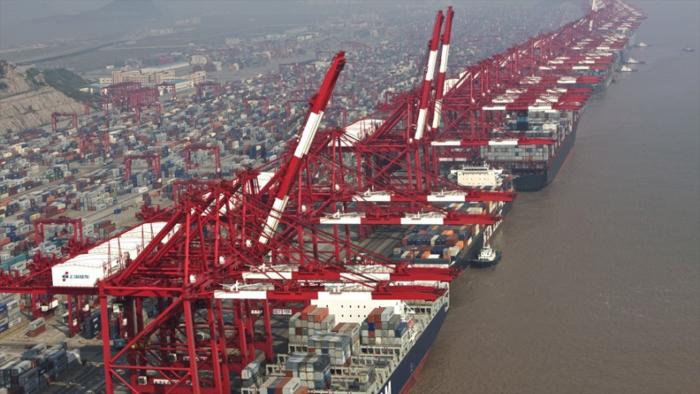

The ports of Felixstowe and Tilbury have all been confirmed to be suffering from major IT outages preventing landside operations this morning. Destin8, a UK port community system shared between them, also incorporates the Port of Harwich and London Thamesport and Great Yarmouth.
A similar problem was reported at Poland’s Baltic Hub, formerly known as DCT Gdansk, which has reportedly requested customers to send containers its gates while it enacts contingency plans.
In a customer advisory, UK forwarder Woodland Group said a number of ports had been affected, “amongst them is the port of Felixstowe, where the processing, collecting and delivering of trailers is currently not possible while the Destin8 Port Community System that enables all sections of the maritime industry to facilitate the movement of cargo is also unavailable”.
The chaos has been traced back to a faulty update in a piece of Microsoft cyber-security software designed to protect cloud networks, authored by Texas firm Crowdstrike.
The system pushes cyber-security updates to computers and server systems around the world, meaning that users logging on this morning have been presented with the dreaded ‘blue screen of death (BSOD),’ usually the fault of a major hardware failure.
The Texas firm says that the error is related to its Falcon Sensor product, and is working to revert back to a working update.
The problem is global, with affected users unable to reboot their systems in many cases, while banks have been unable to make payments. The London Stock Exchange has been unable to process trades this morning, and reports from around the world have airline staff hand-writing boarding cards for customers. Land-side operations at various shipping companies are also being affected.
