

Уважаемая Ирина, добрый день. Благодарим, что присоединились и создали профиль Вашей компании. Предлагаю создать тарифы Вашей компании на ключевые направления для того, чтобы другие участники MAXMODAL смогли найти Ваши тарифы и разместить предварительные заявки. Как создать тарифы - можно узнать на нашем канале https://www.youtube.com/channel/UCx7jbr3gLY3N4X7A-Emqtkg
China is tightening the Silk belt around Europe
The leitmotif of this week seems to be a series of several accusations looming over the horizon that will leave a deep imprint on the industry. COSCO Shipping Ports (CSP) has begun negotiations with Hamburger Hafen Logistik (HHLA) over a possible purchase of a minority share in HHLA Container Terminal Tollerort (CTT), which signifies a major milestone for Chinese presence in Europe. Although HHLA recorded a 7.2% volume decline in its three Hamburg terminals during the first three months of the year, and the port continues to suffer congestion issues, both companies have expressed expectations for fruitful cooperation. In turn, DP World is heading towards the west of the Indian Subcontinent by using the Unifeeder Group for the acquisition of Avana Logistek, Transworld Feeders, and its unit Transworld Feeders FZCO.
A serious threat of possible consequences of the UK’s Delayed Declarations Scheme admitted not so long ago can face British customs, according to the British International Freight Association (BIFA). Following the end of the Brexit transition, the initiative gave businesses importing into the UK up to 175 days to complete their customs declarations. However, now the country lacks sufficient resources to cover the backlog, and it is not going to be easy to find brokers who could handle it on time. The UK’s failure to prepare for Brexit properly forced it to further extend the option of delaying declarations until 1 January 2022.
Sustainable development is on the roll. Teaming up in the “Green Switch” project, LDZ Loģistika Ltd. and LDZ CARGO Ltd. aim to start regular transportation of the aforementioned trailers anytime soon. Another crucial milestone will be the conversion of the Brussels Express to LNG, with the vessel to complete its first LNG bunkering at Singapore on the next round voyage. Furthermore, Tarmac, one of the largest customers of rail freight in the UK, and their rail freight partner DB Cargo UK have announced an environmentally sustainable fuels initiative. The delivery of construction materials on a key strategic route will be powered entirely by renewable fuel.
The new rates have been introduced by MSC from European ports from Europe to Canada and Mexico. The increase ranges $500 and $1000 for 20DV and 40DV-HC respectfully.
Following the time charter rates in the past decade, the drastic changes can be spotted for 14000 TEU, 8800 TEU, 4250 TEU, 1700 vessels. They went up to $550,000 for the 14000 TEU in 2010, but ever since (before the COVID-19), remained below $400,000. The same for 8800 TEU vessels that did not go further than $220,000 before skyrocketing to $1.1 mil. in 2021. The rates for 4250 TEU, 1700 TEU vessels used to be the lowest and did not face any significant bounces, staying in the $200,000 lane. The latter is still under this rate, however, the rates for 4250 TEU vessels are as high as $410,000 in 2021.
The railway sector is speeding up, setting up a positive trend on the way to the post-crises recovery. On Friday 4 June, the first train from Nanjing in China arrived in the Dutch hub of Tilburg commemorating the start of a new regular line between the countries. Soon (from mid-June), thanks to Nurminen Logistics, a new blocktrain will connect the Finnish capital of Helsinki and Nhava Sheva, the largest container port in India. It will run via the western wing of the International North-South Transport Corridor (INSTC), which passes Iran and includes a sea leg across the Indian Ocean. Recently completed infrastructure works at Southampton have enabled Freightliner to run new, 775 meter-long intermodal trains for their client DP World. They have become the first in the country facilities capable of handling the longer trains. Terminal Container Athus (TCA) and rail operator Hupac have launched new rail services to and from the Port of Zeebrugge to strengthen intermodal trade across Europe. The terminals will initially offer one roundtrip each week with the possibility to add a second rotation if volumes are increased. Moreover, since September, the rail operator will also offer a rail link between Zeebrugge and the Polish Warsaw/Gadki.
Haropa Port has announced a new ‘Green Dock’ facility that will link directly to the Seine for river-borne and urban distribution for the Greater Paris region. It has become of interest to such freight players as Stef, DB Schenker, and CEVA Logistics.
The XPO Logistics, a leading global provider of supply chain solutions, has renewed its multi-year contract with EIZO Limited, one of the UK’s fastest-growing monitor brands.
After six years as the chief executive of the UK Warehousing Association (UKWA), Peter Ward has resigned. UKWA said it would name his successor shortly.


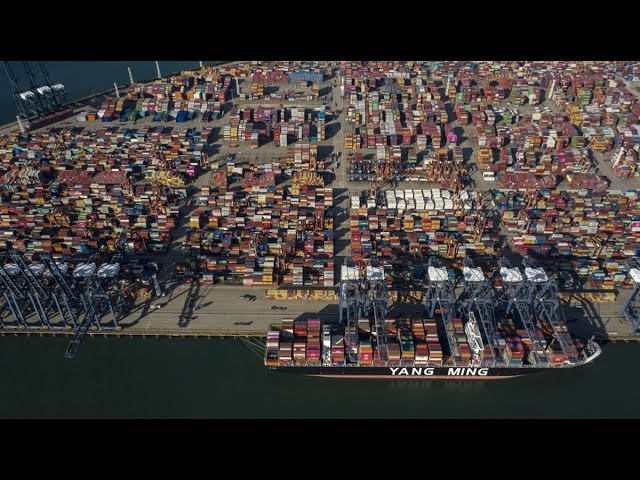
A long-awaited stability is out of reach, so industry players brace against the high rates, prolonged congestions, and more pressure on the supply chain.
It seems like the current ocean freights have truly become the embodiment of the saying “sky is the only limit” as they have gone up by another 3% for Shanghai to Rotterdam direction (or $288 on last week to $10,462 - a rise of 518% on their level a year ago for 40ft containers and those on Shanghai-Genoa rose 2% or $238 to $9,900/FEU (+418% year over year). On the transpacific, spot rates from Shanghai to Los Angeles increased 4% or $210 to $5,952/FEU while prices from Shanghai to New York surged $412 (+6%) to come in at $7,559 for a 40ft box. As for the transatlantic trade, the westbound leg rose just 1% to an average of US$3,720/FEU on Rotterdam-New York, while prices on Rotterdam-Shanghai increased by 5% also to $1,629/FEU. The continuing blockage of the port of Yantian does not contribute to the positive changes. Although Chinese officials are stating that the situation is improving, it is on the contrary getting worse. The number of delays is growing since only the eastern portion of the terminal is operating at 30% capacity, while the western part of it is completely shut down. China has increased the dray cost and decreased the availability of truckers. This is also negatively affecting the equipment problems as inbound vessels bypass Yantian for other terminals. Importers watching the spot rates that are now astonishingly high have begun to move orders forward to allow more time to get their products to market. They now have to prioritize the products based on their profit margins. Is it even possible to determine the limit of the rate growth? According to experts, hardly. While a “new normal” is expected to be around 10-20% above the pre-COVID level, nobody knows when this awaited stability finally takes place. There are several reasons for the current circumstances. Firstly, there are not enough empty containers and slots. Secondly, the players have to mind the ratio of goods ready to ship vs placement of the new orders in order not to pay extra money for the boxes decreasing in value. Thirdly, the contagion of equipment shortages across trades: Asia-Europe is experiencing quite anemic demand growth, but rates are through the roof because there are no boxes to move the cargo. The congestion of Yantian is not the only obstacle. In turn, Hapag-Lloyd is bypassing the Port of Oakland from the westbound legs of two of its transpacific west coast services because of the delays and prolonged blockage. While the aforementioned ports are struggling, the port of Los Angeles aims to increase its infrastructure budget by 42.5% to meet growing demand. The improvements have been spotted at the Chittagong port. Despite facing weeklong disruptions in mid-May, cargo volumes continue to be positive. Faruque Hassan, the new president of the Bangladesh Garment Manufacturers and Exporters Association (BGMEA), said the apparel may make a full recovery by October. It is going to follow the reopening of western retailers.
What about manufactures and the exact aforementioned retails who depend on the logistics companies and have to manage their costs associated with inbound and outbound domestic freight that are on the rise? Dollar Tree’s freight-market conditions are deteriorating alongside the lack of truck drives that are unable to meet the elevated demand. The latter is the problem for many. The recent cyber-attack on giant meat processor JBS’s operations in North America and Australia left truckers scheduled to haul cows to JBS plants without loads, forcing them to scramble for traffic elsewhere. The ubiquitous shortages concern technology companies as well. Dell and HP expect supply constraints to continue at least through the end of 2021. Having taken the current conditions into the account, the tech giants are trying to adjust their supply chains. Dell has started prioritizing more valuable places for the components it can procure. The company is going to focus on fulfilling orders for long-term customers first. As for HP, the company noted that it is increasing inventories and preparing long-term contracts with suppliers to ensure lasting partnerships and security. Retailers all over the world are admitting that panic buying and pantry stockings have majorly disrupted the industry knocking out manufacturers and producers. To sum up, although the latest quarterly reports from retailers appear to show progress in rebuilding merchandise levels, freight is still delayed at the ports, and transportation capacity remains historically constrained. It is too early and reckless to expert the improvements any time soon in the big picture.
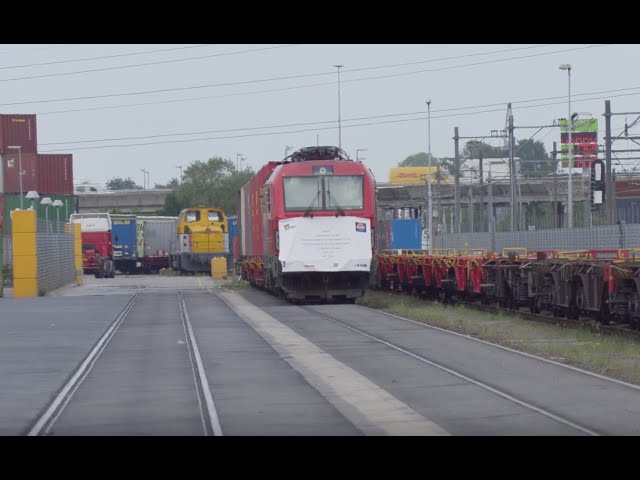
Rates are growing, but the trains move on – figuratively and literally. On Friday 4 June, the first train from Nanjing in China arrived in the Dutch hub of Tilburg. The event has marked the beginning of a new regular line between these two countries.
Asian shipping group SITC International has extended its newbuilding string to nearly 30 ships exercising options for eight more vessels at Yangzijiang Shipbuilding. The tension between Canadian Pacific (CP), Canadian National (CN), and KSC accelerates - 130 stakeholders had filed statements to the US Surface Transportation Board (STB) requesting it reject CN’s proposed voting trust. They are concerned over the likelihood of reduced service quality and infrastructure investments.
The green race: a new measure of success
By now, it is no surprise that sustainable initiatives are on the list of major priorities for development for many logistics companies. The shift in the paradigm is coming from the customers of transport companies themselves since they are becoming more and more interested in working with the businesses standing for transparency, traceability, and a “green” mindset. It seems like environmental agenda is gradually becoming as equally important factor for customers in choosing the type of transport solutions, as price, quality and transit time. Among the key players driving the trend are Heineken, Phillips, Unilever, DSM, and FrieslandCampina. Having understood where the wind of change blows, the shipping lobby has gotten inspired by the rail sector. Gasunie and port authorities of Rotterdam, Amsterdam, Groningen, and North Sea Port have conducted a study that has shown that to set up a hydrogen exchange in HyXchange, hydrogen certification and an index for price transparency would be a necessity to trade the renewable fuel. Certification of green, low-carbon, and imported hydrogen is needed to pipe a greater volume of hydrogen from a wide range of sources. HyXchange plans to test the first trading products in pilots and simulations, which will further involve the market. Earlier this week, the CEO of AP Moller – Maersk has proposed a carbon tax on ship fuel, motivating his decision by the current necessity to create a range of alternative fuel at scale. One of the best ways is to invest in R&D fund to achieve those goals, and, ultimately, the zero-carbon future. MSC has baked this proposal and joined an industry call to action with UN IMO member states to support the proposal for an R&D that would help catalyze new technologies.
Not only sustainable objectives have been set. This Thursday (3, June) The European Transport Ministers adopted two important setsof Council Conclusions on EU rail and the EU Strategy on Sustainable and Smart Mobility. The strategy aims to double rail freight and to triple high-speed rail passenger transport by 2050. Conclusions touch upon issues of key importance to the development of the sector: the impact of COVID on EU mobility and railways, the need for supporting rail Research & Innovation, the role of modal shift, the importance of TEN-T and rail freight corridors. This event follows the launch of the first trains between Rotterdam and Pordenone in northern Italy by Hupac. The issue between Samskip and Hector Rail has also been resolved. The first trains departed successfully with trailers via Denmark after all partners implemented the modified procedures for safe trailer transport by rail respecting the criteria from the Danish authorities in their rail supply chain. However, according to many industry players, the new measures are considered too strict since the transportation of trailers by rail is already safe, and the incidents on the Great Belt Bridge are an exception. In turn, the Russian manufacturer of freight cars, United Wagon, has obtained approval to operate two of its wagons on the European railway network. The future for The Istanbul-Tehran-Islamabad train project seems less bright in the context of several main problems. The first one concerns a lack of volumes due to political issues in the regions to be crossed. Apart from the lack of transparency between the parties, the sanctions imposed by the U.S. prevent the governments from providing a letter of credit and insurance for transiting cargo through Iran.
The railway industry is trying to indulge in optimization as much as it can. One of the primary objectives includes a further study on the possibility of using three locomotives to run a longer train. The Distributed Power System (DPS) is an initiative that can turn this plan into reality. It allows the use of three locomotives to run a single train, and in the long-term, such development could lead to the use of 1,500 meter-long trains. The first tests proved to be quite successful. The initiative can potentially revolutionize the entire industry.
Despite being destructive on its own, the current crisis has revealed such significant problem as a shortage of skilled drivers. The situation is expected to get worse with the increase in penury by over a quarter on 2020 levels in almost all of the 23 countries included in a recent global survey of road transport firms at a higher rate - by 150% in Spain, 175% in Mexico and 192% in Turkey. For the UK, the adjustment has become more complicated due to the downturn in the trade with the EU. The companies require drivers and workers who can come up with efficient solutions to identify the problems and address them as efficiently as possible.
Continued market uncertainties and extended public holidays have contributed to a 4% drop in global air cargo demand. On the US-Europe lane, there has been a steady decline in the weekly rate since the 2021 high of $2.13 in the week ending 23 March, with the May average down 5% on April. Shippers are also continuing to struggle with the high ocean rates. However, there is hope that, although air cargo rates remain extremely elevated, the addition of capacity in the form of China Airlines and Cathay Pacific flights returning after quarantine restrictions, may have contributed to Asia-US and Europe prices declining by 10% or more on some lanes.
The Evergreen's issue regarding its speed keeps unfolding. On Friday (June, 4) the UK P&I Club disputed claims made earlier by the Suez Canal Authority that the ship’s captain was to blame for the accident that led to the 400 m ship blocking the waterway for six days in March. However, AIS playbacks of the incident do show the ship, traveling in very blustery conditions above standard speed for transits, which is difficult to deny.

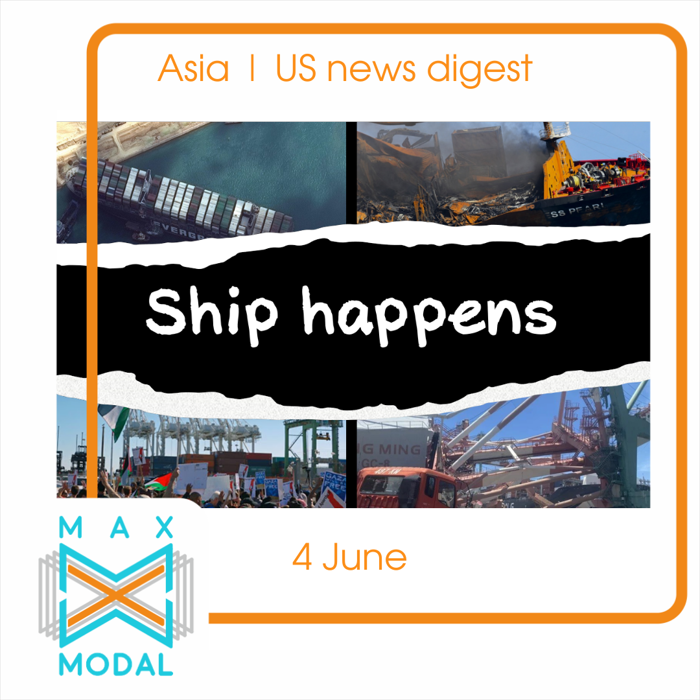
Ship happens: misfortune never comes alone.
The soaring rates have been like a snowball – almost elementally unfolding across the industry (Asia-US West Coast prices increased by 2% to $5,494/FEU and are 236% higher than the same time last year. Asia-US East Coast prices also climbed 2% to $7,479/FEU, and are 190% higher than rates for this week last year) and consequently dragging historically high import demands. Although this week there has been a slight glimpse that the U.S. containerized imports could pull back, at least temporarily, because the trans-Pacific shipping system has bounced against its max-capacity ceiling and can no longer bear the full load, liner giant Maersk has stated that this phenomenon should not be attributed to a softening in demand. The company has also announced that the recent challenges with their booking system were not due to cyber-attacks – it was a purely technical problem. With dozens of ships remaining at anchor along the Californian coast and the blockage of important export getaway in Yantian (productivity in the eastern area of Yantian International Container Terminal (YICT) is down to 30% of normal levels) further pressure to supply chains has been added. With the congestion torturing the port operations, YICT has taken some measures to improve the current situation: acceptance of export-laden containers has resumed from 00:00 AM on 31 May but with certain exceptions. The slots are now only available for containers within three days of a vessel’s estimated time of arrival, and only after the terminal confirms the reservation made by trucking companies for laden container gate-in. The rule imposes at least another week of delays, forcing carriers to bypass the port. One more blockage has occurred this week. Pro-Palestinian protestors, led by the San Francisco-based Arab Resource & Organizing Center (Aroc), have claimed victory in turning a ZIM ship away from the Port of Oakland in California. The organization’s ‘Block the Boat’ campaign aims to prevent Israeli ship operator Zim Integrated Shipping Services from docking anywhere during an ‘International Week of Action’ that will end on June 9.
Life is not easy for the shippers using the North Atlantic trade lanes either as they have faced a sharp increase in Westbound prices(from Asia to US ports on the east as well as the west coast it rose by a relatively modest 2% last week) in response to a combination of robust demand and equipment shortages. The box ship charter market is continuing its bull run, with daily hire rates in some sectors now out of control, according to the experts. The current market reflects a rate of some $52,000 a day for a typical 4,000 teu panama which is 10 times higher than it was achieved by shipowners just five years ago. In a sign of just how frenzied the container market has become, a freight forwarder is reportedly paying $135,000 per day for a short-term charter of the S Santiago (a 15-year-old container ship with a capacity of 5,060 twenty-foot equivalent units (TEUs)). The situation makes it almost impossible for the companies to build momentum when all their assets are concentrated on staying afloat; however, one of the major players of the logistics market Mediterranean Shipping Company has procured more ultra-large containerships, as the second-largest liner operator continues its fleet expansion.
More light has been shed on the situation with the X-Press Pearl. According to the latest information from its owner’s spokesman, the smoldering wreck of it has settled onto the ocean floor after water flooded the engine room. Even though the aft of the vessel had settled on the seabed, the forward portion of the ship was still afloat and the crew had hoped to move the ship away from the Sri Lankan coastline. They have failed the attempts. This incident has demonstrated the need for ensuring the safe transport of dangerous cargo. In particular, the TT Club has been campaigning to reduce the number of these life-threatening, cargo- and ship-damaging, environmentally impactful and highly costly events for a while now. Although the owner of the X-Press Pearl has insisted there is currently no sign of pollution as the vessel starts to sink, the local government has voiced its concerns. Misfortune never comes alone, says a famous proverb - the 8,500TEU OOCL Durban has crashed with the No. 70 Yangming Wharf bridge crane at the Port of Kaohsiung in Taiwan causing two cranes to collapse on the spot. One port worker suffered minor injuries in the accident. Several more were trapped but were later freed uninjured. As for Evergreen that is stuck in Suez Canal, the deal has not been resolved, but as one of the positive outcomes, the blockage has encouraged some of the companies to put their products on Eurasian rail tracks for the first time.
Experts are keeping an eye on the rail industry, voicing concerns about whether the problems with American railroads can be related to low staffing. These service issues, at least to some extent, have been related to workforce reductions caused by the pandemic and its repercussion. The US rail volumes have been going strong. For the week ended 29 May, the AAR reported rail carloads 27.2% higher than a year ago, forcing the SITC Container Lines to place more vessel orders. The air industry is also expecting a splurge in demand - Unique Logistics has booked dozens of Asia cargo jets for peak season.
Tough times create more room for collaborative efforts: the logistics arm of the Alibaba Group has signed a deal with the Korea SMEs and Startups Agency (KOSME) to serve as a third-party logistics provider for affiliated small and midsize exporters shipping to China.
While the sea rates are high, the railway industry strives for growth in its full span.
A significant increase in freight rates facing the industry worldwide has brought crucial consequences for lower-value commodities such as furniture and large electrical and electronic appliances that are becoming priced out of the main intercontinental freight markets. The assembled furniture is the worst hit with the freight rate now accounts for up to 62% of the retail value of the goods. In case of appliances, the freight spot rate now accounts for up to 41% of the retail value for large appliances and up to 27% of the retail value for small ones. Logistics companies are dealing with the following dilemma: to pay spot prices of $12,000 to move a 40-foot box from Asia or to pay a rate that their products could not sustainably support to get the ordered goods to customers. The technical advances also do not come in handy when dealing with the crisis - Maersk Line has confirmed that a failure of its booking systems was not due to a cyber-attack, but rather the result of a technical failure. It is not the first time it collapses, so the company is determined to take a close examination of the cause of the problem. It is impossible to expect any sort of uncertainty to appear in sight, according to the recent surveys, there is little unanimity among air cargo shippers as to the outlook on rates. For example, on the Asia-Europe route, 46% of the sample anticipate that prices will be stable in August when compared to end-March levels – stability being defined as upward and downward movements not exceeding 10%. Many do not share the same opinion. As for transatlantic shippers, there are also dipping their toes in what their counterparts on the transpacific have been dealing with for some time since the increase in spot rates has not omitted this sector either. The ones for westbound containers last week were almost double those charged at the end of March. Meanwhile, container rates in Europe climbed 57% in the first four months of the year, largely helped by a 30% surge from March to April. Another stumbling rock impacting the situation is the Extinction Rebellion of the climate activists that have been protesting for days, blocking roads and the Köhlbrand Bridge, an important traffic artery in the Port of Hamburg. As a result, Maersk and MSC have decided to exclude Hamburg on the next four voyages and divert into Bremerhaven which is going to further disrupt already stretched supply chains and impact port congestion at the container hubs of North Europe. Maersk has also voiced its opinion on the initiative regarding future sustainable policies regarding a more harmonious legal approach - a global tax of at least $450 per tonne of fuel oil in the medium term at the current oil price.
Complexity is added by the new post-Brexit trade regulations. UK business is looking for workarounds to continue trading with the EU after Germany announced it would be ending VAT exemption for goods valued at less than €22. Such companies as DHL try to take pre-cautious decisions by informing customers of the pending change. In turn, FedEx Express, to simplify the arrangements, announced that it had reached an agreement with KPMG to offer a streamlined IOSS solution at a discounted fee, which it said would help e-commerce sellers outside the EU comply with the new rules.
A major shift is continuing in the rail freight sector. It started in 2020 with the Netherlands seeing a 6.2% drop in goods transported by rail. The transit from Belgium to Germany decreased by 20.6% in 2020 to 1.3 million tons compared to the previous year. Many countries in Europe have enabled access to rail at a reduced or even nullified rate to support railways during the pandemic. However, due to the administrative backlog, not everyone will be compensated. The notoriously famous Suez Canal blockage has forced more companies to Eurasian rail freight. Germany-based Fressnapf Group put its products on the aforementioned tracks for the first time and not only reduced the distance in half, but also dropped CO2 emissions by 75%. To expand transcontinental rail freight volumes Kazakhstan’s Eurotransit and Hungary’s East-West Intermodal Logistics Service (EWILS) have signed a strategic cooperation agreement. They are planning to build a new facility in line with EWILS’ East-West Gate (EWG). In the UK, GB Railfreight has set the objective to transform one of the largest potential development sites in the East Midlands into national distribution, logistics, and rail freight hub. DP World’s deep-water ports at Southampton and London Gateway have become the first two locations in the UK to handle Freightliner’s new 775m intermodal container trains.
The Polish LOTOS Kolej has entered the Lithuanian transport market. The Polish carrier signed a cooperation agreement with Lithuanian LTG Cargo enabling it to transport cargo through Lithuania to Poland and other neighboring countries. The Kolin terminal in the Czech Republic will be connected to the Halkali terminal in Istanbul thanks to the Turkish logistics company’s (Mars Logistics) new launch. Another company Turkish Pasifik Eurasia has partnered up with the Austrian Rail Cargo Group (RCG) on the New Silk Road, establishing the Turkish Köseköy terminal nearby Istanbul as a new hub. Haropa Port, the maritime complex comprising the ports of Le Havre, Rouen, and Paris, has launched the Seine Axis Major River and Sea Port, the fifth-biggest hub in Northern Europe.
Ports of Stockholm hosted Sweden’s first container barge shuttle service on inland waterways between Stockholm Norvik Port and the Port of Vasteras. Services will be operated by the German company Reederie Deymann, which introduced the EU-class inland waterway container barge into Lake Malaren to operate services linking the two ports.


With the suffering supplier performance and instability of the freight sector, American logistics companies are doing whatever it takes to keep running and search for alternative channels to deliver their goods to consumers.
The beginning of Joe Biden’s presidency has started with a drastic change in policies and primary objectives from those set by his predecessor, Donald Trump. Several executive orders that were announced just hours after Biden’s inauguration have highlighted the new direction. There are several regulatory reviews affecting freight markets that need closer examination. The 5.9GHz safety band by Federal Communications Commission has been confirmed, enhancing vehicle-to-vehicle communications safety for more consumer-based Wi-Fi services. Companies like Volvo Trucks North America had noted that dedicated bandwidth within the 5.9 GHz spectrum was critical for deploying vehicle-to-vehicle applications such as truck platooning. Biden has also signed an executive order, “Protecting Public Health and the Environment and Restoring Science to Tackle the Climate Crisis,” that included reviewing the Trump administration’s regulation allowing bulk shipments of liquefied natural gas by rail. Additionally, the National Industrial Transportation League is calling on Congress to modify the Shipping Act of 1984 in a way that would expand FMC’s authority to act on anti-competitive complaints against carriers and expand the FMC’s oversight of commercial contracts between the carrier and their customers.
As for the manufacturing activity, according to the data, there is a significant increase in one of the key metrics – PMI (at 61.2 (a reading of 50 or higher growth), plus a 0.5% increase from April to May that marks its 12 consecutive months of growth. Supplier performance overall is suffering; the lead time of raw materials is extremely low, so the current environment highlights just how much companies’ internal operations and inventory planning rely on a smoothly run freight environment. The freight sector has been unstable, and, as the result, more retailers are starting to build extra days into their shipping schedules to improve their inventory planning. They also have to keep in mind the rising logistics cost that follows the rise of the B2B sector. The challenge regards the search for alternative channels to deliver their goods to consumers is not an easy one. Truckload rates are also up drastically. The indicators of the logistics spend set a record in April – its fourth record in five months – and spot prices are reportedly on track to rise 70%, year on year, in the second quarter. With the continued relentless rise of container freight spot rates (they are set over $10,000 per FEU for both northern Europe and the Mediterranean, and the 4.2% and 5.2% increases, respectively, which will put yet more pressure on shippers. The Shanghai Containerized Freight Index rose another 1.8% last week as a decline in transpacific rates to the US West Coast mitigated rises elsewhere. The data on the Asia-North America direction reports high demand and short capacity, with no slowdown in sight, pointing that the situation will be escalating even if the blank sailings remove capacity across all TPEB (Transpacific Eastbound) lanes. South America’s destination will also experience certain changes: COSCO Shipping Lines is planning an implementation of a new General Rate Restoration for all shipments from the Far East to Latin America & Africa ports with the new charges taking effect in June, according to the company's announcement.
Although it has started to seem like the COVID-19 pandemic has eased its grasp, the latest outbreak hit Yantian and as a consequence, all the ships that are scheduled to call there in the coming 14 days are forced to come up with alternative plans. It may have a devastating effect since Yantian handles nearly 90% of Shenzhen’s U.S. and Europe’s exports, with approximately 100 routes impacted. It will also delay European exports to North America.
An alliance of the ports of Long Beach, Los Angeles, Oakland, and another 34 organizations, has sent a request to the state of California seeking a state investment of US$2.25 billion on emissions-free freight hauling. Supply chain and environmental groups sent their request to Sacramento this month, seeking surplus state revenue to finance zero-emission trucks and cargo handling equipment and infrastructure such as electric charging stations, and training to operate and maintain the equipment. State support of the ports has recently become one of the most important issues in general. The deepening and widening of Norfolk Harbor at the Port of Virginia were for the first time included in a federal budget with $83.7 million that will help ensure that the project remains on course for completion in 2024. The Port of Seattle has approved a long-term ground lease for a portion of Terminal 106 to Trammell Crow. The new facility will be able to support e-commerce, manufacturers, and logistics providers that support maritime industries. On a positive note, the Port of New York and New Jersey, and New Jersey’s seaport cargo volumes demonstrated an increase for the ninth month in a row to reach 18% above pre-COVID-19 pandemic levels in April 2021.
A further investigation on the issue of the X-Press Pearl burning off the coast of Colombo, Sri Lanka has been carried out. The captain has been detained in the country along with the chief engineer and deputy chief engineer by order of Colombo Magistrates Court.
Regarding the Asian direction, Taiwanese container line Wan Hai has placed an order at South Korea’s Samsung Heavy Industries for four containerships worth between $474m and $500m. The four 13,100 TEU ships are scheduled to start delivering from the second quarter of 2023. The deal includes potential equipment upgrades on the vessels. Bangladesh’s spike in mango exports caused a splurge in air cargo shipments.