
Despite the soaring rates, European logistics companies are on the rails of expending their capacities. From Ireland to Norway, the new facilities aim for growth acceleration
For a brief moment, it might have seemed that the situation regarding the container freight rates had started to improve since some routes began to see pricing tail off, however, the numbers continued at elevated levels this week with no signs of decrease. According to data provided by FBX, the spot rate for Asia-North Europe climbed 9.1%, to reach $9,871 per 40ft, while another indicator, Drewry World’s Container Index (WCI) showcasing the Shanghai-Rotterdam leg stood at $10,174 per 40ft, a 3% gain on last week. Numerous shippers started to cancel their orders because the freight rates cancel out their margin; it equally affects the ones seeking long-term contacts. The forecast about the coming weeks is also worrying: transatlantic shippers are preparing a new set of GRIs and/or peak season surcharges, ranging from $500-$2,500 per TEU. The WCI has also shown that the composite index of eight major routes worldwide went up by 2% 6,257 from a week earlier. This is a historical record: the numbers are 12 times higher than the amount of TEU ordered in the first five months of 2020 and more than 60% higher than the last record that occurred in 2005.
While the shippers are unable to adjust to all the uncertainties shuttering the market, the industry is experiencing a soaring splurge in volumes (they are currently 300% above what they already were) combined with an alarming shortage of drivers. It is time to operate at a higher speed and make the supply chains more agile. Many haulage operators see the government as the main driver of change and demand practical actions; otherwise, the situation will escalate to a threatening state. Logistics UK has backed this request and, in addition, strongly criticized the government’s New Plan for Immigration, closed on the 6 May 2021, which would introduce changes to the penalties imposed on logistics businesses and their drivers regarding vehicle security and migrant incursions. People-smuggling gangs are indeed a big problem in the UK, however, the business group states that the new measures may critically affect the haulers and drivers who may become the unwitting victims. In the framework of spikes in demand and the growth rates, it is not strategically wise to deprive the vehicle operators of any defense and put them at risk. Not only the British government is advised to reconsider its agenda, but also this week the BVRLA has addressed the launch of the CAZ (clear air zone) in Birmingham planned on June 1. With the expected rates (daily £50 charge to enter the zone, £8/day for non-compliant cars), the BVRLA suggests that around 60% of the 200,000 vehicles that enter the city center each day could be affected.
In times of instability, any glimpse of a positive prognosis becomes particularly crucial. The Port of Hamburg Marketing has predicted that container traffic volumes will stabilize in 2021 and that it expects the hub to handle 8.7 million TEU. China, the port’s biggest commercial partner (16% increase in trade) is the biggest contributor to this improvement. Besides, Mercer Holz is planning to increase its efficiency regarding the transportation of wood. Thanks to the new wagons by TRANSWAGGON, the company wants to acquire a more homogenous fleet without changing rail cars for each different shipment. British DP World Southampton follows suit by receiving the new generation of environmentally friendly HMM ships. They will be deployed on the Asia and North Europe trade lane.
If for some countries Brexit has become a stumbling rock in attempts to overcome the crisis, Ireland seems to be extracting the benefits. A good example is the upgrade of the Amsterdam-Dublin container service by Samskip. The company started moving cargo with a larger, faster ship, which now also calls at Port of Waterford, a hub in the making for UK-Europe trade.
Norwegian terminal Narvik is also planning an expansion of its capacity. The new 30 million euros project is aimed to increase the current number of TEUs (30 000/year) that the terminal is handling to 100,000 TEUs per year. The construction is expected to start this coming fall and conclude by 2023. As for the Port of Oslo, it will receive three electric stacker cranes on 29 May 2021 as part of the plans to improve the sight’s performance.
Some experts believe that success will be determined by the three-dimensional approach that includes hinterland connectivity, investments in intermodal, and the development of the rail sector. The Spanish government is investing €6 billion to connect hinterland facilities with the major urban ports through rail networks in the future. The Mosnov Multimodal Transport Terminal will connect the Moravian-Silesian region in the Czech Republic, as well as neighboring regions in Poland and Slovakia. Mediterranean Shipping Company (MSC) UK has renewed its partnership, which began in 2002, with GB Railfreight (GBRf) with a new five-year deal, so despite the challenging reality, the European companies are focused on strengthening the connections with each other.
The Evergreen deal has not been resolved yet. Egypt has added its say, stating that the sheep moved indeed too fast and the size of the vessel contributed to the accident. The SCA has said that Shoei Kisen is willing to pay $150m in compensation.
Momentum for Growth: What Are the Stakes?

Осуществляем контейнерные перевозки любого тоннажа и размера по маршруту Беларусь - СНГ и обратно

Как называется компания?


US consumers make China great again
Driven by an upsurge in the US E-commerce consumer demand, container volumes from Asia to the US have set a new monthly record and marked the 10th consecutive month of year-over-year growth. According to data from an expert research company Descartes Datamyne, in April alone, imported container volumes into the US skyrocketed by over 30% year-on-year, amounting to a total of 1.57m teu shipped last month. The largest share of exports for 987,834TEU has come from China, which manifested a 46.5% jump compared to April 2020. Slow turnaround of ocean carriers due to port delays caused by congestion has resulted in disruption of shipping schedules in a major gateway in South China - Yantian International Container Terminal (YICT), prompting the port to stop accepting laden export containers earlier this week. According to China ports’ statistics, container volume at eight major Chinese ports indicated 15.8% annual increase in early May.
Amidst spiraling demand surge all major trade, corridors have seen container rates growth, marking 33.5% year-on-year increase, and 9% surge in prices just over the month of May. According to experts, much of this spectacular growth occurred across the first five months of the year with Far East export and European imports leading the way, – both indicating over 50% rise. Box freight rates from Shanghai to Rotterdam have crossed the $10,000 per feu mark for the first time in history, designating 485% jump from a year ago. This week, Swiss-based MSC said it would apply a temporary limitation on reefer container bookings from Europe to Asia because of significant shortage of reefer containers on the Europe-Asia trades.
In an attempt to improve its environmental footprint, LA based port of Long Beach has announced generous financial incentives as part of the Green Ship Incentive Program. The incentives range from US$600 to US$9,000 that can be awarded in credits to sea vessels meeting IMO's Tier III emission standard. Additionally, the port of Long Beach set aside $329.1 million budget in an ongoing capital improvement program to modernize terminals, rail, bridges, waterways, roads and other infrastructure to support the ongoing growth of operations and improve cargo flow, reliability and efficiency.
Yesterday, after a week’s long of pertinacious and concerted efforts by Sri Lankan Navy and Indian coastguards to put out the ravaging blaze aboard Singapore-bound 2,700 teu X-Press Pearl, carrying among other cargo 25 tons of nitric acid, 278 tons of bunker oil and 50 tons of marine gas, some hope has emerged as the smoke from the ship started turning from pitch black to white. Shri Lankan authorities warned that the vessel could sink later today, and alerted population of a possible risk of acid rain falling across the island.
4,900 teu Japanese carrier NYK Delphinus has declared general average this week after the vessel experienced fire in the engine prior to arriving in Oakland two weeks ago. Freight insurance and risk management specialists have alerted shippers and ocean carriers to exercise more vigilance in view of increased cargo crime risks associated with the current supply chain disruptions.
Striving to meet a rapidly growing consumer demand across Asian continent, a new weekly service has been added by Maersk this week to connect the DP World-operated International Container Transshipment Terminal (ICTT) at the Port of Cochin India to ports in the Far East .The service will allow customers to reach global markets directly without transshipping at the Port of Colombo, Sri Lanka, cutting transit time by as much as 10 days. On the other note, Danish-based container has temporarily ceased acceptance of new bookings to Mexico and some destinations in the Caribbean Sea due to the recent disruptions in North Europe and US ports.
South Korean feeder operators and its Thai and Singaporean allies will start new, second direct link services connecting southern China with Thailand, complementing its existing service that covers South China, Thailand and Northern Vietnam. Each carrier will contribute one 1,800TEU ship. Multiple South Korean feeder operators have seen their profits surge from %100-300% over the last year thanks to the intra-Asian trade rates boom and reduced oil prices.
OSCO Shipping Ports Chancay Peru has signed a $600 million contract with Chinese construction company CHEC SAC-CCCC4TH to build a new multipurpose terminal that would be intended to process approximately 1.5 million TEU a year, and receive vessels of 18,000 TEU directly from Asia.


The logistics market’s metamorphosis brings the new players into the spotlight. More European countries are considering a different direction for development as further shortages are expected to splurge.
Brexit has surely shaken up the status quo of the logistics market, changing the existing patterns of the established partnerships. With the UK leaving the EU, the potential for new alliances has emerged, bringing China into the spotlight. The country overtook Germany to become the UK’s biggest import market since trade in goods had to plunge due to political changes and the consequences of the COVID-19 pandemic. The premise for this shift was already noticeable in 2019 when German import to the UK as well as business enthusiasm started to decline in the light of the looming uncertainty of whether the country would leave the EU or not.
The shift is not the only change currently occurring in the market: the industry is experiencing significant metamorphosis in the rates of the major carriers. It is uncertain when the situation will get back to “normality” but there are big chances that European exporters that are on the lookout to source shipping containers will face the deterioration of the shortages in the coming weeks. The thing is that most carriers are continuing to favor shipping empties back to Asia as fast as possible to maximize yields in main-haul services. The recently updated trading data indicates that in the period between January and April average prices for used 20ft containers across Europe rose up to 57% from US$1,348 to US$2,119. The situation in the main European fore posts is the following: the prices in Hamburg rose by 16%, in Rotterdam by 12%. At the same time, the Mediterranean Shipping Company (MSC) plans to increase its rates from India, Pakistan, and Sri Lanka to the major European ports. Additionally, the company is going to impose temporary limitations on reefer container bookings from Europe to Asia starting from May 25 due to the shortage of equipment. According to the experts’ prognosis, the industry is also expected to deal with ocean space storages all the way through the summer. The main reason for it is the blockage of the Suez Chanel. The shippers had to reduce the numbers of the transported containers, and this step disproportionally affected lower-paying companies with carriers favoring cargo from higher-paying customers. However, the good news is that forward indicators suggest that their availability for exporters will improve in the coming months.
The state of the UK rail industry seems to be getting better thanks to the initiative to consolidate instead of implementing a fragmented approach. There is now a crucial objective to adjust the sector to the changes regarding the transportation charges. For now, the companies abstain from them for much of the European network but with the new market segmentation and post-Brexit reality, it will not be for long. The UK officials believe that the success of the further steps of the rail restructuration is determined by the consistent, day-to-day management and training of the logistics companies’ employees. The new green agenda and the growing customer demandplace the necessity for more efficient and flexible stuff.
In the bigger picture, CLECAT (European Association for Forwarding…) has identified three areas where the authorities in both the EU and the UK must agree on further discussions and guidance. There is now a lack of sufficient regulation of the EU goods entering the UK, which has to be solved shortly. Priority Freight, the leading English logistics company, in turn, has declared the ‘clearance on wheels’ status from the UK HMRC that is essential for reducing post-Brexit border bottlenecks.
DHL is another example of a company that has caught the wind of change. However, it is mostly regarding administrative and legal procedures following the new Air Services Agreement (ASA) between the UK and the EU. The biggest shake-up concerns the launch of a new European airline in Austria aimed at turning its UK direction into an intercontinental carrier.
Several other European companies have set their objectives for international expansion. Germany’s Vega Reederei is extending its fleet with four 1,868 TEU container vessel new buildings from China’s Yangfan Group by the end of 2022. Chinese intra-regional carrier CU Lines has confirmed the launch of the Asia-Europe service in early June. Turkey sends two more trains to China setting the potential alternative for other companies to use instead of currently popular Eurasian corridors. German CargoBeamer has chosen the Eastern European direction, and it sets up a rail service between Duisburg and the Polish city Poznan. Swiss Hupac announces the use of longer trains in its transalpine routes, claiming a 10% increase in its traffic in the first quarter of 2021. The construction of the Rail Terminal Barneveld is believed to become a reality in the Netherlands; however, the prospects of Barneveld Noord depend on the further investments of private investors since the municipality has announced that it will not invest in it.

Hot growth blasts the cargo market
According to recently issued Intermodal Quarterly Report by IANA, total first quarter intermodal volumes amounted to 4,616,262 units, marking 10.5% annual growth. All domestic equipment category, which is comprised of trailer and domestic containers, saw a 6.3% increase, and international containers, rose by 14.8%.
In the US demand for trucking capacity increased during 2021, and the biggest shortage is seen in the supply of truck drivers. According to experts, from April 2020 to April 2021 shippers’ requests for moving loads increased by 577%, while postings of trucks available to move loads were down 17 percent.
Georgia Ports Authority (GPA) has reported a 38% year-on-year increase in container trade for April, with the Port of Savannah handling 466,633TEU in what turned out to be the second-busiest month in the year.
In an attempt to reduce port congestion and cut emission, this week the US Department of Transportation’s Maritime Administration (MARAD) has allocated $10.8 million for America’s Marine Highway Program (AMHP) designed to further integrate coastal and inland waterways into a unified transportation system that would provide container on barge services on commercially navigable waterways.
Increased demand and supply are not the only factors wreaking havoc in global shipping networks. Cyclone Tauktae has recently forced the Indian port of Pipavav to shut its 1.35m teu capacity facility, causing containerships to re-route and discharge containers at other ports such as Nhava Sheva, Mumbai. This morning X-Press Pearl, 2,700-teu ship, carrying 25 tons of nitric acid, suffered an explosion in Colombo port of Shri Lanka. .Shri Lanka is deploying aircraft and navy vessels to assist in combating the fire.
In this time when availability of containers is of the utmost importance to shippers, China’s lead in container manufacturing cost per unit, cheap labor and low repositioning costs make China’s competitive advantage on the global scale unbeatable. According to experts, three Chinese factories nowadays build more than 96% of the world’s dry cargo containers, and 100% of the world’s refrigerated containers.
Amidst escalated growth of ocean shipments, European freight forwarders Maersk and Hapag-Lloyd have increased their lease rates for 20’ and 40’ feet containers on routes from North America to Australia and New Zealand, and from Indian Subcontinent (ISC) and Middle East to North America. The rate increase is expected to take effect in mid-June and July.
China-Europe rail freight is also benefitting from the overstretched container shipping market. As reported by CNDRF, the number of Silk Road train trips grew by 24% year-on-year in April to 1,218, marking a 33% increase in volumes to 117,000 teu. The demand for rail freight is also on the rise across South East Asia. For example, Shanghai-based Crane Worldwide Logistics is now moving cargo via rail from Japan, Korea and Vietnam.
Turkey’s role in New Silk Road hub is also growing. Thus, on 24 May, two trains with 41 containers carrying 250 tons of melamine-coated chipboard departed from Izmir, Turkey to China. They are expected to travel through the Middle Corridor and the Baku-Tbilisi-Kars rail freight route and reach Xi’an in 12 days.
Development of the Laos-China Economic Corridor is picking up the pace, as the Kunming-Vientiane rail link is getting closer to completion. A new 414 km railway line is intended reconnect China and Southeast Asia, stretching from Boten, on Laos’ northern border with China, to Vientiane, the Laotian capital.
According to experts, as the apparel sector is set to grow by 8.2% globally in 2021, Asia’s current 38% share of the global spend in this market is expected to increase to 41% by 2025, boosting demand for ocean and rail freight across regions and countries.
Building a premier railway connecting Mexico-US-Canada freight network has inspired the recent US$30 billion merger deal that was reached last month between US-based KCS and Canadian CN late last month. Kansas City, Missouri-based KCS’ network connects the US Midwest to ports along the Gulf of Mexico. Its system also reaches deep into Mexico.
High airfreight rates are making freight forwarders come up with new freight business ideas. Thus, Panama-based carrier Cargo Threehopes to launch cargo charter services delivering 40 tons per week to the US aboard a 38-year old converted A300-B4.




These 40HCPW containers are excellent for cargo on pallets !!!
40PW - superb !!!
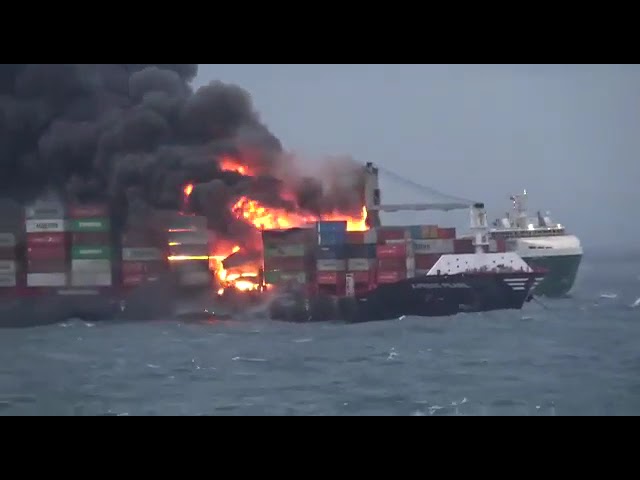

I compassion very much for all the people who have cargos on this ship
A days-long fire aboard m/v X-Press Pearl now appears to be out of control after an explosion happened last Tuesday. The carrier was otherwise ready to start a salvage operation Monday. Insurance Co warns that container fires are frequent and should be better prevented